 comparison
Open vs Enclosed Car Trailer for Transport
Table of Contents
- Open vs Enclosed Car Trailer for Transport: The Core Differences
- Open vs Enclosed Car Shipping Cost: What Drives the Price Gap
- Protection, Damage Risk, and Vehicle Condition
- Car Hauler Trailer Size Guide: Matching Trailer to Vehicle
- Car Trailer Rental for Project Cars and Daily Drivers
- Open Car Hauler Trailer Rental: Towing, Loading, and Insurance Basics
- Towing a Trailer vs Hiring a Carrier: Total Cost and Practicality
- Frequently Asked Questions
Last Updated: October 12, 2026
Open vs Enclosed Car Trailer for Transport: The Core Differences
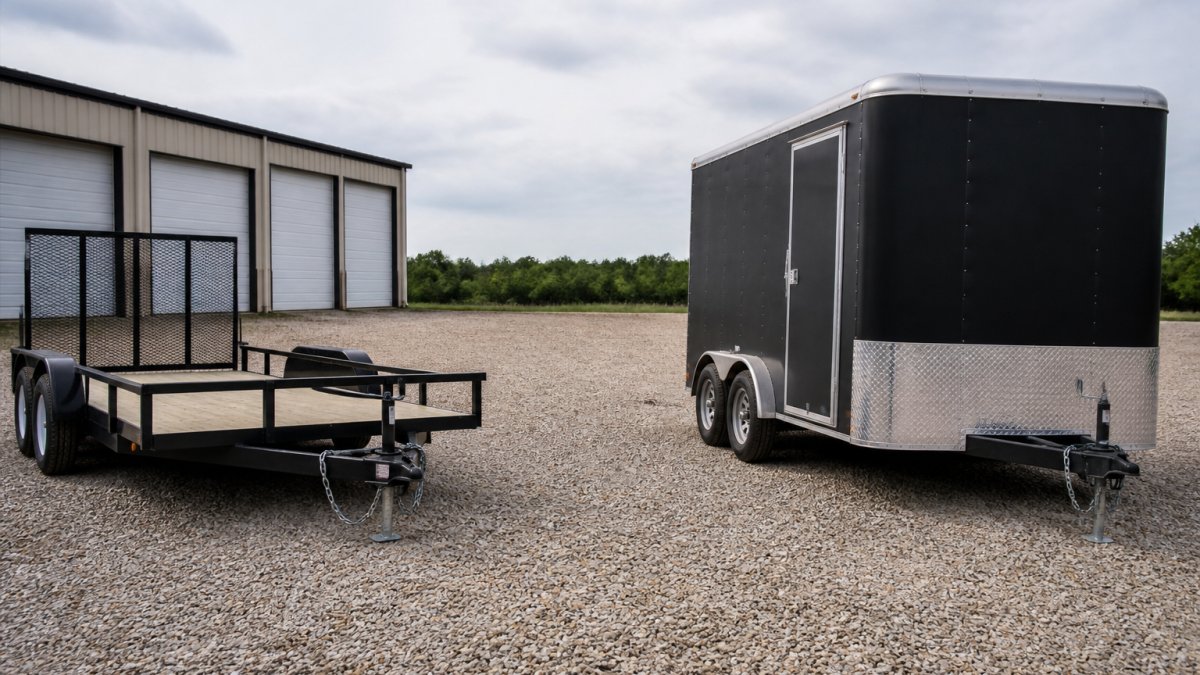
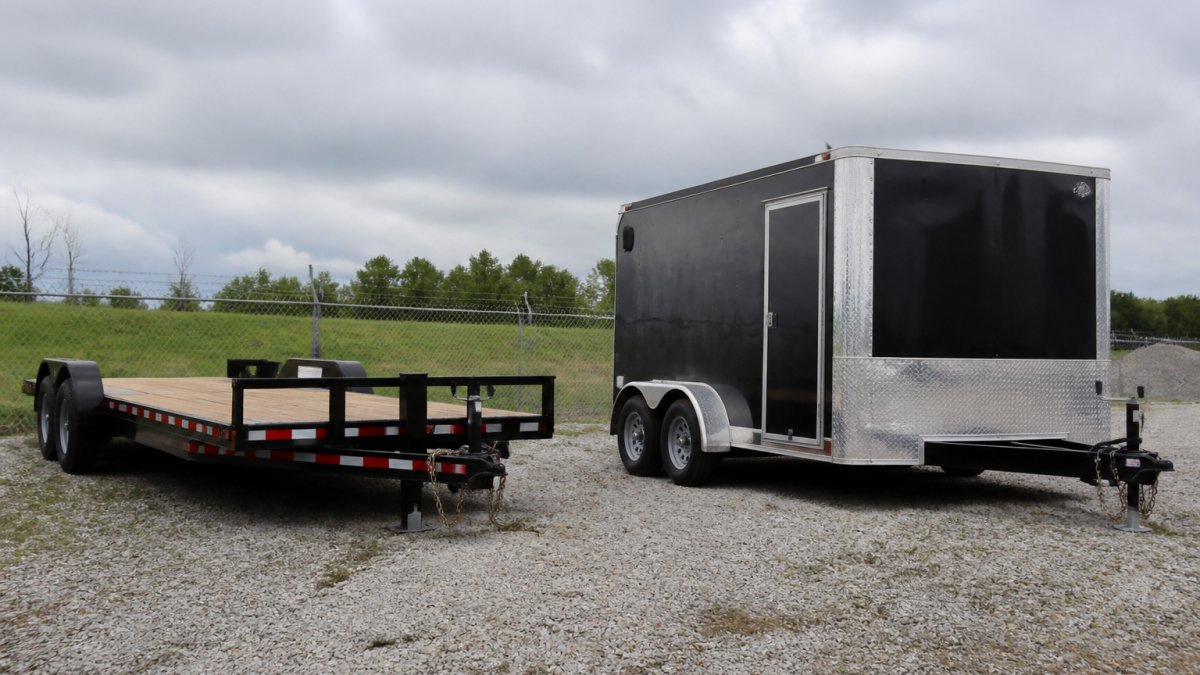
The open vs enclosed car trailer decision comes down to one trade-off: an open car hauler trailer costs less and carries more, while an enclosed car trailer adds weather protection and security at a higher price. Omaha hobbyists hauling project cars and shop owners moving customer vehicles face this constantly.
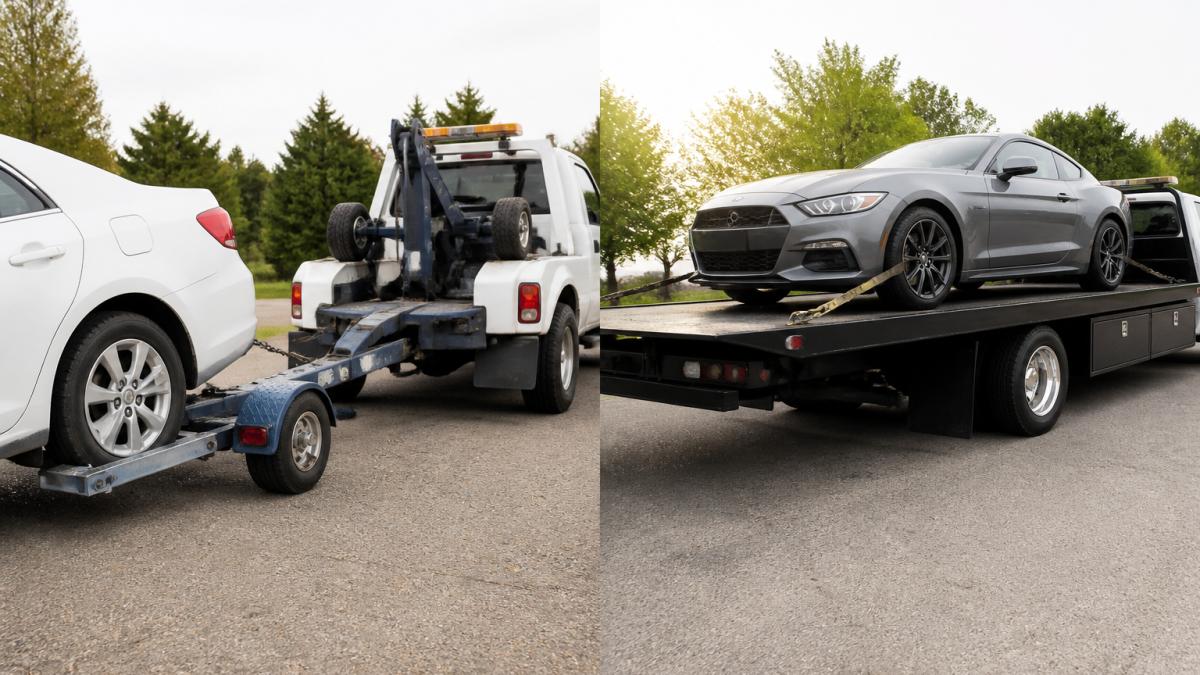
Open car transport is the practice of hauling a vehicle on a flat-deck trailer with no roof or walls, exposing it to wind, rain, and road debris. Enclosed car transport uses a fully walled trailer that shields the vehicle from the elements and public view.
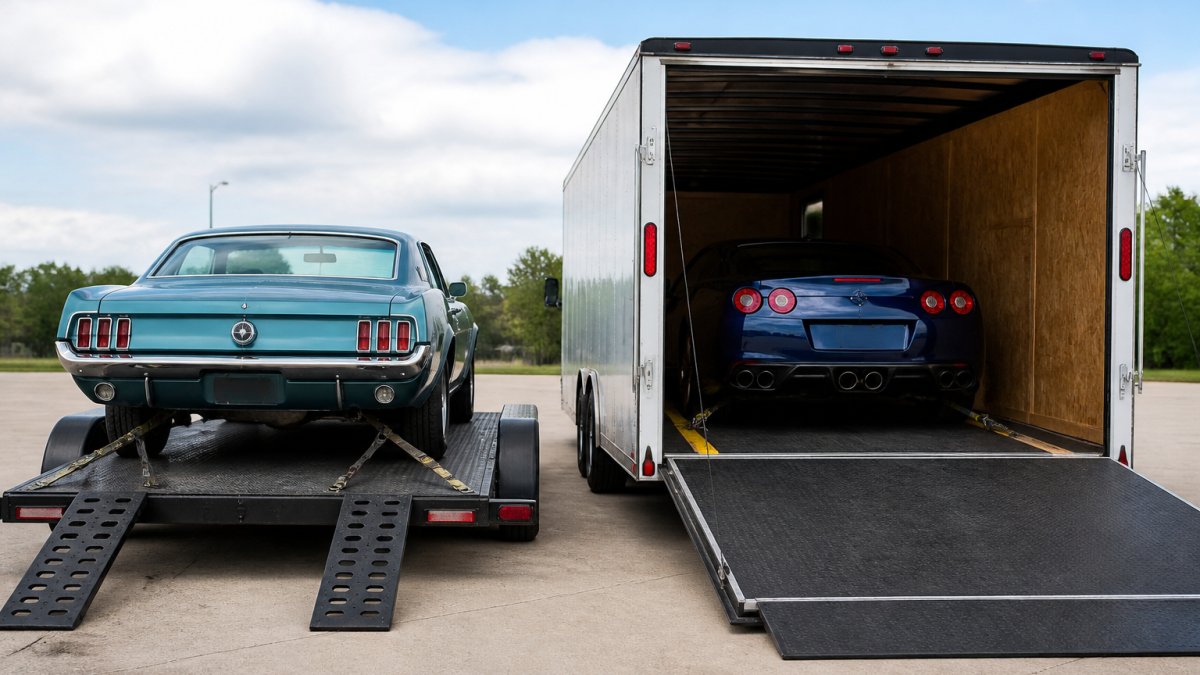
How an Open Car Hauler Trailer Works
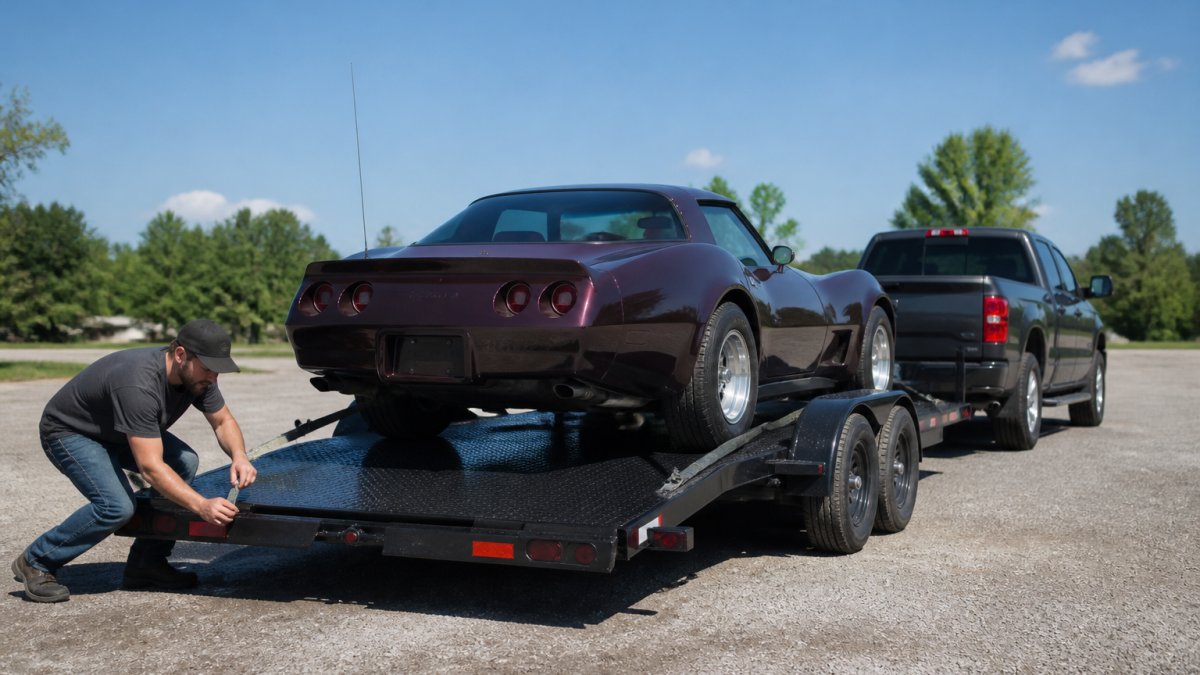
An open car hauler trailer is a flat platform with a ramp or dove-tail, wheel straps, and a winch, holding one or more vehicles in the open air. It is lighter than an enclosed trailer, making towing easier on a half-ton truck, and moves a daily driver, project car, or race vehicle without fuss.
What an Enclosed Car Trailer Adds
An enclosed car trailer adds walls, a roof, and a locking door: protection from rain, hail, dust, and road debris, plus security that keeps a high-value vehicle out of public view. The trade-off is weight, cost, and capacity, enclosed trailers carry fewer vehicles per load because the shell limits stacking.
Open vs Enclosed Car Shipping Cost: What Drives the Price Gap
Enclosed transport costs more because enclosed trailers have limited capacity and provide extra protection. But the daily rate is only one line on the invoice; the real gap shows up when you add fuel, tolls, insurance, and the tow vehicle.
What Actually Drives the Price Gap
- Capacity: An open carrier can move several vehicles per run; an enclosed trailer usually holds one or two. When a carrier can only bill one customer per trip, that customer absorbs the whole cost of the run.
- Weight and fuel: A typical enclosed car trailer weighs roughly 2,500 to 4,000 lb empty, versus about 1,500 to 2,500 lb for a comparable open trailer. That extra ton costs fuel on every mile and demands a bigger tow vehicle.
- Aerodynamics: An enclosed trailer is a rolling box. At highway speed it pushes far more air than an open deck, and fuel economy drops accordingly.
Rental Rates vs Carrier Quotes: Two Different Numbers
A rental yard quotes a daily or weekly rate for the trailer alone; a carrier quotes one door-to-door price bundling trailer, tow vehicle, driver, fuel, tolls, and insurance.
A one-way rental plus fuel and tolls can approach or exceed a carrier quote on a long haul, while a short local move almost always favors renting. The crossover point depends on distance, fuel prices, and whether you own a capable tow vehicle.
The Line Items Competitors Leave Out
Most shipping quotes hide the true cost of self-towing. Renting and towing yourself means paying for:
- Trailer rental: daily or weekly rate, plus a deposit
- Fuel: the loaded weight and the trailer's drag both cut your truck's mileage
- Tolls: often charged per axle, and a trailer adds axles
A carrier quote folds all of that into one number, which is why the sticker price looks higher until you build the full self-tow budget.
For current rates on open and enclosed units, check our booking page rather than relying on a quoted range.
Protection, Damage Risk, and Vehicle Condition
Open transport exposes a vehicle to weather and road debris; enclosed transport shields it. Neither removes the need to secure the vehicle properly or document its condition before you tow.
Weather Exposure and Road Debris
Rain, hail, dust, and kicked-up gravel are the real risks on an open trailer. A cover helps, but a loose one can flap and scratch paint. Enclosed transport removes that exposure entirely, critical for a classic or exotic car with fresh paint.
Documenting Vehicle Condition Before You Tow
Photograph all four corners, the roof, and the odometer before loading, note any existing dents or scratches, and keep the photos until the trip ends. This protects you in an insurance or liability dispute, whether you tow it yourself or hire a carrier. Ask any carrier for a certificate of insurance before they load.
Car Hauler Trailer Size Guide: Matching Trailer to Vehicle
Match trailer length and deck width to the vehicle, not the other way around. A standard open car hauler runs 16 to 20 feet, fitting most cars and light trucks. Measure your vehicle's length and width, then add a foot of clearance at each end for strapping.
| Vehicle Type | Recommended Trailer | Key Consideration |
|---|---|---|
| Daily driver / sedan | 16-18 ft open | Ground clearance for ramps |
| Classic car | 18-20 ft enclosed | Paint protection, security |
| Race car | 18-20 ft open or enclosed | Winch, tie-down points |
| Multiple vehicles | 20 ft+ open | Trailer capacity, weight limits |
Ground clearance decides whether a low car needs extended ramps. A race car with a splitter will scrape a standard ramp angle, so plan for ramp extensions.
Car Trailer Rental for Project Cars and Daily Drivers
Renting beats buying for most project-car owners. A restoration timeline is rarely fixed, so flexible rental terms fit better than a trailer sitting in the driveway for months.
Here is how to decide:
- One or two trips a year: rent.
- Weekly hauls for a shop: buy or set up a recurring rental.
- Unclear timeline: choose flexible booking terms over daily rates.
If your project car restoration slips a week, a rigid daily rate punishes you for it. Ask about flexible terms up front.
Open Car Hauler Trailer Rental: Towing, Loading, and Insurance Basics
An open car hauler rental works best when your tow vehicle is rated for the loaded weight and you have confirmed insurance coverage. Check your truck's tow rating against the trailer plus vehicle weight before booking.
Loading and unloading practicality matters more than people expect. A dove-tail deck and winch make a solo load far easier. Secure the vehicle with four-point straps over the tires, not the frame, and re-check tension after the first few miles.
Insurance and liability are common questions. Confirm what your auto policy covers during towing, and ask the rental yard what their policy covers if a strap breaks or the trailer fails mid-trip. Get it in writing before you tow.
Towing a Trailer vs Hiring a Carrier: Total Cost and Practicality
Towing yourself wins on flexibility and control; hiring a carrier wins on effort. A tow setup's total cost includes trailer rental, fuel, tolls, and your time, while a carrier quotes one door-to-door price. The decision comes down to whether your tow vehicle can safely handle the loaded trailer, a numbers question, not a gut call.
Trailer Specifications You Need to Know
Before you rent or buy, understand four numbers:
- Gross vehicle weight rating (GVWR): the maximum the trailer is rated to weigh fully loaded, including the trailer itself.
- Payload capacity: GVWR minus the trailer's empty weight. This is how much vehicle and cargo you can actually put on the deck.
- Trailer weight: the empty weight, which counts against your tow vehicle's rating even before you load a car.
A 20-foot open car hauler commonly has a GVWR around 7,000 lb and an empty weight near 2,000 lb, leaving roughly 5,000 lb of payload, enough for most cars and light trucks but not a heavy-duty pickup. An enclosed trailer of similar length often weighs 1,000 to 2,000 lb more empty, which eats directly into payload.
Towing Requirements: Hitch Class, Braking, and Tow Rating
Your tow vehicle's rating must cover the trailer's weight plus the vehicle on it plus anything in the bed or cab. Three requirements trip people up:
- Hitch class: Class III hitches handle up to about 5,000 lb gross trailer weight and 500 lb tongue weight; Class IV steps up to roughly 10,000 lb and 1,000 lb. Match the hitch to the loaded trailer, not the empty one.
- Braking: most states require trailer brakes above a certain weight threshold, often 3,000 lb. Electric brakes need a controller in the cab. Surge brakes are self-contained but less adjustable.
- Weight-distributing hitch: recommended when tongue weight approaches the upper end of your vehicle's rating, and often required for half-ton trucks pulling enclosed trailers.
If your truck's rating falls short of the loaded weight, a carrier is the safer call. No amount of careful driving fixes an overloaded rig.
Loading and Unloading Practicality
How the car goes on and comes off matters as much as how it tows:
- Ramps: a low car with a splitter or a lowered suspension may need extended ramps or a dove-tail deck to avoid scraping.
- Winch: essential for a non-running project car. A hand-crank winch works; an electric winch is faster and safer solo.
- Tie-down points: four-point straps over the tires are the standard. Inspect D-rings and anchors before you load.
Decision Guidance by Route, Season, and Vehicle Condition
Use these scenarios to shortcut the decision:
- Short local move, running car, good weather: open trailer, self-tow. Lowest cost, full control.
- Long cross-country haul, running car: carrier. Fuel, tolls, lodging, and your time usually erase the savings.
- Classic or exotic, any distance: enclosed, whether you tow it or hire a carrier. Paint and security justify the premium.
Verifying Insurance and Documenting Condition
Whichever route you choose, protect yourself before the wheels turn:
- Ask for a certificate of insurance from any carrier and confirm the coverage limit exceeds your vehicle's value.
- Read the exclusions. Many policies exclude damage from improper loading, pre-existing conditions, or acts of nature.
- Photograph the vehicle on all four corners, the roof, and the odometer before loading, and again at delivery.
Frequently Asked Questions
Is open or enclosed car transport cheaper?
Open transport is almost always cheaper. Enclosed trailers carry fewer vehicles per load and cost more to operate. If you rent a trailer yourself instead of hiring a carrier, the same logic holds: an open car hauler trailer for transport costs less per day than an enclosed unit.
Does an enclosed car trailer protect a vehicle from weather and road debris?
Yes. An enclosed car trailer shields the vehicle from rain, hail, dust, and debris kicked up on the highway, and it also keeps the car out of public view. An open car trailer leaves the vehicle exposed to the elements for the entire trip. For a daily driver, that exposure is usually acceptable. For a classic car, exotic car, or freshly painted project, the protection matters enough to justify the higher rate.
Can an open car trailer transport a project car safely?
It can, provided the trailer is sized correctly and the car is secured properly. Check ground clearance before loading, use four-point straps on the frame or wheels rather than suspension components, and confirm the trailer's weight rating covers the car plus gear. A project car with no drivetrain or missing panels still needs the same strap points and tie-down discipline as a finished vehicle.
What should I check before renting a car hauler trailer?
Confirm the trailer's gross vehicle weight rating against your tow vehicle's capacity, inspect straps, chains, and tire stops for wear, and ask how the rental handles date changes if your project timeline shifts. Verify what insurance or liability coverage applies during the rental and whether you need to document the vehicle's condition before towing. A quick walkaround with the rental staff catches most problems before you leave the lot.
Do I need a different tow vehicle for an enclosed car trailer?
Usually yes. Enclosed trailers weigh more and have a larger frontal area, which increases tongue weight and wind resistance. A half-ton truck that pulls an open car hauler comfortably may be near its limit with a loaded enclosed trailer. Check your truck's tow rating, payload, and hitch class against the loaded trailer weight before you commit to an enclosed rental.
The hardest part of transport is not picking a trailer; it is matching the trailer, the tow vehicle, and the timeline without surprises. 402 car hauler rentals offers reliable trailer rentals with flexible terms and competitive rates for project cars and race vehicles across the Omaha area. Get started with 402 car hauler rentals and book a dependable trailer for your next haul.