 listicle
8 Best Ways to Transport a Project Car in 2026
Table of Contents
- Quick Comparison: 8 Ways to Transport a Project Car
- 1. Project Car Trailer Rental: The DIY Standard
- 2. Tow Dolly Rental: Cheaper but Limited
- 3. Flatbed Carrier: Professional Hauling for Non-Running Cars
- How to Transport a Non-Running Car Safely
- Open vs. Enclosed Car Trailer: Which Protects Your Build?
- 4-8. Professional Shipping Companies Compared
- Project Car Transport Cost: What Drives the Price
- Frequently Asked Questions
Last Updated: October 12, 2026
Quick Comparison: 8 Ways to Transport a Project Car
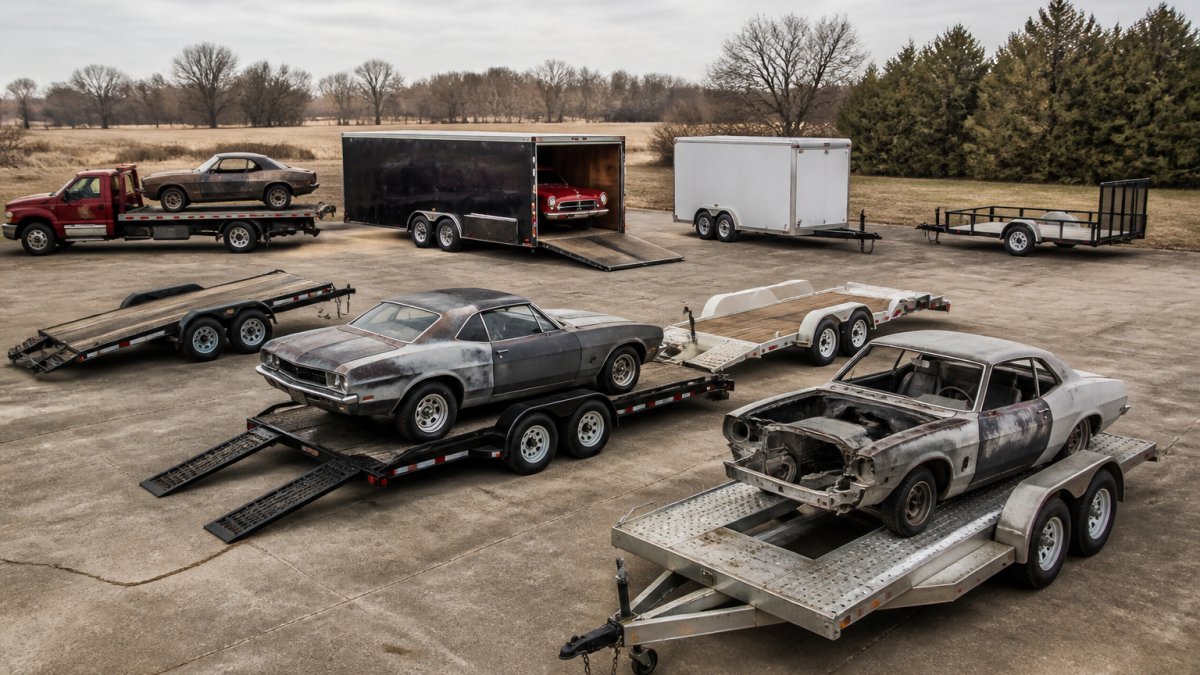
Choosing how to move a project car comes down to one question: does the car roll, and do you own a truck rated to pull it? The 8 best ways to transport a project car range from a rented car hauler trailer you tow yourself to a professional enclosed carrier that handles everything. At 402 car hauler rentals, we rent car-hauler trailers to hobbyists and shop owners who want control over the schedule and the loading. This guide breaks down every option, what each one costs you in time and money, and which one fits your build.
Here is the short version before the details:
| Method | Best For | You Provide | Non-Running Car? |
|---|---|---|---|
| Car hauler trailer rental | DIY haulers with a tow vehicle | Truck, hitch, straps | Yes, with a winch |
| Tow dolly rental | Rolling cars only | Truck, hitch | No |
| Flatbed carrier | Non-running builds | Nothing | Yes |
| Open carrier shipping | Budget long-distance moves | Nothing | Sometimes |
| Enclosed carrier shipping | Show cars, fresh paint | Nothing | Yes, with liftgate |
| Driveaway service | Running cars, flexible timing | Nothing | No |
| Container shipping | Cross-country or overseas | Nothing | Yes |
| Borrowing a friend's rig | Local moves, tight budget | Truck, trailer, favors | Yes |
1. Project Car Trailer Rental: The DIY Standard
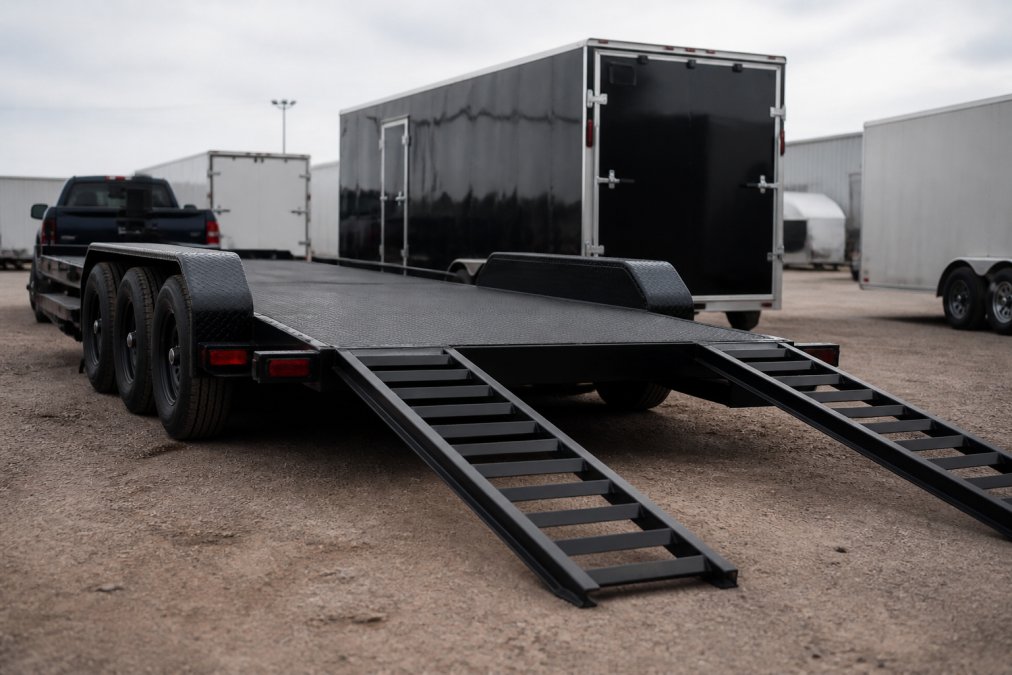
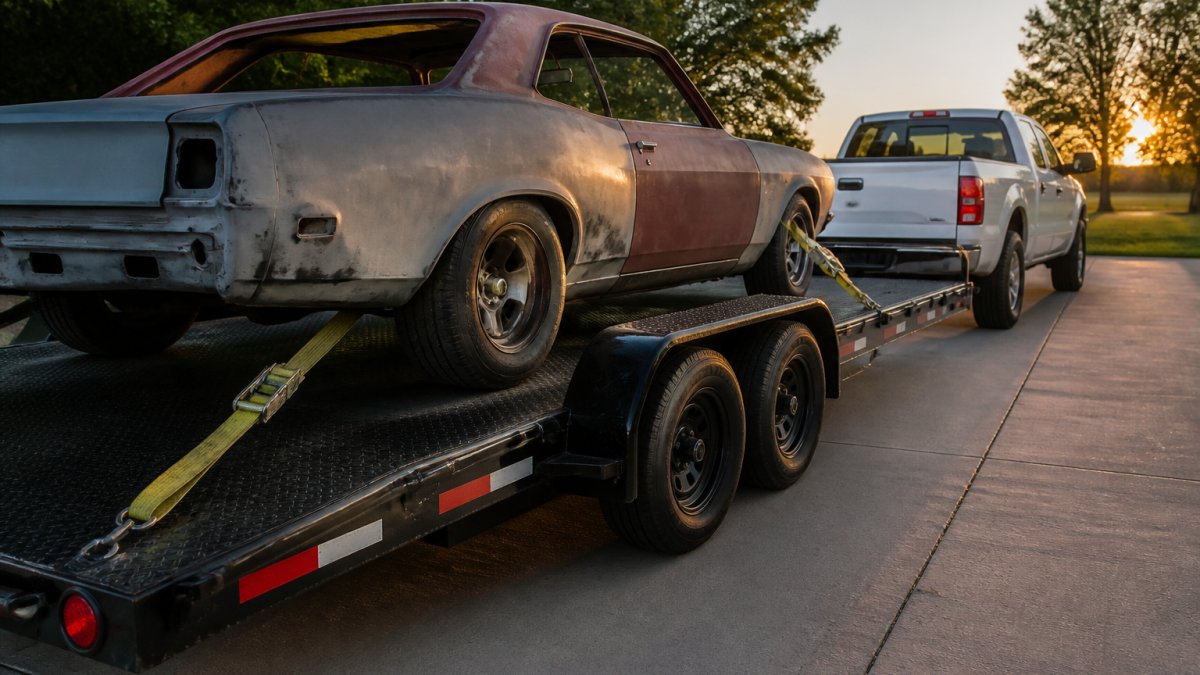
Renting a car hauler trailer is the most common choice for enthusiasts within driving distance of the seller, and it is the option we know best. You control when you leave, how the car is strapped down, and how fast you drive. A full-deck car hauler carries all four wheels, so a non-running project rolls or winches straight on.
What to Check Before You Rent
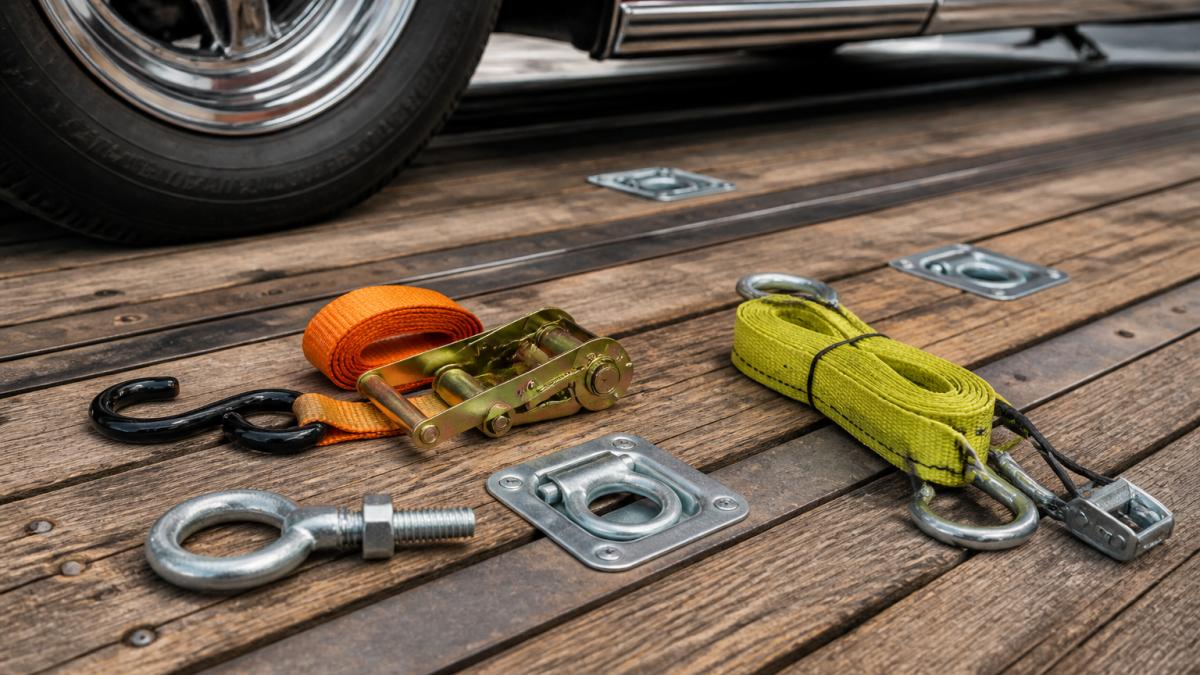
Walk the trailer before you hook up. Check tire tread and sidewalls for cracking, confirm the lights work, and inspect the straps and ratchets for fraying or bent hardware. Ask how the rental handles a rescheduled weekend, because restoration timelines slip. Confirm your truck's tow rating before you commit, and ask whether the rental allows older or modified tow vehicles. A shop that answers those questions plainly is the one to book.
2. Tow Dolly Rental: Cheaper but Limited
A tow dolly lifts the front wheels and drags the rear, which makes it lighter and easier to store than a full trailer. It only works on cars that roll and steer, and it puts wear on the rear tires and drivetrain. Rear-wheel-drive cars generally need the driveshaft disconnected or the rear wheels on a dolly instead. For a running project with a solid front end, a dolly keeps the rental simple. For anything that has not moved in years, skip it.
3. Flatbed Carrier: Professional Hauling for Non-Running Cars
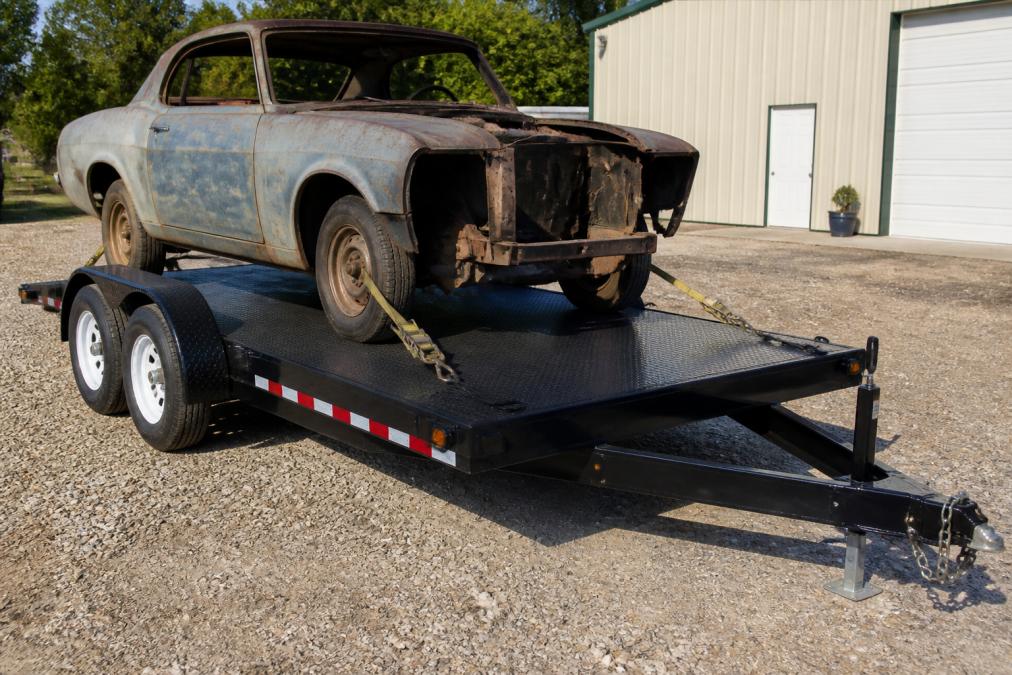
A flatbed carrier is the standard answer for a car that will not start, roll, or steer. The operator winches the vehicle onto a tilting or hydraulic-lift deck, straps it at all four corners, and delivers it. You do nothing but meet the driver. This is the option to pick when the project is a shell, has locked brakes, or sits in a spot a trailer cannot reach. Expect to pay more than a self-tow, and expect to book further out for popular routes.
How to Transport a Non-Running Car Safely
Transporting a non-running car means solving three problems: getting it onto the deck, holding it there, and keeping the load legal. A winch handles the first. Four-point soft-strap tie-downs handle the second. Ratchet straps rated for the car's weight, plus a working brake system on the tow vehicle, handle the third. Never rely on the parking brake alone, and never strap over sheet metal or brake lines.
Loading Techniques That Prevent Damage
- Use a winch or come-along instead of pushing, especially on a car with no brakes
- Route straps around the tires or frame, never over body panels
- Cross the rear straps in an X pattern to stop side-to-side movement
- Check every strap after the first few miles, then again at each fuel stop
- Confirm the ramps are secured before the car rolls onto them
Open vs. Enclosed Car Trailer: Which Protects Your Build?
Open trailers cost less to rent and are easier to load, but the car rides exposed to road debris, weather, and sun. Enclosed trailers shield a fresh paint job or a restored interior from grit and rain, and they deter casual attention at overnight stops. If your project is a driver-quality build heading to a local show, open is fine. If you just paid for a respray or the car is rare, enclosed is worth the extra rental.
4-8. Professional Shipping Companies Compared
Professional shipping makes sense when the distance is long or the car cannot be towed. Brokers post your job to carriers, then a driver picks it up. The trade-offs are timing and control: you give up both in exchange for not owning a truck. Ask each company directly whether it handles non-running vehicles, whether the quote is open or enclosed, and what happens if the pickup window slips. Get the answer in writing before you pay a deposit.
Project Car Transport Cost: What Drives the Price
Project car transport cost depends on distance, whether the car runs, and how much flexibility you offer. A running car on an open carrier is the cheapest professional option. A non-running car needs a winch or liftgate, which adds labor and limits which drivers will take the job. Enclosed transport costs more than open. Flexible pickup windows and booking ahead both lower the price, while a tight deadline raises it. For trailer rentals, rates depend on the trailer type, the rental length, and the dates, so check our site for current pricing or a quote.
Moving a project car is a scheduling problem as much as a logistics one, and the wrong method costs you a weekend or a paint job. If you have a tow vehicle and want to control the timeline, 402 car hauler rentals offers dependable car-hauler trailers, flexible booking terms, and competitive rates for everything from project cars to race vehicles. Our trailers are built for the job, and we work with hobbyists and shop owners alike. Get started with 402 car hauler rentals and haul your build on your own schedule.
Frequently Asked Questions
What is the cheapest way to transport a project car?
Renting a trailer and towing it yourself is typically the lowest-cost option, especially for local moves. A project car trailer rental avoids the per-mile fees that professional carriers charge. For longer distances, open transport through a shipping company costs less than enclosed. Flexible pickup windows and booking about two weeks ahead can also reduce shipping quotes.
How do you transport a non-running project car?
A non-running car needs either a winch-equipped trailer, a flatbed carrier, or a shipping company that handles inoperable vehicles. If you rent a trailer, confirm it has a working winch and enough strap points. Professional shippers like those offering flatbed service can load a non-running car without it moving under its own power. Never use a tow dolly for a car that cannot roll and steer.
Is an open or enclosed trailer better for a project car?
Open trailers cost less and work fine for cars with durable paint or those already in primer. Enclosed trailers protect against road debris, weather, and theft, which matters for finished builds or classic cars with original paint. For a project car in bare metal or fresh paint, enclosed transport is worth the extra cost. For a rough driver, open transport is the practical choice.
Should I rent a car hauler or hire a vehicle shipping company?
Rent a car hauler when you have a capable tow vehicle, the distance is manageable, and you want to control the schedule. Hire a shipping company when you lack a tow vehicle, the distance is long, or the car is too valuable to risk on an open trailer. Shipping companies handle loading, permits, and insurance, which simplifies cross-country moves.
What equipment do you need to haul a project car?
You need a trailer rated for the car's weight, a tow vehicle with adequate towing capacity and a working hitch, four ratchet straps rated for the load, and wheel chocks. A winch helps with non-running cars. Check that straps are not frayed and that tire stops are straight before you leave. Confirm your tow vehicle's rating matches the loaded trailer weight.