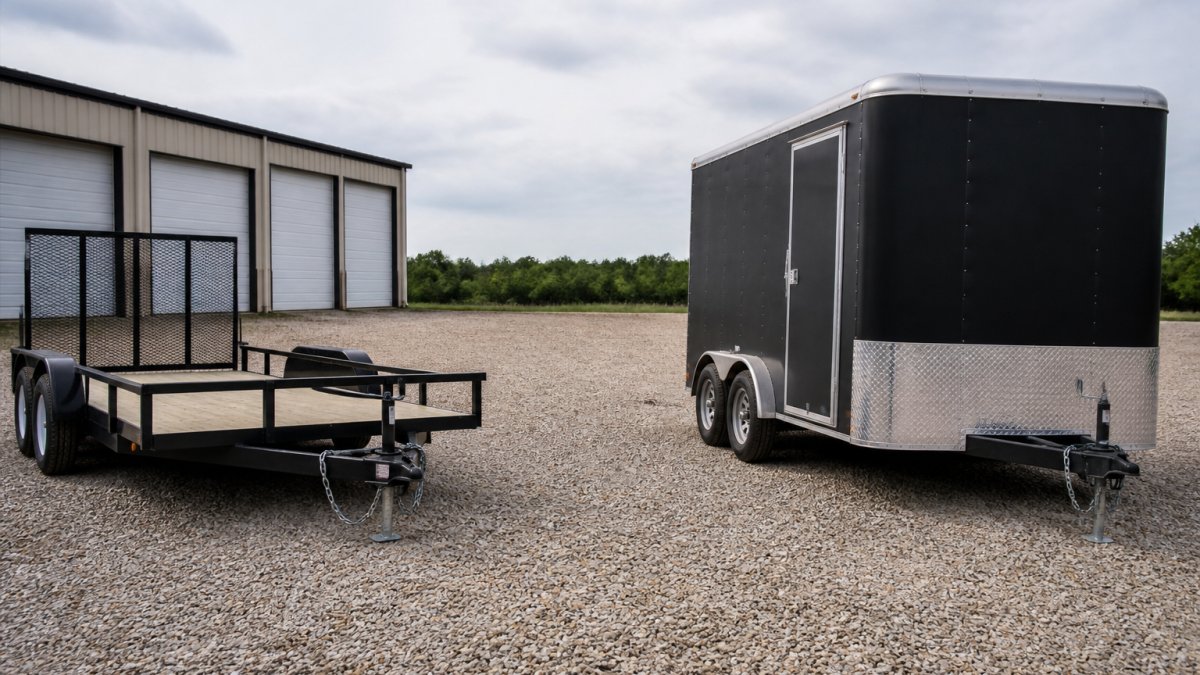
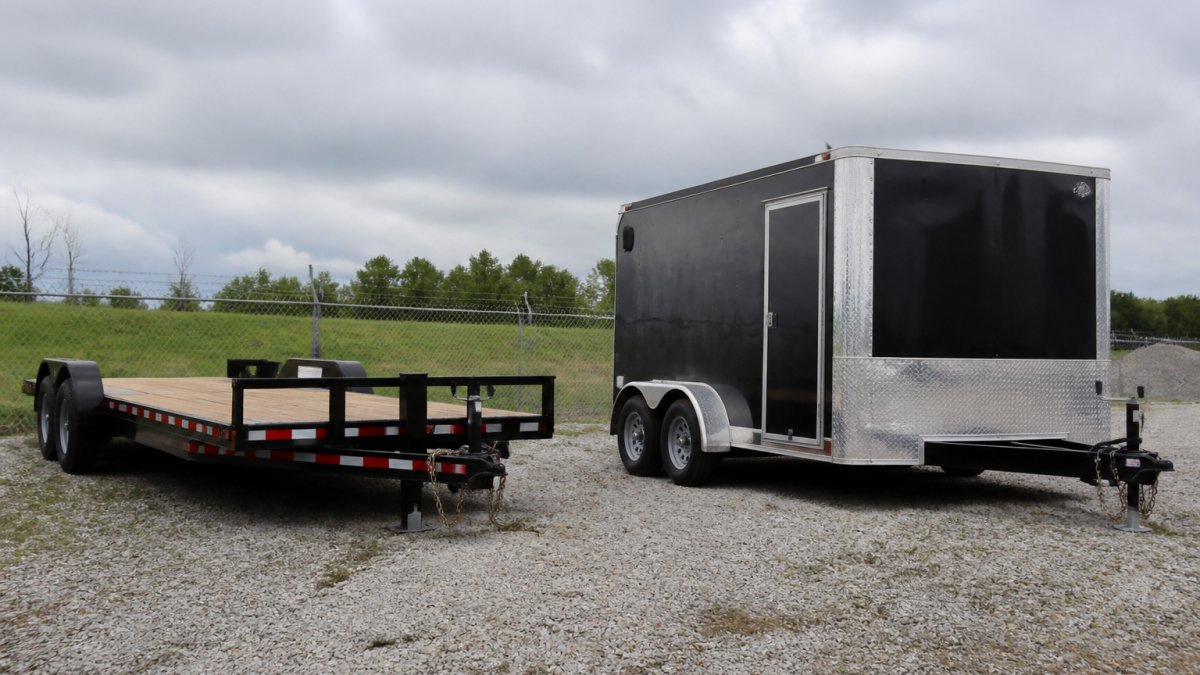
 comparison
Towing vs Flatbed Transport: Key Differences Explained
Table of Contents
- Towing vs Flatbed Transport: What's the Actual Difference?
- Flatbed Towing vs Wheel-Lift Towing: How the Methods Compare
- Flatbed Towing Cost: What Affects the Price
- How to Load a Car Onto a Flatbed Trailer Safely
- Car Hauler Trailer Rental vs Hiring a Tow Service
- When to Choose Flatbed Transport vs a Tow Truck
- Conclusion
- Frequently Asked Questions
Last Updated: October 8, 2026
Towing vs Flatbed Transport: What's the Actual Difference?
The core difference in the towing vs flatbed transport debate comes down to wheels. At 402 car hauler rentals, we know this distinction can trip up customers, because the two terms get used interchangeably in casual conversation even though they describe very different processes.
A common mistake is assuming "transport" always means a tow truck is coming. In practice, transport often means the vehicle is being shipped or hauled for a planned reason, not recovered from a breakdown.
Here's what most guides miss: the method you choose affects wear on your drivetrain, not just your wallet.
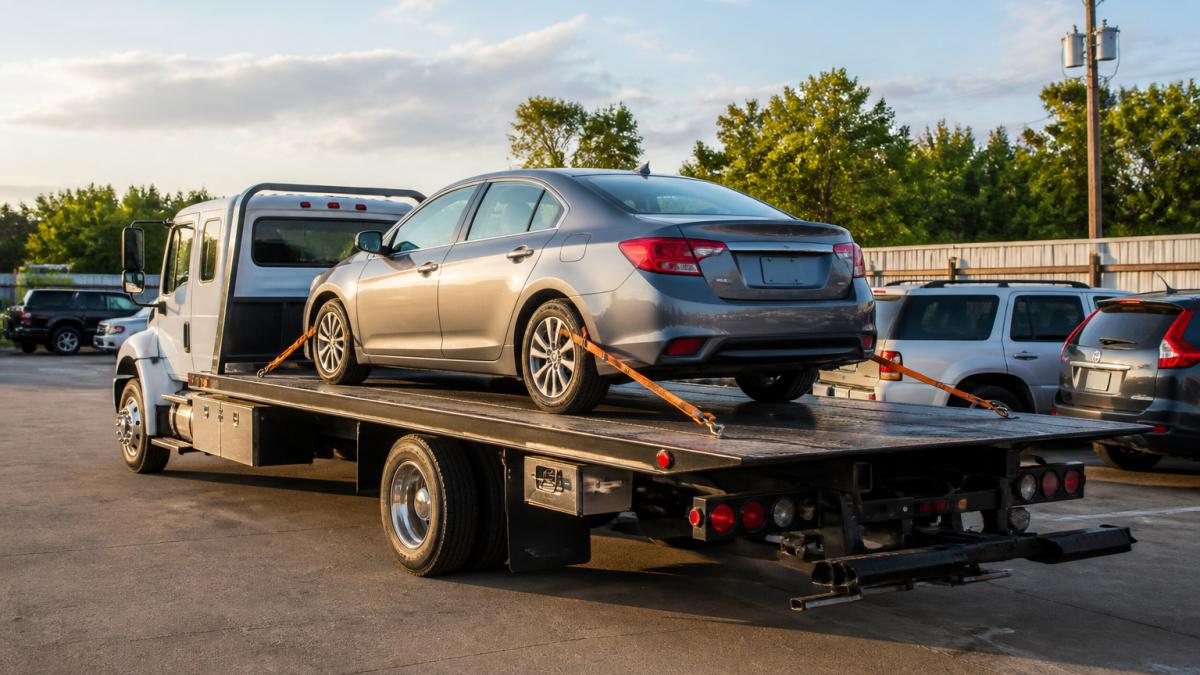
Flatbed Towing vs Wheel-Lift Towing: How the Methods Compare
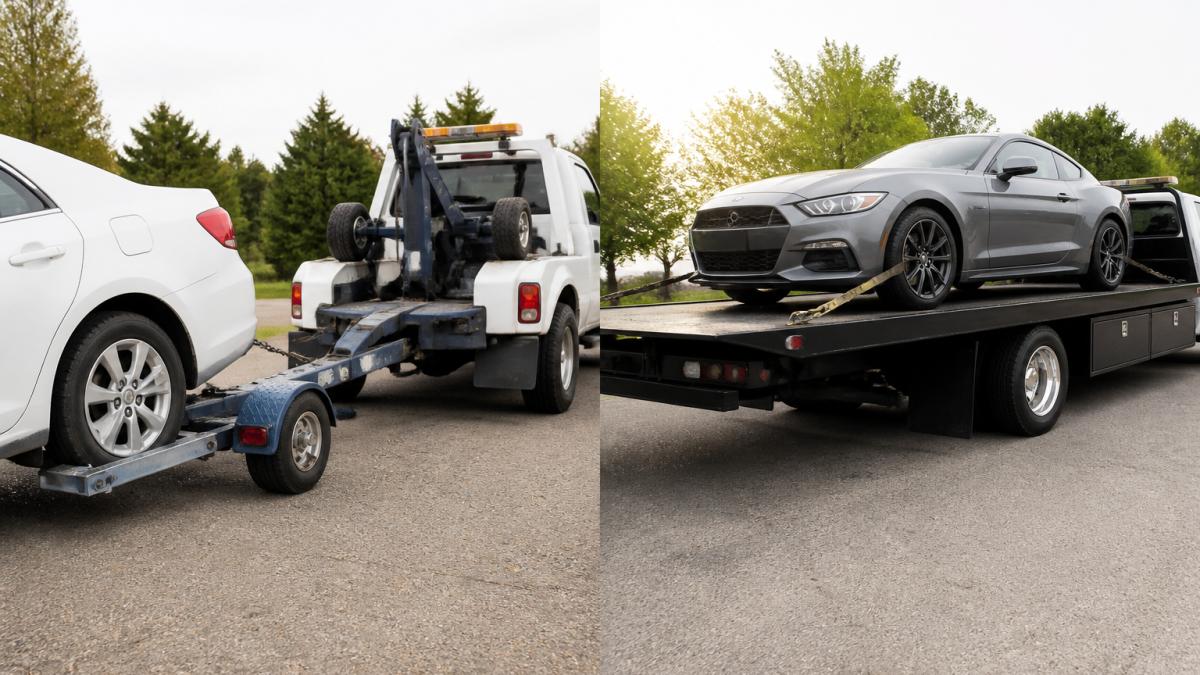
Flatbed towing wins on vehicle protection, while wheel-lift towing wins on speed and maneuverability.
Wheel-lift towing is a recovery method where a tow truck lifts either the front or rear wheels off the ground while the opposite wheels roll on the pavement.
Flatbed transport eliminates that rolling contact entirely. Every wheel sits on the loading platform.
The trade-off is setup time. Flatbeds take longer to load and require more space to position.
| Factor | Flatbed Towing | Wheel-Lift Towing |
|---|---|---|
| Wheel contact | None, all wheels off ground | Two wheels rolling |
| Best for | AWD, low-clearance, damaged vehicles | Standard breakdowns, tight spaces |
| Loading time | Longer | Faster |
| Maneuverability | Limited in tight spots | High |
| Drivetrain risk | Minimal | Higher for AWD and 4WD |
How Each Method Loads and Secures a Vehicle
A flatbed loads by tilting its hydraulic bed to form a ramp. The operator winches or drives the vehicle up until all four tires rest on the platform, then levels the bed and secures it with tie-down straps and wheel straps over each tire. Securement quality is what prevents sliding during turns and stops.
Wheel-lift loading is quicker but less forgiving. The operator positions the cradle under the tires, lifts, and tows. Only two points of contact hold the vehicle, so balance matters more.
Vehicle Types and Drivetrain Considerations
All-wheel drive and four-wheel drive vehicles belong on a flatbed in almost every case. Towing an AWD vehicle with two wheels rolling can damage the transmission and drivetrain, because the system expects all four wheels to turn together. The same risk applies to low-clearance vehicles that would scrape on a wheel-lift cradle.
Passenger cars, SUVs, and trucks all fit flatbed platforms fine. Wheel-lift trucks handle standard front-wheel-drive sedans and smaller SUVs without issue, but they struggle with anything lowered, modified, or all-wheel drive.
- Flatbed preferred: AWD, 4WD, low-clearance, damaged, classic, or race vehicles
- Wheel-lift acceptable: Standard front-wheel-drive cars in normal condition
- Never wheel-lift: Vehicles with drivetrain damage or no rolling capability
Flatbed Towing Cost: What Affects the Price
Flatbed towing cost depends on distance, vehicle weight, recovery conditions, and whether you are paying for emergency roadside recovery or planned long-distance transport.
Local recovery pricing is typically quoted as a hook fee plus a per-mile rate after a small included radius.
Long-distance transport pricing works differently.
Factors that move the number up or down:
- Distance: the dominant variable for transport; a minor variable for local recovery once you are past the hook fee
- Vehicle size and weight: full-size trucks, SUVs, and EVs weigh more and can require heavier equipment or a different trailer class
- Loading difficulty: low clearance, flat tires, no steering, or a confined pickup spot all add time
- Access: a carrier that cannot reach your driveway may require a transfer or a meet point
- Timing: emergency and holiday or event-weekend demand raises prices; flexible dates lower them
- Service type: open vs enclosed, running vs non-running, door-to-door vs terminal-to-terminal
For planned transport rather than emergency recovery, renting a car hauler trailer is often the more economical route. You control the schedule and avoid per-mile towing fees.
Insurance, Liability, and Documentation
Before any tow or transport, confirm who is liable if the vehicle is damaged in transit. A roadside tow arranged through a motor club or insurer may be covered under a roadside assistance benefit, but coverage limits and per-incident caps vary.
Practical steps that protect you:
- Photograph all four sides, the roof, the wheels, and the odometer before loading
- Note existing damage, cracks, or missing parts in writing on the bill of lading
- Remove loose items, toll transponders, and personal property; most carriers exclude them from liability
- Confirm the carrier's insurance certificate and ask what the deductible is on a damage claim
- Keep a copy of the signed condition report until the vehicle is delivered and inspected
A common pattern is that damage disputes are won or lost on the pre-transport condition report. If it is not documented before loading, it is hard to prove after delivery.
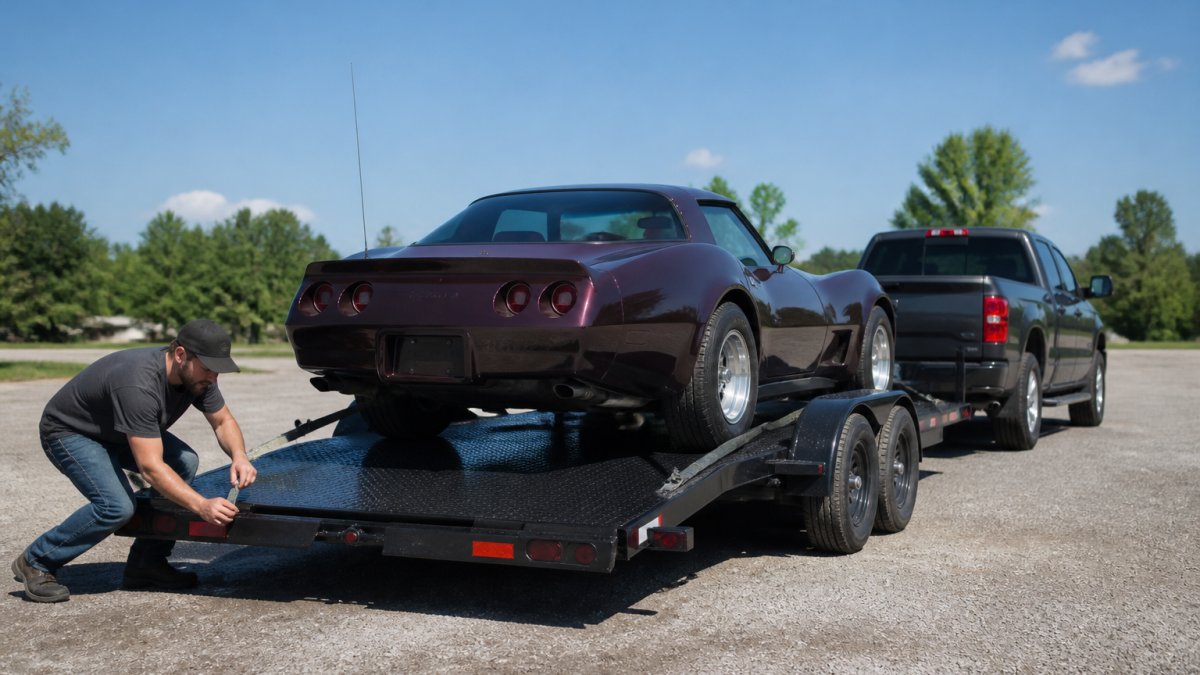
How to Load a Car Onto a Flatbed Trailer Safely
Safe loading follows a fixed sequence: position, align, climb, level, and secure. Skipping any step risks the vehicle rolling or shifting mid-transport.
- Park the trailer on level ground and chock the trailer wheels
- Lower the ramps and check the loading angle against your vehicle's ground clearance
- Line the vehicle up straight with the ramps before moving
- Drive or winch the vehicle up slowly, using a spotter
- Center the vehicle over the axles and set the parking brake
- Attach four tie-down straps at the frame or designated points
- Add wheel straps over each tire and re-check tension after the first few miles
For low-clearance vehicles, use extended ramps or wooden blocks to reduce the loading angle. Never rely on the parking brake alone; straps do the real work.
Car Hauler Trailer Rental vs Hiring a Tow Service
Car hauler trailer rental makes sense when the move is planned, the distance is long, and you have a capable tow vehicle. Hiring a tow service makes sense when the vehicle is disabled, you lack a tow vehicle, or you need it moved today.
Renting gives you schedule control and often a lower total cost for long hauls. It also lets you haul multiple vehicles or equipment over the rental period.
A tow service removes that burden. You pay for convenience and expertise, and you don't touch a strap.
If you're renting, confirm the trailer's towing capacity against your vehicle's weight before you book. Overloading is the most common and most dangerous mistake.
When to Choose Flatbed Transport vs a Tow Truck
Choose flatbed transport for AWD and 4WD vehicles, low-clearance cars, damaged vehicles, electric vehicles, motorcycles, and any planned long-distance move. Choose a wheel-lift tow truck for standard breakdowns, tight urban spaces, and situations where speed matters more than protection.
The deciding factors come down to three questions: Does the vehicle roll safely? Is the drivetrain sensitive to rolling wheels? Is this planned or an emergency?
Vehicle-Specific Guidance
- All-wheel drive and four-wheel drive: flatbed in almost every case. Towing with two wheels rolling can damage the transmission, transfer case, or center differential because the system expects all four wheels to turn together.
- Electric vehicles: flatbed only. EVs have no neutral that fully disconnects the drive motors, and regenerative braking systems can be damaged by spinning wheels. Many manufacturers specify flatbed transport in the owner's manual.
- Low-clearance cars: flatbed with extended ramps. A wheel-lift cradle can catch the bumper, splitter, or underbody.
- Motorcycles: flatbed or a dedicated motorcycle trailer with a wheel chock and soft tie-downs at the triple tree or handlebars, never frame-only straps that let the bike tip.
- Drivetrain or suspension damage: flatbed with winch loading. If a wheel is bent, seized, or missing, the vehicle cannot roll and a wheel-lift cannot safely cradle it.
- Standard front-wheel-drive sedans in normal condition: wheel-lift is acceptable and usually faster.
Decision Guide for Breakdown and Accident Scenarios
Work through these in order:
- Does the vehicle roll and steer? If no, flatbed with winch loading.
- Is any wheel damaged, seized, or missing? If yes, flatbed.
- Is it AWD, 4WD, or an EV? If yes, flatbed regardless of whether it rolls.
- Is the vehicle in a confined space, parking garage, alley, tight curb, where a flatbed cannot position or extend its bed? If yes, a wheel-lift may be the only practical option, even for a vehicle that would otherwise prefer a flatbed.
- Is this planned or an emergency? Planned long-distance moves favor a car hauler trailer or a transport carrier; emergencies favor whichever truck can reach you fastest and safely.
- Planned move, capable tow vehicle: rent a car hauler trailer
- AWD, 4WD, EV, or lowered vehicle: flatbed, always
- Standard breakdown in traffic: wheel-lift tow truck
- Damaged or non-rolling vehicle: flatbed with winch loading
- Confined location, vehicle rolls: wheel-lift may be the only option
Conclusion
Choosing between towing and flatbed transport is really a question of what your vehicle can safely tolerate. Get it wrong with an all-wheel-drive or low-clearance car and you risk drivetrain damage that no tow bill can justify. At 402 car hauler rentals, we offer reliable trailer rentals with flexible terms and competitive rates for project cars, race vehicles, and customer deliveries across the Omaha area. Our trailers are dependable for secure transport, and we work with enthusiasts and shop owners who need scheduling that fits a real project timeline.
Frequently Asked Questions
Is flatbed towing more expensive than wheel-lift towing?
Flatbed towing typically costs more than wheel-lift towing because flatbeds require larger trucks, more fuel, and greater operator skill to load and secure a vehicle. The gap widens with distance. For short local tows, wheel-lift service is usually the cheaper option. For longer trips or higher-value vehicles, the extra cost of a flatbed often makes sense because it reduces damage risk and handles vehicles that cannot roll on their own wheels.
Can an all-wheel-drive car be towed with two wheels on the ground?
No. Towing an all-wheel-drive or four-wheel-drive vehicle with only two wheels on the ground can damage the drivetrain, transmission, and bearings, even over short distances. All four wheels need to be off the ground, which means a flatbed or a tow dolly with the driveshaft disconnected. A flatbed is the safer choice because it lifts the entire vehicle onto a level platform and secures all four wheels with straps.
What is the difference between towing and flatbed transport?
Towing usually refers to roadside recovery, where a tow truck lifts part of a disabled vehicle and pulls it to a shop. Flatbed transport means the entire vehicle rides on a level platform, with all four wheels off the ground and secured with tie-down straps. Towing is a recovery service; flatbed transport is better suited to moving vehicles that run, need protection from damage, or are traveling long distances.
When should I choose flatbed transport instead of a tow truck?
Choose flatbed transport for low-clearance vehicles, all-wheel-drive and four-wheel-drive cars, damaged vehicles that cannot roll, classic or race cars, and any trip where damage risk matters. Flatbeds also handle long distances better because the load stays stable at highway speed. A wheel-lift tow truck works fine for short local tows of front-wheel-drive vehicles with no body damage.
How do I load a car onto a flatbed trailer without damaging it?
Line the vehicle up straight with the ramps, check that the ramps are rated for the vehicle's weight, and drive up slowly at a steady speed. Once loaded, set the parking brake, put the transmission in park or gear, and secure all four wheels with wheel straps or tie-down straps rated above the vehicle weight. Recheck the straps after the first few miles, since they can loosen as the suspension settles.