 comparison
Local vs. National Trailer Rentals: Which Wins?
Table of Contents
- Local Trailer Rental vs. National Chains: Key Differences
- Trailer Rental Prices and Fees: What You Actually Pay
- Availability, Fleet Selection, and Same-Day Rental Options
- Questions to Ask Before Renting a Trailer
- Trailer Rental Pickup and Return Policies
- Trailer Rental Checklist: What to Verify Before You Drive
- Which Option Fits Your Hauling Needs?
- Frequently Asked Questions
Last Updated: October 21, 2026
Local Trailer Rental vs. National Chains: Key Differences
Choosing between a local trailer rental provider and a national chain affects price, availability, flexibility, and how problems get handled.
Local operators build relationships and adjust terms.
Trailer Rental Prices and Fees: What You Actually Pay
The advertised daily rate isn't the final bill. To compare a local provider against a national chain, price the same job line by line, the total is what hits your card.
Build a like-for-like quote
Ask every provider for the same seven line items on the same scenario. If they won't itemize, that's a data point.
- Base rate for the exact trailer type and the exact number of rental days (including whether a "day" is 24 hours or a calendar day).
- Mileage, unlimited, included allowance, or per-mile charge, and what the per-mile rate is after the allowance.
- Delivery and pickup, flat fee, per-mile fee, or free within a radius, plus any after-hours surcharge.
- Deposit, amount, whether it is a hold or a charge, and how many business days the refund takes.
- Insurance or damage waiver, daily rate, what it actually covers, and whether it is optional or required.
- Late return and extension fees, hourly vs. full-day, and whether an extension is charged at the walk-up rate.
- Taxes and surcharges, sales tax, vehicle/rental surcharges, and any airport or facility fee.
Sample scenario: a 3-day, 240-mile car hauler rental
The numbers below are illustrative, replace them with live quotes. The structure exposes where the total diverges from the headline.
| Line item | National chain (illustrative) | Local provider (illustrative) |
|---|---|---|
| Base rate (3 days) | $55/day = $165 | $70/day = $210 |
| Mileage (240 mi) | 100 mi included, then $0.35/mi = $49 | Unlimited |
| Delivery/pickup | $0 (counter pickup) | $0 (counter pickup) |
| Deposit hold | $150 hold, 5-7 business days to release | $100 hold, 3-5 business days to release |
| Damage waiver | $14/day = $42 | $10/day = $30 (optional) |
| Late/extension | Full-day rate, no grace | 2-hour grace, then hourly |
| Taxes and surcharges | ~9% = ~$23 | ~7% = ~$17 |
| Estimated total | ~$279 | ~$257 |
Here the chain's lower headline rate ($55 vs. $70) loses on total cost once mileage and the waiver are added. At 60 miles, the chain wins. The cheaper provider depends on mileage, days, and waiver, not the advertised rate.
The fees that decide the total
- Mileage is the biggest swing factor. A 200-mile round trip at $0.35/mile adds $70. Ask whether the allowance resets daily or is per rental.
- Deposits aren't a cost if refunded, but a large hold ties up cash. Ask whether it's a hold or a charge and the release timeline.
- Damage waivers are often optional but pushed at the counter. Compare the daily rate and exclusions (commonly tire and wheel damage).
- Late fees punish schedule slippage: a two-hour grace versus a full-day charge can mean a $70 difference on a one-day overrun.
- Fuel and cleaning charges appear at return. Get the return-fuel policy and cleaning fee threshold in writing.
Why local quotes often look higher but cost less
Local operators bundle mileage and waivers, so quotes look higher up front and lower at the bottom; chains unbundle, so the base rate looks lower and add-ons arrive later. Compare itemized totals, not daily rates.
Availability, Fleet Selection, and Same-Day Rental Options
Availability is four separate questions: does the provider have your trailer type, on your dates, can it get it to you, and what happens if it fails mid-rental. Local providers and chains answer differently, and the right choice flips based on which question matters most.
The four availability questions
| Question | National chain pattern | Local provider pattern |
|---|---|---|
| Fleet fit | Standard trailer types in volume; limited customization | Narrower fleet, often specialized (e.g., car haulers configured for classics or race cars) |
| Date certainty | High turnover, but a fully booked lot means no trailer | Smaller inventory; can sometimes source from partner lots or adjust schedule |
| Delivery reach | Delivery in select metros, often with a fee and radius limit | Delivery/pickup often negotiable, especially for longer or repeat rentals |
| Backup if it breaks | Multiple locations can sometimes swap a unit | Same-day swap depends on spare inventory; relationship speeds resolution |
When the national network's footprint wins
A national chain's broader coverage wins when:
- One-way and multi-city rentals. Dropping a trailer in a different metro often requires a national network's branch footprint. Confirm one-way availability and the drop fee first.
- A replacement far from home. If a trailer fails 300 miles out, a nearby chain branch may swap it faster than a local operator can dispatch.
- Standard equipment in an unfamiliar market. A chain's standardized fleet reduces the risk of an unfamiliar configuration where you have no relationship.
- After-hours national support. Some chains offer a national phone line; ask whether it's staffed 24/7 and what it can authorize.
When local flexibility wins
- Specialized configuration. A car hauler set up for a low-clearance classic or race car with specific tie-down points isn't a standard SKU, it's a local specialist's core business.
- Tight or unusual schedules. Early-morning pickup, Sunday return, or a same-day request a chain's lot can't fill is where a local operator can adjust.
- Repeat rentals. Rent monthly and a local provider can hold a unit, prioritize your dates, and structure terms around your workflow.
- Backup through relationships. A local operator who knows your job can source a spare from a partner lot or prioritize your swap.
Same-day rental: what to actually ask
Same-day availability is where marketing and reality diverge most. Ask these before you drive over:
- Is the trailer physically on the lot now, in the exact configuration I need? "Available" sometimes means "available to reserve."
- What time does the lot close, and can I pick up after that? A trailer that can't be released until morning isn't same-day.
- If this unit is booked, can you hold one at another location? Chains often can't transfer between branches on short notice; local operators sometimes can through partners.
- What's the cancellation or no-show policy for a same-day reservation? Confirm whether a hold deposit is refundable.
A simple decision rule
- Choose the national network when you need one-way or multi-city drop, standard equipment in an unfamiliar market, or a national support line as backup.
- Choose the local provider when you need a specialized configuration, an unusual pickup/return window, a same-day unit, or a repeat-rental relationship with priority scheduling.
- When both could work, price the same scenario and ask each provider the four availability questions. The answers, not the brand, should decide it.
Questions to Ask Before Renting a Trailer
Before you sign any rental agreement, ask these questions. The answers reveal whether a provider will actually serve your needs.
What's included in the rental price? Ask about insurance, mileage allowance, fuel charges, and late-return penalties, and get it in writing.
Do you require specific towing vehicle documentation? Some operators restrict towing by vehicle age, capacity, or insurance.
What happens if I need to extend my rental? Chains charge premium extension rates assuming the trailer is booked next; local operators often have flexibility, especially for regulars.
Can you guarantee availability for my specific dates? Ask whether they'll hold a trailer with a deposit or if it's first-come, first-served.
Trailer Rental Pickup and Return Policies
Pickup and return policies expose the biggest operational differences between local and national providers.
National chains run strict time windows: pick up during business hours, return by closing or pay late fees.
Local providers build flexibility in because they work directly with customers: early-morning pickup and Sunday returns are arrangements they can make.
Return condition matters too. Chains inspect for damage and charge for any mark beyond normal wear, a definition that varies and breeds disputes.
Delivery differs too: some chains offer it, but expensively and only in certain areas.
Paperwork differs as well: chains use standardized contracts with little negotiation, while local operators can adjust terms and structure agreements around a regular business's workflow.
Trailer Rental Checklist: What to Verify Before You Drive
Inspect the trailer thoroughly before leaving the lot, it protects you from liability for pre-existing damage and confirms the equipment is safe.
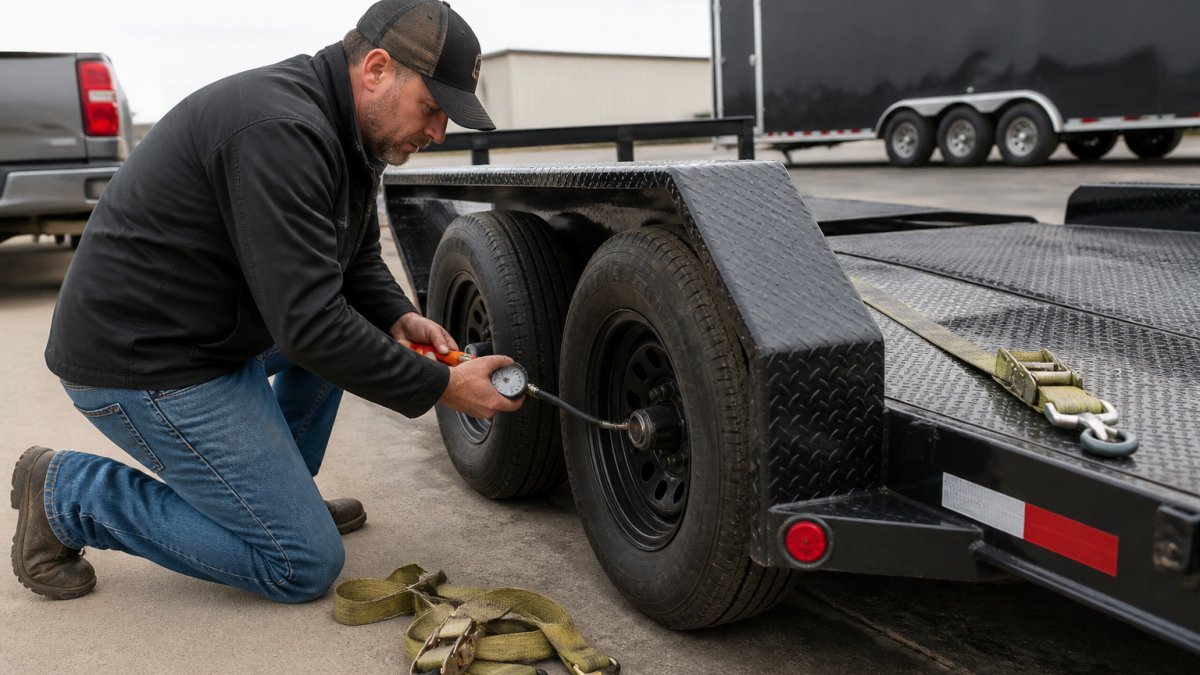
Structural integrity: Walk the whole trailer for rust, dents, bent frames, or cracked welds, and photograph any damage.
Safety equipment: Test all lights, brake lights, turn signals, and running lights; verify reflectors are intact; check the safety chain is secure and not frayed; test the emergency brake if equipped.
Coupling and hitch: Verify the hitch ball matches your coupler, the coupler is secure and uncracked, and the safety pin is present and functional.
Documentation: Get a written condition report, photograph the trailer before leaving, and note pre-existing damage on the agreement to protect yourself in return disputes.
Chains provide checklists, but enforcement varies by location. Local providers walk through the inspection with you so you're confident the equipment is safe and maintained.
Which Option Fits Your Hauling Needs?
The right choice depends on your situation, not just which option is cheaper.
Choose a national chain if: you need a standard trailer type in a major metro, value consistency and brand recognition, and are comfortable with standardized policies. Chains suit occasional renters needing basic equipment.
Choose a local provider if: you need specialized equipment, flexible pickup and return times, transparent all-inclusive pricing, relationship-based terms for regular rentals, or someone who understands your specific hauling requirements. Local providers excel for businesses, repeat renters, and non-standard needs.
Ultimately: do you need standardized convenience, or a provider who understands your specific job and works with you to make the rental efficient?
Frequently Asked Questions
Are local trailer rentals cheaper than national chains?
Local trailer rental providers often have lower overhead costs than national chains, which can translate to competitive pricing. However, cost depends on rental period, trailer type, and current demand. The real difference is transparency: local providers typically quote all-in pricing upfront, while national chains may add hidden fees. Request a complete cost breakdown from any provider, local or national, before booking.
What should I compare before renting a trailer?
Start with the essentials: daily or weekly rate, insurance coverage, deposit requirements, mileage limits, and cancellation policy. Then verify trailer condition, towing compatibility with your vehicle, pickup and return hours, and whether same-day rental is available. Ask about their maintenance schedule and what happens if equipment fails during your rental. Local providers can often customize terms; national chains follow fixed policies.
Do local trailer rental companies offer more flexible pickup and return times?
Many local trailer rental businesses do offer flexible scheduling because they operate with smaller fleets and more personalized service. National chains typically enforce strict business hours and standard rental periods. If scheduling flexibility is critical, especially for weekend events or last-minute jobs, ask your local provider directly about their availability. This is one of the strongest advantages of renting locally.
What's the difference between renting a trailer locally versus through a marketplace?
Local trailer rental companies own and maintain their fleet directly, so you have one point of contact and clear accountability if something goes wrong. Rental marketplaces connect you with individual owners, which can mean lower prices but also less standardization in trailer condition and customer service. Local rental businesses typically provide insurance options, maintenance guarantees, and a known service area; peer-to-peer rentals shift more responsibility to you.
Renting a trailer shouldn't mean choosing between affordability and reliability. At 402 car hauler rentals, we provide flexible booking terms, competitive rates, and trailers configured specifically for car hauling, whether you're transporting a project car, a classic vehicle, or multiple cars for your business. Get a transparent quote for your next hauling job and see why local expertise beats national standardization.