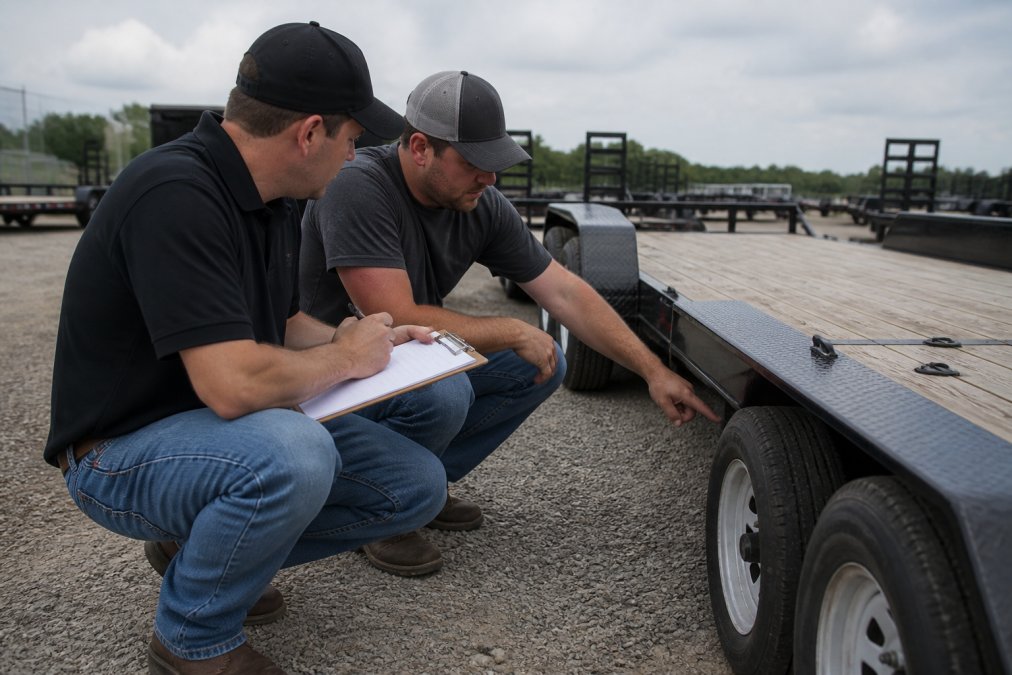
 ultimate-guide
Trailer Rental Hidden Fee Guide: Costs to Expect
Table of Contents
- Daily Rates, Deposits, and What the Base Price Leaves Out
- Mandatory vs. Optional Fees: Reading the Rental Agreement
- Trailer Rental Insurance Requirements and Damage Waivers
- How to Calculate Trailer Rental Total Cost Before You Book
- Avoiding Trailer Rental Cleaning Fees and Damage Charges
- Towing Vehicle Compatibility, State Fees, and Contract Fine Print
- Frequently Asked Questions
Last Updated: September 12, 2026
Daily Rates, Deposits, and What the Base Price Leaves Out
A trailer rental hidden fee guide starts with the number most renters never question: the advertised daily rate, which is where any good trailer rental hidden fee guide begins. That figure is real, but it is rarely the number you pay. The base price covers the trailer and a set rental period. Everything else, from deposits to environmental charges, sits outside it.
The daily rate is the advertised cost to rent a trailer for a 24-hour period, before taxes, deposits, insurance, and optional add-ons. Most rental yards quote this number because it is the easiest to compare. It is also the least useful for budgeting.
Two charges sit closest to the surface:
- Security deposit: A refundable hold placed on your card at pickup. It is not a fee unless you damage the trailer or return it late.
- Upfront charge: The deposit plus the first day's rate, collected before you drive off the lot.
The gap between base price and final bill is where most disputes begin. Renters who ask for the out-the-door total before signing avoid that gap entirely. Ask for the out-the-door total before signing to avoid surprises at the counter.
Mandatory vs. Optional Fees: Reading the Rental Agreement
The fastest way to control costs is to separate fees you cannot decline from fees you can. A rental agreement typically lists both in the same block of text, which is exactly why they get confused.
Mandatory fees apply to every rental. They include sales tax, a state or local environmental fee where one exists, and any administrative charge disclosed in the contract. You cannot negotiate these away.
Optional fees are add-ons. Damage waivers, accessory rentals, and extended coverage fall here. You can decline them, but declining shifts risk back to you.
| Fee Type | Mandatory? | Can You Decline? | Typical Trigger |
|---|---|---|---|
| Sales tax | Yes | No | Every rental |
| Environmental fee | Yes | No | Where state or local law requires it |
| Administrative charge | Yes | No | Every rental |
| Damage waiver | No | Yes | Optional coverage |
| Accessory rental | No | Yes | Straps, ramps, tie-downs |
| Cleaning charge | Conditional | Only by returning it clean | Excess dirt or debris |
The fine print matters more than the headline rate. Read the section labeled "Additional Charges" before you sign anything.
Trailer Rental Insurance Requirements and Damage Waivers
Trailer rental insurance requirements vary by state and by rental company, and this is where the biggest cost swing lives. Some yards require proof of coverage before pickup. Others sell you a damage waiver at the counter. A few require both. The order in which you resolve this determines whether you pay for coverage you already have.
A damage waiver is not insurance. It is a contractual agreement that the rental company will not charge you for certain damage during the rental period, provided you were not negligent. It typically excludes theft, tire damage, damage from misuse or overload, and damage that occurs while the trailer is detached from your vehicle. Read the exclusion list before you accept it, a waiver that sounds comprehensive often carries a short list of exceptions that cover the most common real-world failures.
How coverage stacks
Three sources can pay for trailer damage, and they apply in a specific order:
- Your personal auto policy. Many policies extend physical damage coverage to a trailer you are towing, but only if the trailer is attached to a covered vehicle and only up to the policy's liability or comprehensive limits. Some policies exclude trailers entirely. This is the single most important thing to confirm.
- Your credit card. Certain cards offer secondary rental coverage, but most exclude trailers, cargo, and vehicles over a weight threshold. Do not assume a card benefit applies to a towed trailer.
- The rental company's damage waiver. This is the fallback when the first two do not apply. It is priced per day and is usually the most expensive option per unit of coverage.
What to confirm before you book
- Whether your auto policy extends to a towed trailer, and at what limit
- Whether the rental company requires proof of that coverage at pickup
- What the damage waiver actually excludes, in writing
- Whether the waiver covers theft or only collision and damage
- Whether a deductible applies to the waiver itself
The dollar exposure you are actually insuring
A damage waiver is only worth its daily cost if the potential loss exceeds that cost. The exposure is not just the trailer's repair bill. It is the repair bill plus the rental company's loss-of-use charge while the trailer is out of service, plus any administrative fee the contract allows. On a utility trailer, a bent axle or damaged ramp can easily exceed the cost of a week of waiver coverage. On a small open trailer with minimal components, the math often runs the other way. Run the comparison before you decline.
State requirements
A handful of states require rental companies to offer liability coverage or to disclose whether the renter's insurance applies. Requirements vary, and they change. Ask the rental company which coverage is mandatory in your state and confirm the answer against your state motor vehicle agency's published guidance rather than relying on the counter agent's summary.
How to Calculate Trailer Rental Total Cost Before You Book
Learning how to calculate trailer rental total cost takes about five minutes and saves arguments later. The formula is simple: base rate times rental period, plus mandatory fees, plus optional coverage you accept, plus a buffer for conditional charges.
Work through it in this order:
- Base price: Daily rate multiplied by the number of days, including the return day if the rental period crosses it.
- Mandatory fees: Add tax and any environmental or administrative charge disclosed in the contract.
- Coverage: Add the damage waiver or confirm your own insurance applies.
- Accessories: Add any accessory rental you need, such as straps or ramps.
- Conditional charges: Set aside a buffer for cleaning, fuel, or late return.
That buffer is not paranoia. It is the difference between a planned cost and an unplanned one.
Avoiding Trailer Rental Cleaning Fees and Damage Charges
Most cleaning and damage charges are avoidable, and the work happens before you leave the lot, not after. A documented pre-rental inspection is your best protection against paying for damage you did not cause.
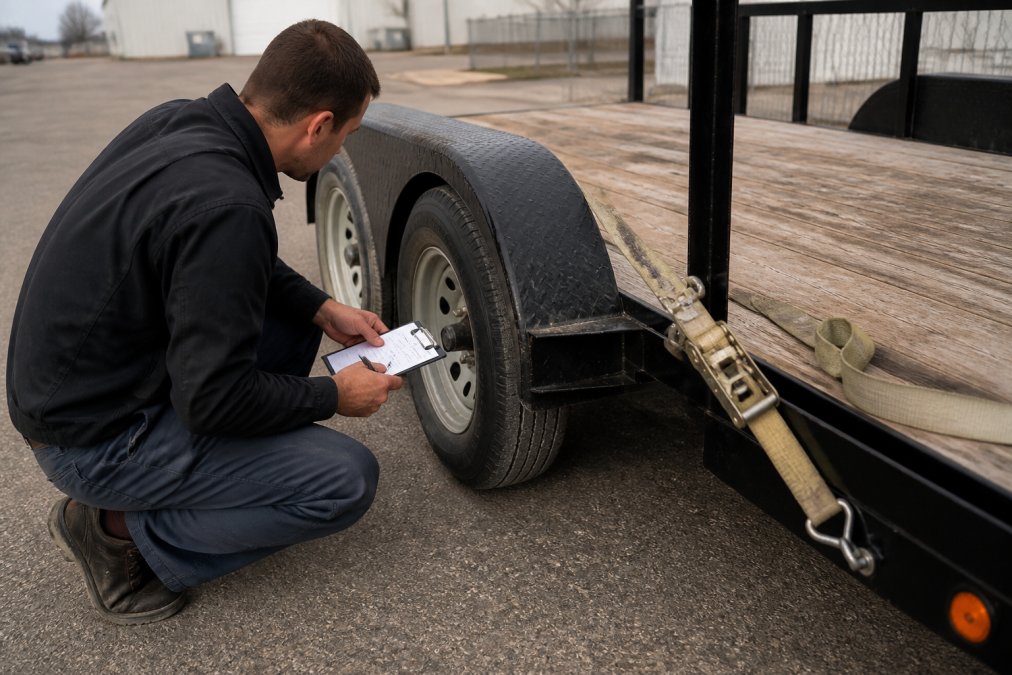
Walk the trailer with the rental agent present. Photograph every pre-existing scratch, dent, and bent tie-down point. Note the tire condition and the strap quality. If a strap is frayed, ask for a replacement before you tow.
On return, sweep out debris and remove any mud or gravel you tracked in. A trailer returned in the condition it left rarely triggers a cleaning charge.
Pre-Rental Inspection Checklist
- Photograph all four sides and the deck
- Note every pre-existing dent, scratch, or rust spot
- Check tire tread and sidewall condition
- Inspect straps and tie-down points for fraying or bends
- Confirm lights, brakes, and coupler function
- Verify the hitch and ball size match your towing vehicle
- Get the agent's signature on the condition report
Towing Vehicle Compatibility, State Fees, and Contract Fine Print
Two things sink more rentals than any fee: an incompatible towing vehicle and a contract clause nobody read. Both are preventable with a five-minute check. This section covers the verification procedure, the fee categories most guides skip, and a plain-language glossary of the contract terms that hide financial liability.
Towing vehicle compatibility: the three-number check
Compatibility comes down to three numbers, and all three must clear before you book:
- Your vehicle's towing capacity. Find it in your owner's manual under "Towing" or on the driver's door jamb sticker. It is the maximum loaded weight your vehicle is rated to pull, including the trailer and everything on it.
- The trailer's loaded weight. This is the trailer's empty weight plus the weight of your cargo. A car hauler carrying a project car can easily exceed the empty trailer weight by several thousand pounds.
- Your hitch rating. The hitch and ball have their own weight limits, stamped on the hitch itself. A hitch rated below the loaded trailer weight is a hard stop, regardless of what your vehicle can pull.
Exceed any one of the three and you are outside the rental agreement, which can void your coverage entirely. Rental yards commonly reject a pickup at the counter when the tow vehicle does not match the trailer, and some contracts treat that rejection as a cancellation subject to a fee. Verify before you drive to the lot.
State-specific regulatory fees
Most guides ignore regional surcharges, but they show up on real invoices. Common categories include:
- Environmental or tire fees levied on trailer rentals in some jurisdictions
- Vehicle registration or trip permit fees for one-way rentals that cross state lines
- Local surcharges applied by municipalities on commercial rental transactions
- Sales tax, which varies by state and sometimes by county or city
Because these change and vary by jurisdiction, confirm the current amounts with the rental company and your state motor vehicle agency rather than assuming. Ask for the fee breakdown in writing before you sign.
Contract fine print: a plain-language glossary
Rental agreements use terms that shift financial liability without saying so directly. Watch for these:
- Normal wear. The contract's definition of what does not count as damage. If the definition is narrow, more of what you return can be billed as damage.
- Loss of use. A charge for the rental income the company loses while the trailer is being repaired. It is separate from the repair cost and is often the largest line on a damage invoice.
- Administrative fee. A flat charge the company adds when it processes a damage or cleaning claim. It applies even if the underlying charge is small.
- Mileage surcharge. A per-mile charge that applies above a stated allowance, common on one-way rentals.
- Grace period. The window after the due time before a late fee applies. Many contracts have no grace period at all.
- Condition report. The document that records the trailer's condition at pickup. If it is blank or unsigned, you have no proof of pre-existing damage.
- Indemnification. A clause that makes you responsible for claims arising from the rental, sometimes beyond your own negligence.
One-way vs. round-trip structures
A one-way rental often costs more than a round-trip because the company has to reposition the trailer. The one-way premium can appear as a higher daily rate, a separate drop fee, or a mileage surcharge. Compare the out-the-door total for both structures before you commit.
Pre-rental inspection checklist
Use this before you leave the lot. Document everything, and get the agent's signature on the condition report.
- Photograph all four sides, the deck, and the underside
- Note every pre-existing dent, scratch, rust spot, or bent component
- Check tire tread and sidewall condition on all wheels
- Inspect straps, chains, and tie-down points for fraying or bends
- Confirm lights, brakes, and coupler function
- Verify the hitch and ball size match your towing vehicle
- Confirm the loaded weight is within your vehicle's towing capacity and hitch rating
- Get the agent's signature on the condition report
- Keep a copy of the signed report and your photos until the deposit is refunded
For a pre-rental walkthrough, the NHTSA towing safety guidance covers hitch ratings and load limits in plain terms. On fee disclosure, the FTC guidance on advertising and consumer disclosures explains what businesses must state upfront. For state-level fee and registration questions, check your state motor vehicle agency.
Frequently Asked Questions
What are the most common hidden fees in trailer rentals?
The fees that catch renters off guard include environmental and administrative charges, cleaning fees if the trailer comes back dirty, late return penalties, mileage surcharges on one-way rentals, and damage waiver costs that are optional but often presented as required. Security deposits and insurance can also add to the base rate. Ask for a full written breakdown before you sign the rental agreement so the final bill matches the quote.
Are insurance and protection plans mandatory for trailer rentals?
Most rental companies require proof of liability coverage, either through your auto policy or a purchased plan. Damage waivers are usually optional but carry exclusions for things like tire damage or overhead collisions. Check whether your personal auto policy extends to a rented trailer before you pay for extra coverage. If it does, you may be able to decline the waiver and save money.
How do late return fees and cleaning charges impact my final bill?
Late fees often run hourly or daily and can exceed the original daily rate if you keep the trailer past the grace period. Cleaning charges apply when the trailer comes back with mud, debris, or spilled cargo, and they are typically flat fees that vary by trailer category. Document the trailer's condition at pickup with photos so you are not billed for pre-existing damage or dirt you did not cause.
What is the difference between a base rate and total rental cost?
The base rate is the advertised daily price for the trailer itself. The total rental cost adds the security deposit, insurance or damage waiver, environmental and administrative fees, taxes, and any accessories like straps or hitches. One-way rentals also add a drop fee. Always ask for the out-the-door total before booking so you can compare quotes accurately across rental companies.
How can I verify my trailer rental quote before signing?
Request an itemized written estimate that lists the daily rate, deposit, all mandatory and optional fees, and the return deadline. Read the contract fine print for mileage surcharges, cleaning charges, and late fee terms. Confirm the towing capacity matches your vehicle and that the hitch and wiring are compatible. If any charge is unclear, ask for it in writing before you sign.