 how-to
Towing Project Cars Safely in Omaha: A 2026 Guide
Table of Contents
- Why Towing a Project Car in Omaha Needs a Different Approach
- Step 1: Match Your Truck to the Trailer and Car
- Step 2: Understand Car Hauler Rental Requirements
- Step 3: How to Secure a Car on a Trailer That Won't Roll
- Step 4: Check Local Omaha Permits and Towing Regulations
- Common Mistakes to Avoid When Towing Project Cars
- Final Checklist Before You Hit the Road
- Frequently Asked Questions
Last Updated: September 9, 2026
Why Towing a Project Car in Omaha Needs a Different Approach
Towing project cars safely in Omaha requires more than hooking up a strap, especially when the vehicle hasn't moved in years. A non-running project car with seized brakes, dead suspension, or missing drivetrain components behaves nothing like a road-ready vehicle.
This guide walks through the complete process of towing project cars safely in Omaha, from matching your truck to the load to understanding local permit rules.
Step 1: Match Your Truck to the Trailer and Car
Your truck's towing capacity must exceed the combined weight of the trailer and the car, based on the manufacturer's gross vehicle weight rating.
Add the car's curb weight to the trailer's empty weight, compare that total against your truck's rated capacity, and leave at least 10 to 15 percent margin for gear, tools, and passengers. Many half-ton pickups are rated for the load on paper but struggle with braking and stability once loaded.
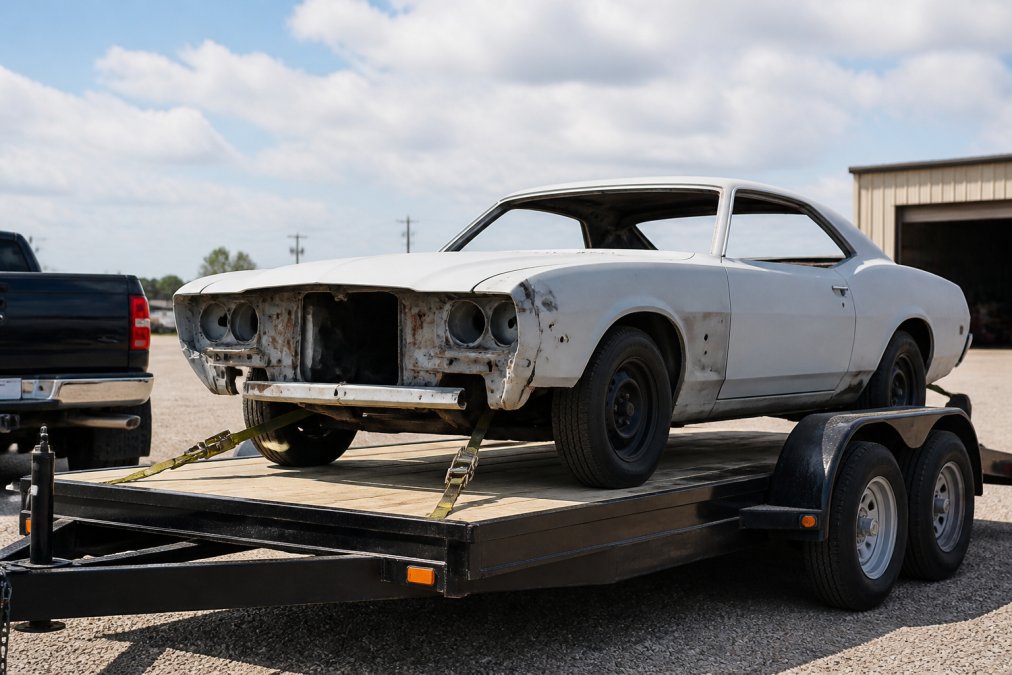
Don't assume a project car weighs less because parts have been removed. An engine-less shell still carries significant weight in the frame, axles, and body panels.
Step 2: Understand Car Hauler Rental Requirements
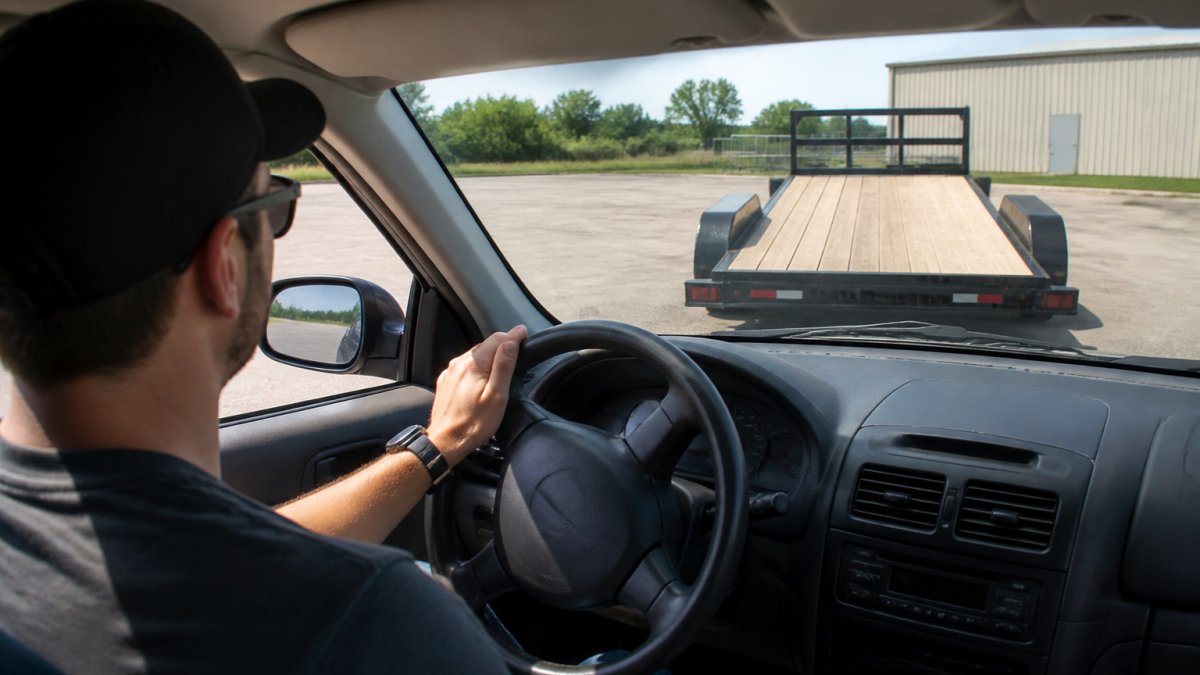
Car hauler rental requirements vary by provider, but most agreements require a trailer hitch rated for the load, functioning trailer brakes above a certain weight threshold, and a brake controller.
Before you book, ask about policies. You will typically need proof of insurance, a valid driver's license, and confirmation that your truck has the correct hitch class and electrical connector. If your truck is modified or older, confirm it meets their requirements.
At 402 car hauler rentals, our trailers are well-maintained. We offer flexible terms because project car timelines shift, and we work with owners whose trucks are not exactly stock. The key is asking the right questions before you commit.
Step 3: How to Secure a Car on a Trailer That Won't Roll
Securing a car on a trailer that won't roll is where most damage occurs. A non-rolling car cannot be winched into place with its own brakes, so you must control every movement manually.
Pre-Winch Setup: Assess and Prepare the Car
Before backing the trailer up to the car, do a full walk-around. If the tires are flat or dry-rotted, they can shred during loading. For a car with seized brakes, use wheel dollies under the locked wheels.
If the suspension is collapsed or the car sits on the frame, you cannot simply winch it up the ramps, the frame will drag. Use a hydraulic lift or heavy-duty ramps to raise the car enough to clear the trailer deck's approach angle.
The Winching Process: Controlled, Not Forced
Position the trailer as close to level with the car as possible. With the trailer chocked and the tow vehicle's parking brake set, attach the winch hook to a solid point on the car's frame, never to a bumper, control arm, or any part that can bend or shear. The ideal point is a factory tow hook, a frame crossmember, or a reinforced hole in the frame rail.
Engage the winch slowly, a steady, controlled pull, not a jerk. Have a spotter on each side to watch the tires or dollies tracking straight. If the car veers, stop the winch immediately and correct the angle. Once the car is on the deck, keep the winch engaged and under tension while you position the tie-down straps.
Positioning for Balance: The 60/40 Rule
Aim for roughly 60 percent of the car's weight forward of the trailer's axle center. This keeps tongue weight positive, meaning the trailer presses down on the hitch ball rather than lifting it. A rear-heavy trailer will fishtail at highway speed. A tongue weight of 10 to 15 percent of the total loaded trailer weight is the safe zone.
Securing the Frame, Not the Body Panels
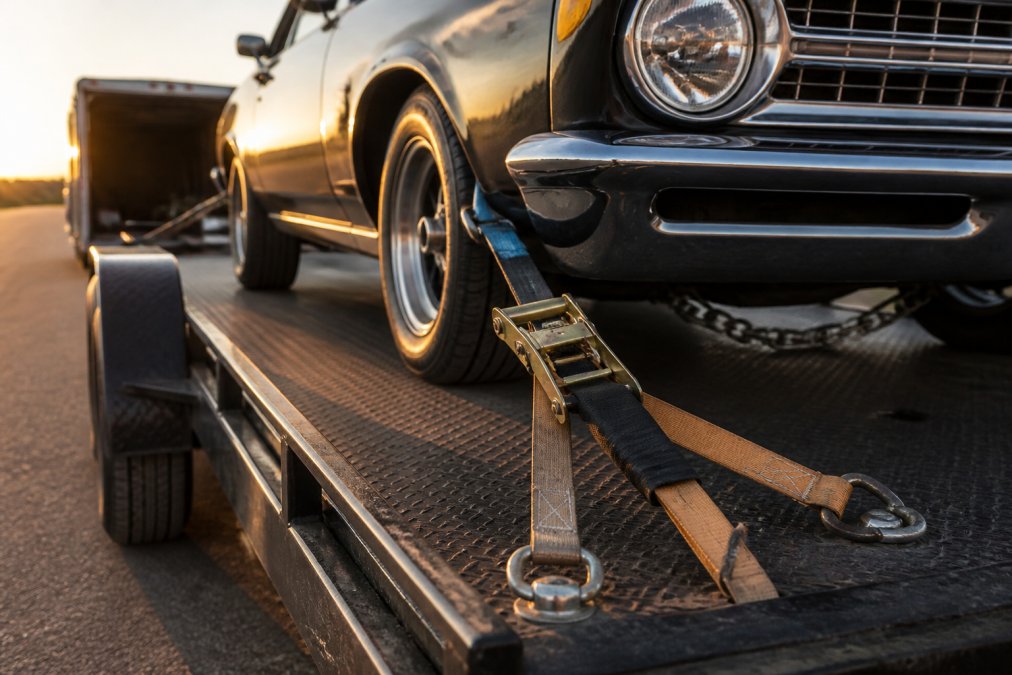
Attach straps to the frame, never to the body panels. Control arms, suspension mounting points, and frame rails are designed to hold the vehicle's weight; quarter panels, rocker panels, and bumpers are not.
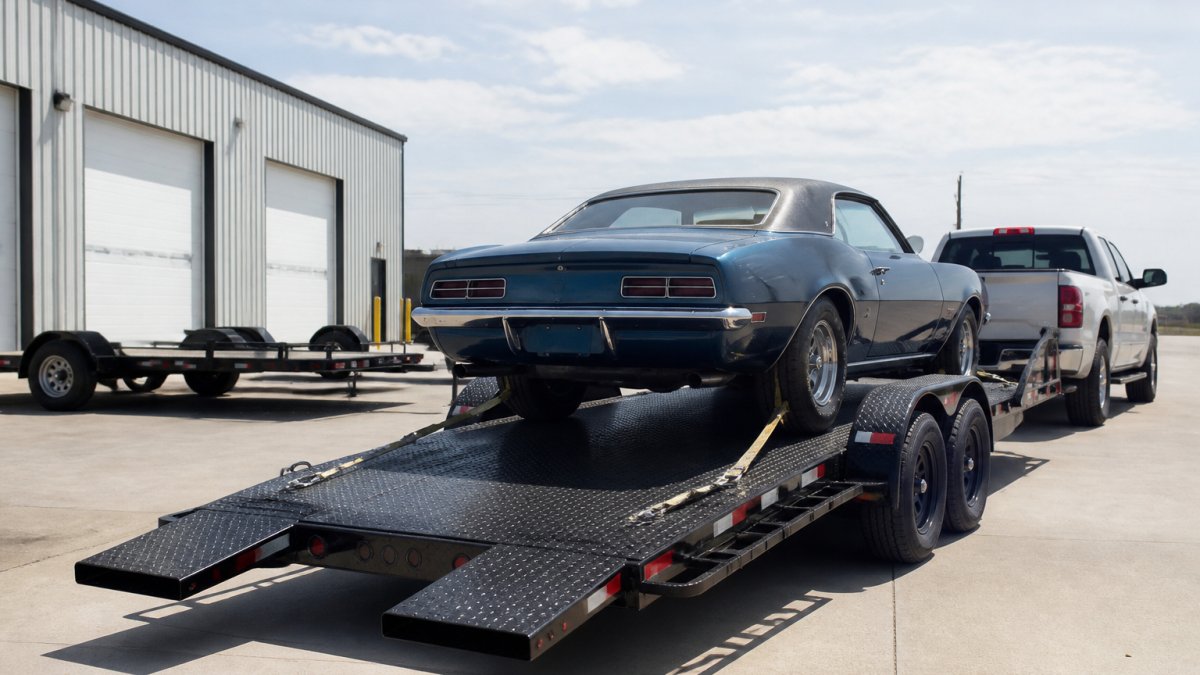
Use four tie-down points minimum, one at each corner, with ratchet straps rated for the vehicle's weight. Cross the rear straps in an X pattern to prevent lateral movement. If the car has no suspension travel, add a fifth strap through the wheels or around the axle to prevent vertical bounce.
Run safety chains as a backup to the main straps, and check all connections after the first five miles.
The Final Tension Sequence
Tighten the straps in a specific order to avoid pulling the car out of position. Start with the front straps, alternating side to side, to pull the car firmly against the front stops. Then tighten the rear straps, again alternating. After all four are tight, re-tighten the front straps.
Step 4: Check Local Omaha Permits and Towing Regulations
Omaha's municipal code treats oversized loads differently from standard vehicle transport, and the rules depend on the combined dimensions of your truck and trailer. A standard car hauler with a project car typically falls within legal width limits.
Understanding the Legal Limits
The federal standard for maximum vehicle width on interstate highways is 102 inches (8.5 feet), applied to your trailer's width, not just the car (ops.fhwa.dot.gov). Most standard car haulers are built to this exact width. If you have a trailer with fenders that extend beyond 102 inches, or a car with wide mirrors, you are in oversize territory.
Height is a more common issue. The maximum legal height in Nebraska is 14 feet 6 inches. A typical car hauler deck sits about 3 feet off the ground, and a project car adds another 4 to 5 feet, putting you at roughly 8 to 9 feet total, well within the limit. If you are hauling a tall vehicle like a van or a lifted truck, measure the total height before you travel.
Length is where most project car towers run into trouble. The maximum legal length for a single trailer in Nebraska is 75 feet for the combined truck and trailer. A standard 18-foot car hauler with a full-size truck is typically around 40 to 45 feet total. If you exceed 75 feet, you are in oversize territory and will need a permit.
The Oversize Permit Process
If your load exceeds any of these limits, you must obtain an oversize permit from the Nebraska Department of Transportation (NDOT) in advance. The application requires specific information about your vehicle, trailer, load dimensions, and planned route. A single-trip permit is typically in the range of $50 to $100. The fine for hauling without a permit is often several hundred dollars.
Omaha-Specific Municipal Rules
Beyond state regulations, the City of Omaha has its own municipal code governing vehicle movement on city streets. A key local rule prohibits towing a vehicle with a chain or rope on city streets. Omaha municipal code requires that any vehicle being towed must be connected by a rigid tow bar or a trailer, and the connection must be rated for the weight of the towed vehicle.
Another local consideration is the city's noise ordinance, which prohibits excessive noise between 10 p.m. and 7 a.m. in residential areas. The sound of a winch, air tools, or a loud exhaust can trigger a complaint. Plan your loading and departure time accordingly.
Private Property vs. Public Roads
Private property moves are simpler. If you are towing a project car from one private driveway to another and staying off public roads except for the shortest possible crossing, most municipal rules do not apply. The moment you enter a public street, you are subject to the same regulations as any commercial hauler.
Check both the Nebraska Department of Transportation oversize permit requirements and the City of Omaha municipal code on vehicle size limits before you finalize your route. Both agencies publish current thresholds, and the cost of a permit is trivial compared to the fines for hauling without one.
Common Mistakes to Avoid When Towing Project Cars
Several recurring errors account for most of the damage seen on project car transports. The first is using tow straps instead of ratchet straps. Tow straps are designed for recovery, not securement, they stretch under load. Ratchet straps hold firm once tensioned.
The second mistake is ignoring load distribution. A car positioned too far forward overloads the truck's rear axle and compromises steering; too far back, and the trailer becomes unstable.
Third is neglecting the brake controller. Trailers above a certain weight require functioning electric brakes, and the controller must be calibrated to the trailer's actual weight. An improperly adjusted controller either locks the trailer brakes or fails to engage them.
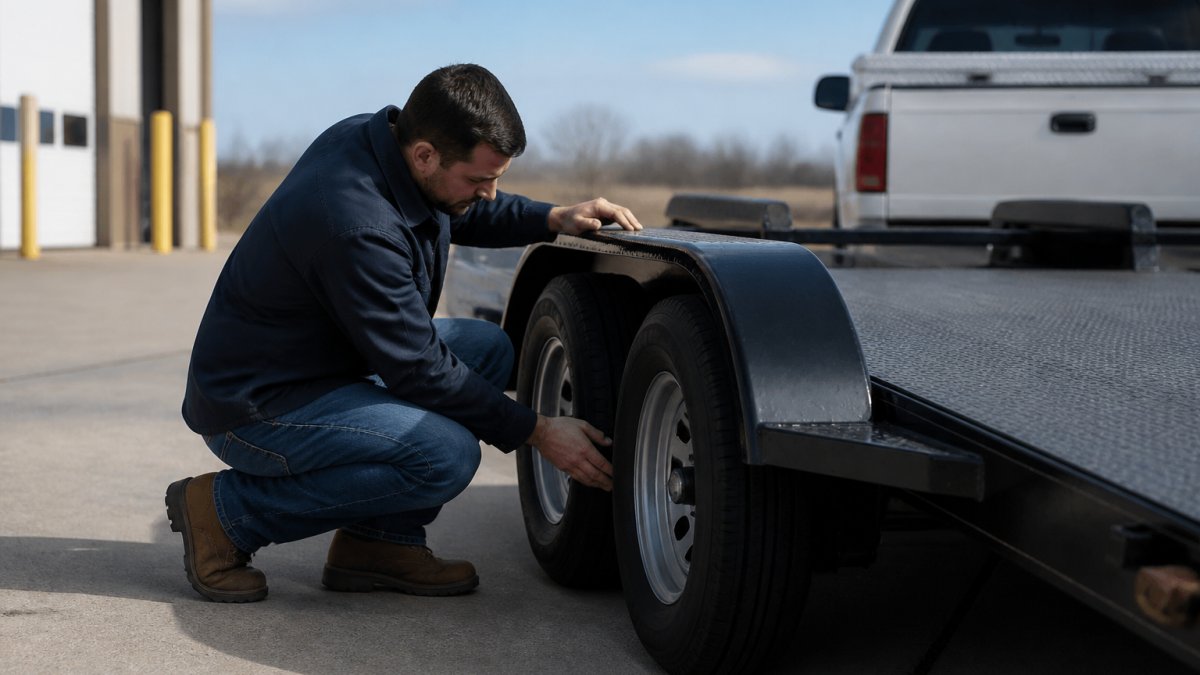
Finally, do not skip the pre-trip inspection. Walk around the rig, check every strap, confirm the safety chains are crossed and connected, verify the trailer lights work, and test the brakes before you pull out of the driveway.
Final Checklist Before You Hit the Road
Run through this checklist before every tow:
- Confirm your truck's towing capacity exceeds the combined weight of trailer and car by at least 15 percent
- Verify the trailer hitch is rated for the load and properly secured to the receiver
- Test all trailer lights and the brake controller before loading
- Position the car with 60 percent of its weight forward of the trailer axle
- Attach four ratchet straps to the frame, crossing the rear straps in an X pattern
- Connect safety chains, crossed beneath the hitch, and secure the trailer jack in the raised position
- Chock the car's wheels if it can roll; use additional axle straps if the suspension is collapsed
- Check all straps after the first five miles and again at each fuel stop
- Confirm no permits are required for your route and load dimensions
| Check | Why It Matters | Time Needed |
|---|---|---|
| Towing capacity vs. load weight | Prevents brake and steering failure | 10 minutes |
| Hitch and electrical connection | Ensures trailer lights and brakes function | 5 minutes |
| Strap placement on frame | Prevents body damage and load shift | 15 minutes |
| Safety chains and jack position | Backup securement if a strap fails | 5 minutes |
| Post-drive strap check | Catches settling and loosening | 5 minutes |
Towing project cars safely in Omaha comes down to preparation. The vehicle that has sat in your garage for three years does not care about your timeline, and it will punish shortcuts with bent panels, broken straps, or worse.
For owners who need a dependable trailer without the guesswork, 402 car hauler rentals provides well-maintained car haulers with flexible booking terms suited to project car timelines. Get started with 402 car hauler rentals and move your project car with confidence.
Frequently Asked Questions
What are the towing laws for project cars in Nebraska?
Nebraska law requires all towed loads to be secured so no part can shift or fall off. This includes using proper tie-downs and safety chains. For loads wider than 8.5 feet or heavier than standard limits, you must check with the Nebraska Department of Transportation for oversize permits. Omaha municipal codes also restrict towing on certain streets, so verify local ordinances before moving an oversized project car.
How do I calculate the towing capacity for my truck before renting a trailer?
Check the Gross Vehicle Weight Rating (GVWR) on the driver's side door jamb and subtract your truck's curb weight to find its payload capacity. Then, compare the combined weight of the trailer and your project car against your truck's rated towing capacity. Always keep your total load at 80% or less of the maximum rating to maintain control and stopping power.
What is the safest way to secure a non-running project car to a trailer?
Use four heavy-duty ratchet straps rated for at least 1.5 times the vehicle's weight. Attach them to the car's frame or designated tie-down points, never to body panels or suspension arms. Cross the rear straps for lateral stability and use wheel chocks on all four tires. Verify the winch is locked and add safety chains as a backup before driving.