 how-to
How to Reverse a Trailer With a Car: Step-by-Step Guide
Last Updated: October 22, 2026
Quick Summary
To reverse a trailer with a car, turn the steering wheel opposite to the direction you want the trailer's rear to move, then hold the input for two to four seconds while backing at walking pace or slower. The trailer pivots at the hitch ball, so small steering corrections produce controlled movement.
- Turn the wheel opposite the direction the trailer's rear needs to move, not toward the drift.
- Back at walking pace or slower with both hands at 9 and 3 on the steering wheel.
- Watch the hitch angle in your mirrors and keep it under 30 degrees to avoid jackknifing.
- Use the Z method: align straight, back slowly, then correct with sharp turns as needed.
- Practice in an empty lot at least 200 feet long and 100 feet wide before attempting real situations.
Table of Contents
- Before You Back Up: Preparation and Safety Checks
- How to Reverse a Trailer With a Car: The Fundamentals
- Which Way to Turn the Steering Wheel When Backing a Trailer
- The Z Method for Backing a Trailer Into Position
- How to Reverse a Trailer Without Jackknifing
- How to Practice Reversing a Trailer Safely
- Troubleshooting Common Backing Mistakes
- Frequently Asked Questions
Before You Back Up: Preparation and Safety Checks
Most backing failures start before the car moves. A five-minute pre-backing routine catches the problems that cause jackknifing, scraped fenders, and dropped trailers.
The pre-backing walk-around
Walk a full loop around the car and trailer before you get in. Check these in order:
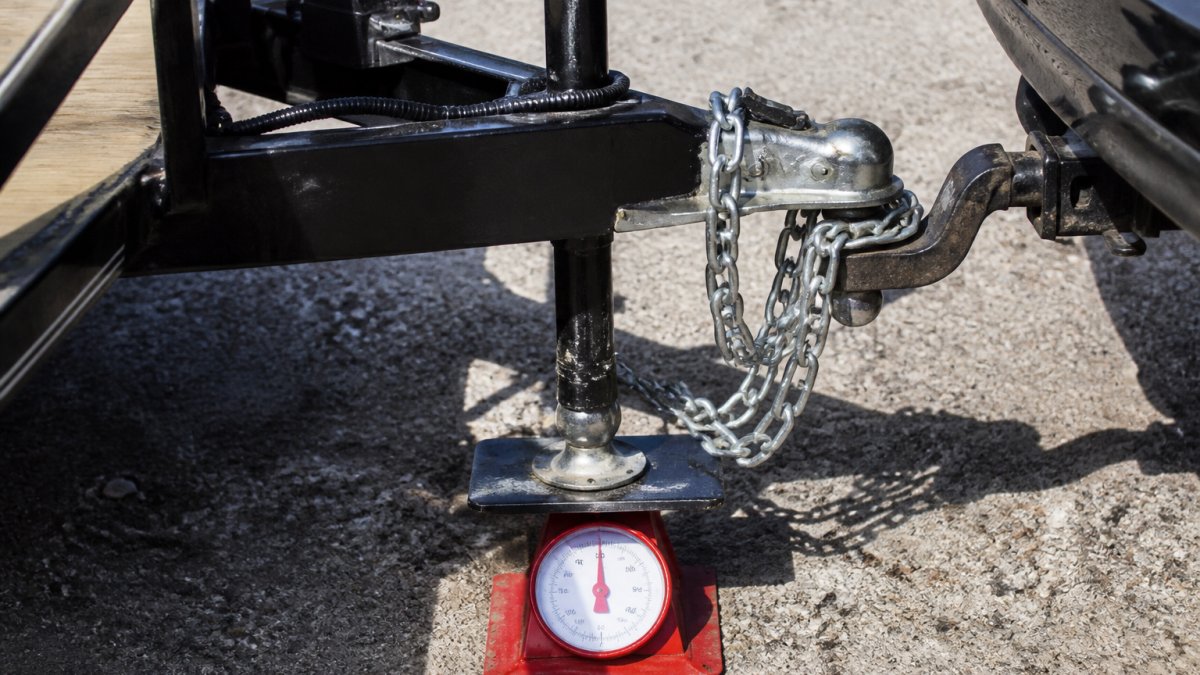
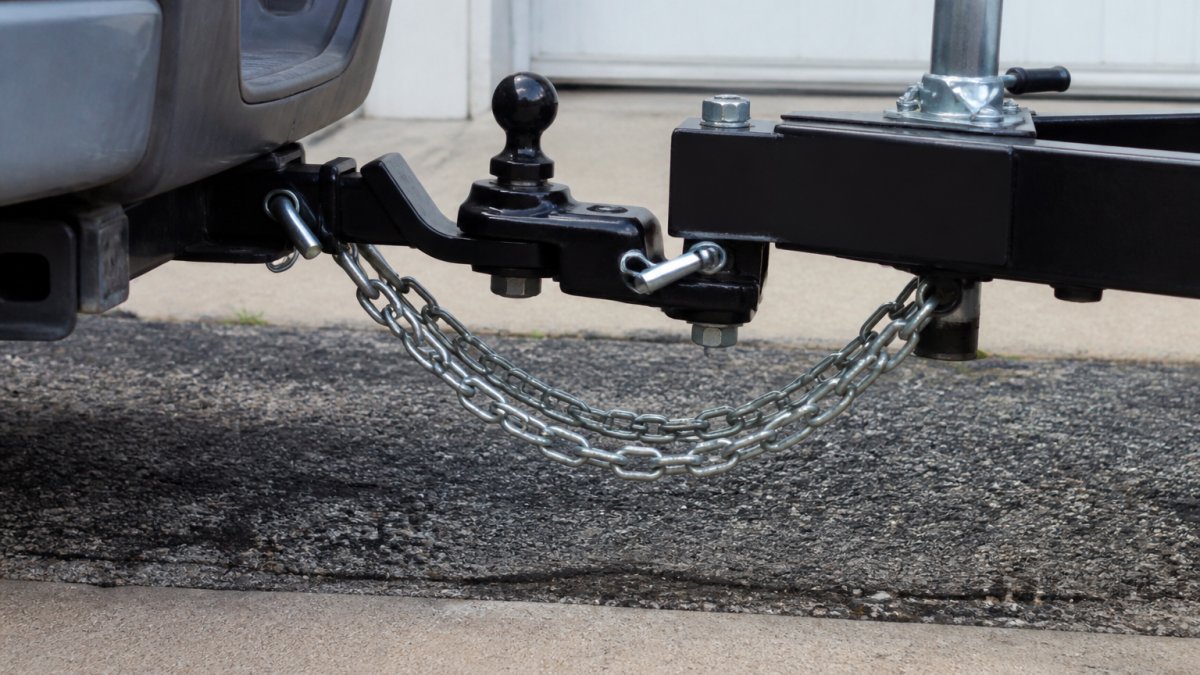
- Coupler and hitch. The coupler must sit fully down on the ball, the latch must be closed, and the safety pin or lock must be engaged. A coupler that is resting on top of the ball instead of seated on it will pop loose under load.
- Safety chains. Cross the chains under the coupler in an X pattern so the trailer tongue is caught if the coupler fails. Leave enough slack to turn but not enough to drag.
- Breakaway cable. Clip it to a solid point on the car's hitch, not to the chains or the ball mount.
- Trailer lights. Turn on the car's headlights and four-way flashers, then walk to the back of the trailer. Confirm brake lights, turn signals, and running lights all work. Have a helper press the brake and each turn signal while you watch.
- Tires and lug nuts. Check pressure on all car and trailer tires when cold. Look for cracked sidewalls, exposed cords, and loose lug nuts. Trailer tires often sit for months and fail on the first trip.
Choosing a practice location
Pick a paved, level, empty lot at least 200 feet long and 100 feet wide. Check these conditions first:
- Grade. A slope of even a few degrees changes how the trailer rolls and how much brake pressure you need. Level ground keeps the drill repeatable.
- Surface. Asphalt or concrete. Gravel and grass hide potholes and reduce tire grip.
- Obstacles. Light poles, curbs, cart corrals, and drainage grates are the usual culprits. Walk the lot and note every fixed object within 20 feet of your intended path.
- People and traffic. A lot that is empty at 7 a.m. may be busy at noon. Choose a time when the lot is genuinely clear, and post a spotter at the entrance if you can.
Setting up a spotter
A spotter is only useful if you agree on signals first. Stand where the driver can see you in a side mirror, and agree on these basics:
- Hand signals. Point in the direction the trailer's rear needs to move, not the direction the car should steer. A flat palm means stop. A fist means stop immediately.
- Voice and radio. If you use phones or two-way radios, keep one earbud out so you can hear horns and shouts.
- The stop rule. The spotter's stop signal overrides everything. If you lose sight of the spotter in your mirror, stop and pull forward until you can see them again.
Weather and visibility
Wind pushes a tall trailer sideways and magnifies small steering corrections; rain and snow reduce mirror clarity and grip. If you must back in poor conditions, shorten the maneuver, use a spotter, and reset more often.
At 402 car hauler rentals, we walk every customer through this checklist at pickup so the first backing attempt happens on level ground with known equipment, not in a driveway at dusk.
How to Reverse a Trailer With a Car: The Fundamentals
Reversing a trailer with a car is fundamentally different from reversing the car alone. The trailer does not follow the car's rear end; it responds to the car's front wheels.
When you turn the wheel, the car's front end moves that way and its rear end swings opposite. The trailer follows the rear end, creating a delayed, exaggerated response where small inputs have large effects.
Understanding Trailer Steering Direction
The trailer's back corner moves opposite your steering wheel turn: turn left and the trailer's back swings right; turn right and it swings left. This is the single most important concept for reversing a trailer with a car.
Most drivers instinctively steer the wrong way when the trailer drifts, making it worse. Before turning the wheel, ask which direction you want the trailer's back to move, then turn the wheel the opposite way.
Setting Your Side Mirrors Correctly
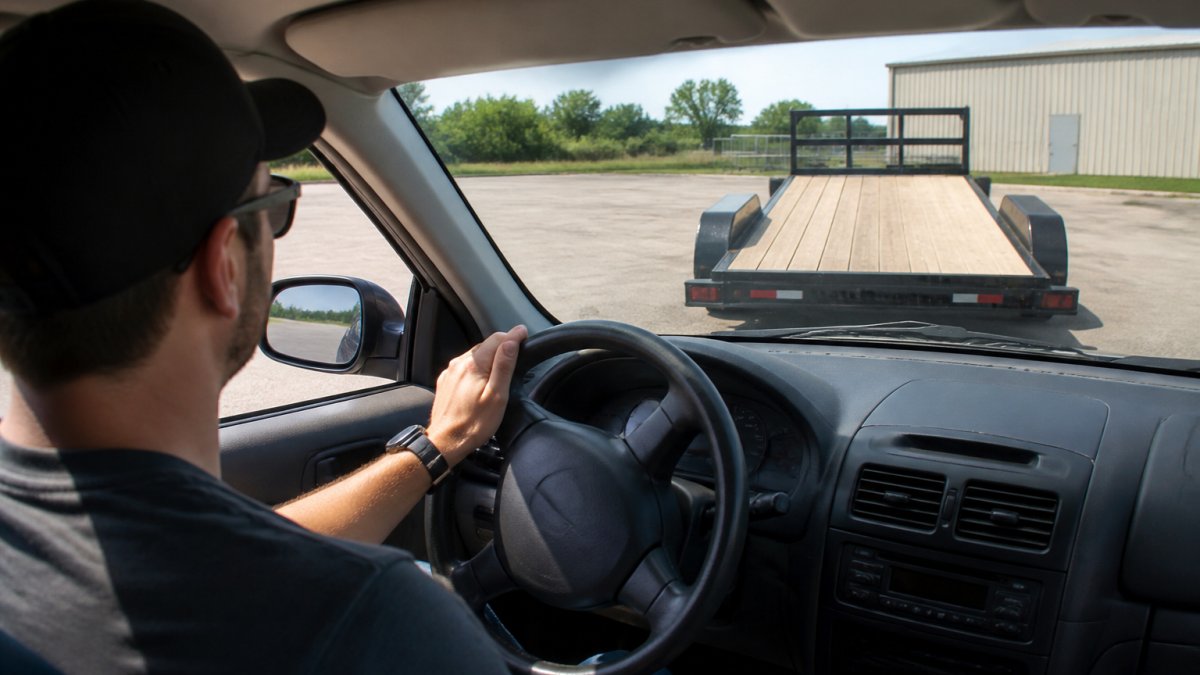
Before backing, tilt your side mirrors down to see the trailer's wheels and the ground beside it. Do not rely on the rearview mirror, which shows what is directly behind the car, not the trailer's angle.
Position yourself to glance at both side mirrors without turning your head far. Use a spotter to watch angles you cannot see, mirrors have blind spots.
Which Way to Turn the Steering Wheel When Backing a Trailer
The rule is simple to state and hard to execute under pressure: turn the wheel opposite to the direction you want the trailer's rear to go. If you want the trailer's back corner to swing right, turn the wheel left.
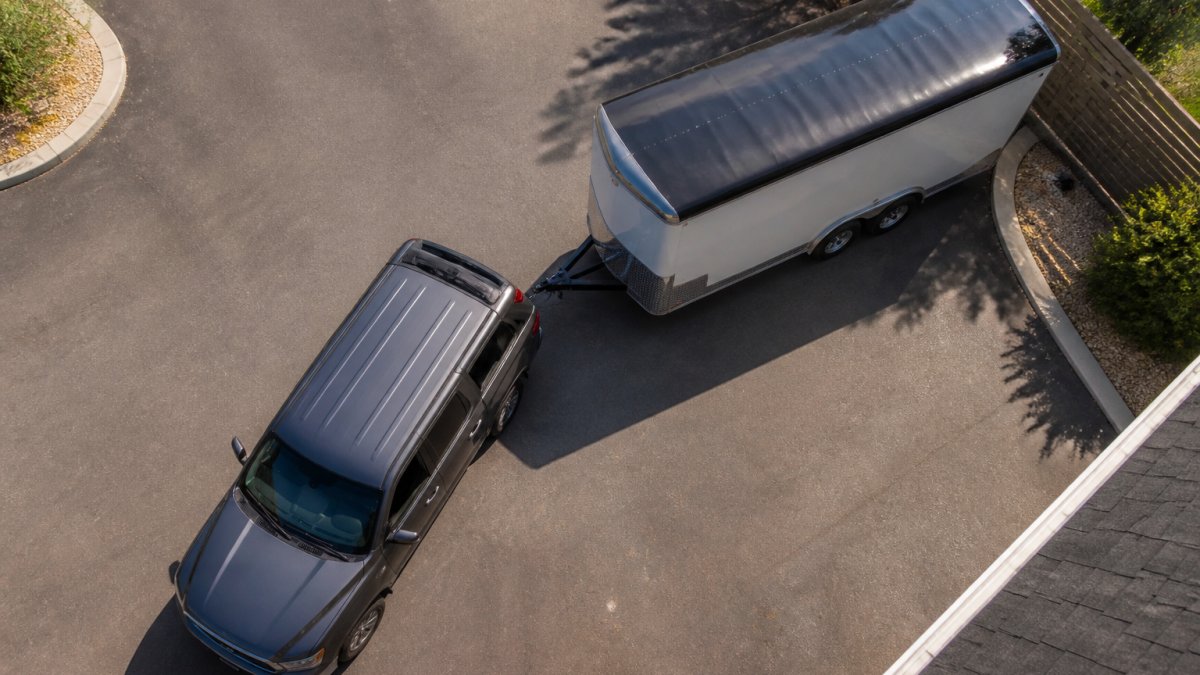
Why it works comes down to the pivot point. The trailer pivots at the hitch ball behind the car's rear axle.
The correction sequence
When the trailer starts drifting off line, run this sequence instead of reacting to the mirror:
- Identify the drift. Look at the trailer's rear corner in the mirror. Which way is it moving relative to your target line?
- Turn the wheel opposite the drift. If the rear corner is drifting right, turn left. A quarter-turn of the wheel is usually enough.
- Hold the input. The trailer needs two to four seconds to respond at walking pace. Do not straighten the wheel the instant you turn it.
- Straighten as the trailer comes back. When the trailer's rear is approaching your target line, return the wheel to center. If you keep the correction in, you will overshoot.
- Back straight to let the angle settle. A short straight segment resets the geometry before the next correction.
Reading the hitch angle
Watch the angle between car and trailer in your mirrors. Most drivers manage up to about 30 degrees; past 45 degrees the trailer's rear swings quickly and jackknifing becomes likely. If the angle grows past 30 degrees unintentionally, straighten the wheel and back straight to reduce it.
When the trailer is already at an angle
If the car and trailer are already bent, common after pulling out of a tight spot, do not correct the angle while moving backward. Pull forward until they are straight, then begin from a straight start. Correcting a large angle in reverse is the most common cause of jackknifing for new drivers.
Speed and hand position
Back at walking pace or slower. At that speed, a quarter-turn of the wheel visibly changes the trailer's angle within a few feet. Keep both hands at 9 and 3; smooth quarter-turns produce controlled movement, while jerky, large inputs produce wild swings.
If you find yourself correcting the same drift repeatedly, the problem is usually the starting alignment, not the steering. Pull forward, straighten the car and trailer, and start again.
The Z Method for Backing a Trailer Into Position
Phase 1: Align. Position the car and trailer in a straight line, aimed at the space where you want to park.
Phase 3: Correct. Turn the wheel sharply in the direction you want the trailer's back to move and reverse slowly.
This method works for most situations but requires patience and multiple small adjustments. Even experienced drivers need two or three attempts.
How to Reverse a Trailer Without Jackknifing
Prevent jackknifing with small steering corrections. If the trailer angles too sharply, straighten the wheel immediately, back straight for a moment to reset the angle, then make another small correction.
If jackknifing begins, stop immediately and pull forward slowly to straighten the car and trailer, then attempt the maneuver again.
Watch the trailer's angle in your mirrors. About 30 degrees is usually the limit before jackknifing becomes likely; at that point, straighten your wheels and back straight.
How to Practice Reversing a Trailer Safely
Start in the largest, emptiest space you can find, an empty lot at least 200 feet long and 100 feet wide.
Practice these drills in order:
- Straight backing. Drive forward, then reverse in a straight line for 50 feet. Keep the car and trailer aligned. This builds confidence and shows you how the trailer follows.
- Wide turns. Drive in a large circle, both left and right. Feel how the car and trailer respond to gentle steering inputs.
- Angled approach. Drive at a 45-degree angle toward your marked rectangle. Reverse straight back into it. This mimics real parking situations.
- Tight backing. Once you are comfortable, back into a narrower space. Reduce the width of your target rectangle by 5 feet at a time.
Practice for 20 to 30 minutes at a time and take breaks, fatigue leads to mistakes, and reversing a trailer with a car requires focus.
Record yourself or have a spotter take photos, then review. Video reveals things you cannot see from the driver's seat, like turning the wheel too far or not watching your mirrors enough.
Troubleshooting Common Backing Mistakes
The trailer keeps drifting right even though I turned the wheel left. You likely straightened the wheel too quickly.
The trailer is jackknifing. Stop immediately and pull forward to straighten.
The car and trailer keep getting crooked no matter what I do. Start over in a straight line pointing at your target.
I feel like I am going to hit something. Stop, pull forward, and reposition farther from the obstacle.
Reversing a trailer with a car is a learnable skill. When you are ready to transport a vehicle, 402 car hauler rentals provides well-maintained trailers and flexible rental terms.
Frequently Asked Questions
What is the trick to reversing with a trailer?
The core trick is understanding that the trailer responds opposite to your steering input. Turn the steering wheel left, and the trailer's back corner moves right. Start with the car and trailer aligned straight, move slowly, use your side mirrors to watch the trailer wheels and back corner, and make small steering corrections. Most difficulty comes from fighting this counter-intuitive response, accept it and you'll improve quickly.
Which way should you turn the steering wheel when reversing a trailer?
Turn the steering wheel in the opposite direction from where you want the trailer to go. If you want the trailer's back corner to move right, turn the wheel left. This opposite-direction steering is what confuses most beginners. Practice this principle in an open space until it becomes automatic, and your backing accuracy will improve dramatically.
How do you stop a trailer from jackknifing while reversing?
Prevent jackknifing by reversing slowly, watching your trailer angle in the mirrors, and correcting early with small steering inputs. If the trailer angle becomes too acute (sharp), pull forward to realign the car and trailer straight, then resume backing. Never make large steering corrections or reverse at speed. Jackknifing happens when the trailer angle exceeds about 45 degrees, staying aware of this angle in your mirrors prevents it entirely.
Can you practice reversing a trailer in a residential area?
No. Practice reversing a trailer only in a safe, open space such as an empty parking lot, a closed course, or a private property with the owner's permission. Residential areas have obstacles, pedestrians, and parked vehicles that create hazards. A large open area lets you focus on steering inputs and trailer response without worrying about collisions or creating a traffic hazard.