 how-to
Does Insurance Cover Rental Car Trailers? 2026 Guide
Table of Contents
- Does Insurance Cover Rental Car Trailers? The Short Answer
- Does Auto Insurance Cover a Rented Trailer?
- Does Renters Insurance Cover a Rented Trailer?
- Damage Waiver for Trailer Rental: What It Actually Covers
- Rental Car Hauler Insurance: Cars, Trucks, and Trailers Are Not the Same
- State Rules, Policy Exclusions, and Rental Agreement Terms
- Pre-Rental Verification Checklist Before You Tow
- Frequently Asked Questions
Last Updated: October 9, 2026
Does Insurance Cover Rental Car Trailers? The Short Answer
Your personal auto policy often extends some coverage to a rented trailer, but the details depend on your insurer, your state, and the type of trailer. At 402 car hauler rentals, we hear this question from customers hauling project cars and race vehicles around the Omaha area, so we built this guide to sort out when does insurance cover rental car trailers and when you are on your own.
The short version: liability coverage usually follows your vehicle when you tow a trailer, but physical damage to the trailer itself is a different story, many policies exclude it entirely. Below, we break down liability, collision, and comprehensive coverage, plus damage waivers, exclusions, and a pre-rental checklist.
Does Auto Insurance Cover a Rented Trailer?
Auto insurance covers a rented trailer in many cases, but the coverage type matters.
The Insurance Information Institute notes that personal auto policy basics coverage varies widely by carrier and state. Some policies treat a rented trailer as an extension of your insured vehicle.
So how do you know which applies to you?
Start with your declarations page: look for the definition of "insured vehicle" and any trailer language.
Liability Coverage While Towing
Liability coverage is the most portable part of your policy. When you tow a hitched trailer, your auto liability typically follows you, so if the trailer swings wide and hits another car, your bodily injury and property damage limits can respond. A detached trailer rolling into a parked vehicle is also a liability claim. But limits apply: state-minimum liability can be exceeded fast in a serious accident, so check your limit before you tow anything heavy.
Physical Damage to the Rental Trailer
Physical damage is where the confusion lives. Collision coverage may pay if you hit something and damage the rented trailer, and comprehensive may pay for theft, fire, or storm damage. But many policies exclude trailers you do not own, and some carriers cover a rented trailer only while it is attached to your insured vehicle. Assuming full coverage on your truck means full coverage on the trailer is often false, confirm in writing before your rental period starts.
Does Renters Insurance Cover a Rented Trailer?
Renters insurance rarely covers a rented trailer, and this catches people off guard. Standard renters policies protect personal property inside your home and liability at your residence; a trailer you rent for hauling sits outside that scope. Some policies extend limited coverage to property in transit, but a car hauler or utility trailer is usually too large and too vehicle-related for that extension.
- Renters insurance: covers belongings and home liability
- Auto insurance: may cover trailer liability while towing
- Neither: reliably covers physical damage to a rented trailer
Damage Waiver for Trailer Rental: What It Actually Covers
A damage waiver for trailer rental is not insurance. It is a contractual shift of risk: the rental company agrees to waive its right to charge you for certain damage to its trailer, in exchange for a daily fee. A waiver does not create a policy, produce a claim number, or obligate any insurer to pay anyone. Most waivers cover cosmetic and minor damage from normal use, scrapes, small dents, cracked lenses, minor tire damage from road debris, but rarely cover everything, so read the terms.
How the Waiver Interacts With Your Auto Policy
The waiver and your auto policy do not stack cleanly:
- If your auto policy's physical damage coverage applies to the rented trailer, your insurer may pay for the loss subject to your deductible, and the rental company may still pursue you for loss-of-use or diminished value.
- If your auto policy excludes the trailer, the waiver becomes your primary protection against the rental company's damage charge.
- If you decline the waiver and your policy excludes the trailer, you are typically responsible for the full repair cost plus any loss-of-use fee the rental agreement allows.
That third scenario is where renters lose the most money: the waiver fills the gap your policy does not cover, rather than replacing insurance.
Common Protection Plan Exclusions
Protection plans exclude more than most renters expect, often voiding the waiver entirely and turning a covered incident into a full out-of-pocket repair bill. Typical exclusions:
- Damage from off-road use or overloading beyond the trailer's rated capacity
- Tire damage and blowouts
- Damage from an accident caused by reckless driving
Deductibles, Loss-of-Use, and Diminished Value
Even when coverage applies, three charges can survive:
- Deductible: Your auto policy's collision or comprehensive deductible still applies if your insurer pays. A $500 or $1,000 deductible can exceed the cost of a minor repair, which is why some renters buy the waiver even when they have coverage.
- Loss-of-use: The rental company may charge for the days the trailer is out of service during repair. Many personal auto policies do not pay this.
- Diminished value: Some rental agreements allow a charge for the reduced resale value of a repaired trailer. Personal auto policies rarely cover this.
Is the Waiver Worth It?
The waiver is usually worth considering when your auto policy excludes trailers you do not own, your deductible is high relative to the trailer's repair cost, the rental agreement imposes loss-of-use or diminished-value charges, or you are towing in conditions where minor damage is likely. It is usually not worth it when your policy clearly extends collision and comprehensive coverage to the rented trailer and your deductible is low, then you may be paying twice for overlapping protection.
Rental Car Hauler Insurance: Cars, Trucks, and Trailers Are Not the Same
Rental car hauler insurance works differently from rental car or rental truck coverage, and lumping them together causes bad decisions. A rental car is a motor vehicle with its own policy options. A rental trailer is towed property with no engine, no plate, and no independent coverage.
Here is how the three compare.
| Rental Type | Liability Coverage | Physical Damage | Best Protection Path |
|---|---|---|---|
| Rental car | Usually via your auto policy | Often via collision/comprehensive | Your policy or rental company plan |
| Rental truck | Varies by weight class | Often excluded on personal policies | Commercial or rental company plan |
| Rental trailer | Follows tow vehicle in many cases | Frequently excluded | Confirm in writing, consider waiver |
Coverage by Damage Type and Responsible Party
Who pays depends on what broke and who caused it:
- You hit a third party: Your liability coverage usually responds.
- A third party hits your trailer: Their liability coverage usually responds.
- You damage the trailer yourself: Physical damage coverage or the waiver decides it.
State Rules, Policy Exclusions, and Rental Agreement Terms
State rules, policy exclusions, and rental agreement terms all shape whether your coverage applies.
What State Law Actually Controls
State law governs two things that affect trailer coverage:
- Minimum liability limits. Every state sets minimum bodily injury and property damage liability limits that apply while you tow. If you carry only the minimum, a serious trailer accident can exceed those limits quickly, leaving you personally exposed for the excess.
- Financial responsibility rules. Most states require liability coverage on the tow vehicle, not the trailer. A trailer is generally not separately registered or insured like a motor vehicle, which is why coverage follows the tow vehicle.
What state law generally does not do is mandate physical damage coverage for a rented trailer, that is a contract issue between you, your insurer, and the rental company.
Policy Exclusions That Quietly Kill Coverage
Policy exclusions are the deal-breakers:
- Business or commercial use exclusions. If you are hauling for a business, a race team, or a paid gig, a personal auto policy may exclude the loss entirely.
- Weight thresholds. Some policies exclude trailers over a certain gross vehicle weight rating (GVWR). A small utility trailer may be covered while a heavy car hauler is not.
- Attachment requirements. Many policies cover a rented trailer only while it is attached to your insured vehicle. A detached trailer in a parking lot may fall outside coverage.
Rental Agreement Terms That Add Exposure
Rental agreement terms add another layer no insurance policy can override:
- Some companies require you to accept their protection plan for certain trailer types or weights.
- Others hold you responsible for all damage regardless of fault, subject only to the waiver.
- Many impose loss-of-use and diminished-value charges that personal auto policies do not pay.
How to Verify Your Coverage Before You Tow
Get answers in writing before the rental period starts. Ask your insurer:
- Does my policy extend liability to a rented trailer while it is attached to my insured vehicle?
- Does my collision coverage apply to a trailer I do not own?
- Does my comprehensive coverage apply if the rented trailer is stolen or damaged by weather?
- Is there a weight limit above which my policy excludes the trailer?
- Does my policy pay loss-of-use or diminished-value charges if the rental company assesses them?
- Are there exclusions for business use, rental periods over a certain length, or detached trailers?
A written answer also gives you something to point to if the rental company and your insurer disagree about who pays.
Pre-Rental Verification Checklist Before You Tow
A five-minute check before you tow prevents most coverage disputes. Run through this list every time you rent.
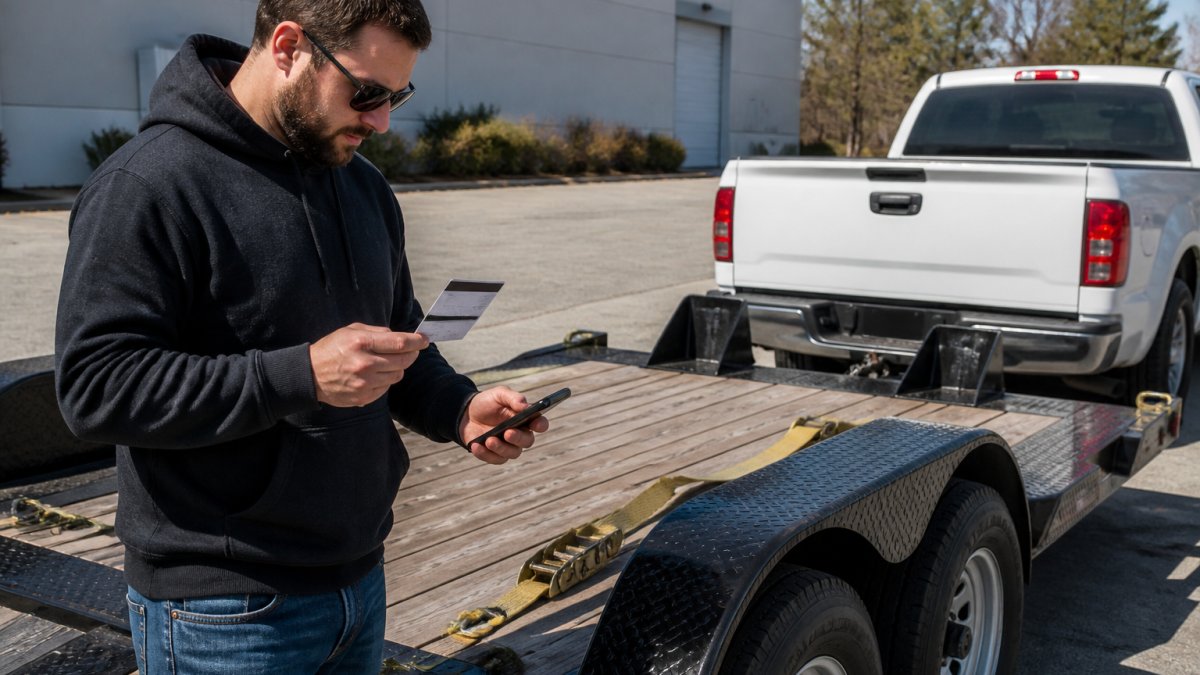
- Call your insurer and confirm liability extends to a rented trailer
- Ask whether physical damage coverage applies to a trailer you do not own
- Get the answer in writing by email
At 402 car hauler rentals, we walk every customer through the hitch and strap setup before they pull out.
If something goes wrong during your rental, call us first.
For broader consumer protection guidance on rental contracts, the Federal Trade Commission consumer advice is a useful starting point when you review any rental agreement.
Insurance for rental car trailers comes down to one hard truth: liability usually travels with you, but physical damage to the trailer often does not. Reliable equipment, competitive rates, and straightforward booking make us the dependable choice for moving project cars, race vehicles, and equipment around the Omaha metro.
Frequently Asked Questions
Does my auto insurance cover a rented car trailer?
It depends on your policy. Many personal auto policies extend liability coverage to a trailer you are towing, but physical damage to the rental trailer itself is often excluded. Some insurers treat a rented trailer like a temporary substitute vehicle, while others require a separate endorsement. Call your insurance carrier before you rent and ask specifically whether liability and physical damage both extend to a hitched trailer. Get the answer in writing so you have proof if you need to file a claim.
Does renters insurance cover a rented trailer?
Renters insurance typically covers personal property inside a rented trailer, not the trailer itself. If your tools, gear, or car parts are stolen from a rental trailer, your renters policy may reimburse the loss after your deductible. The trailer structure, however, usually falls outside renters coverage. If you are hauling a project car or race vehicle, check whether your renters or auto policy covers the cargo separately, because a standard renters policy will not pay for trailer damage or third-party liability.
Is a damage waiver for trailer rental worth the cost?
A damage waiver transfers financial responsibility for trailer damage from you to the rental company, but it is not insurance. It typically excludes damage from reckless driving, off-road use, overloading, or unauthorized drivers. Read the rental agreement terms before you sign. If your auto policy already covers physical damage to a rented trailer, the waiver may be redundant. If your policy excludes trailers, the waiver can protect you from out-of-pocket repair costs that could run into the thousands.
What should I ask my insurer before renting a car hauler?
Ask four questions: Does my auto policy extend liability to a hitched trailer? Does it cover physical damage to the rental trailer? What is my deductible for trailer damage? Does my policy cover theft of the trailer or its contents? Also confirm whether your coverage applies in the state where you are renting and towing. If your insurer says no to physical damage, ask about a supplemental coverage endorsement or consider the rental company's protection plan.