 comparison
Benefits of Open Car Trailers: 2026 Hauling Guide
Table of Contents
- Why Open Car Trailers Dominate Short-Distance Hauling
- Open vs Enclosed Car Trailer Pros and Cons
- How to Load a Car on an Open Trailer Safely
- Car Hauler Weight Distribution Tips for Towing Stability
- Maintenance, Insurance, and Long-Term Resale Value
- Towing Vehicle Compatibility and Legal Requirements
- Conclusion: Is an Open Car Trailer Right for You?
- Frequently Asked Questions
Last Updated: September 23, 2026
Why Open Car Trailers Dominate Short-Distance Hauling
Open car trailers are the workhorse of practical vehicle transport, and for good reason: they cost less to buy, weigh less to pull, and take far less effort to load than enclosed alternatives. At 402 car hauler rentals, we see this play out every week with customers hauling project cars, race vehicles, and customer vehicles across the metro area.
The core advantage is simplicity. An open-deck design uses fewer materials, fewer moving parts, and less structure than a boxed trailer. That translates into lower weight, easier towing, and maintenance you can actually keep up with.
Here's the trade-off up front: you give up weather protection and security. For short-distance hauling in good conditions, that trade is usually worth it. For a concours restoration crossing three states in winter, it isn't.
Below, we'll break down the real numbers, loading technique, and the legal details most guides skip.
Open vs Enclosed Car Trailer Pros and Cons
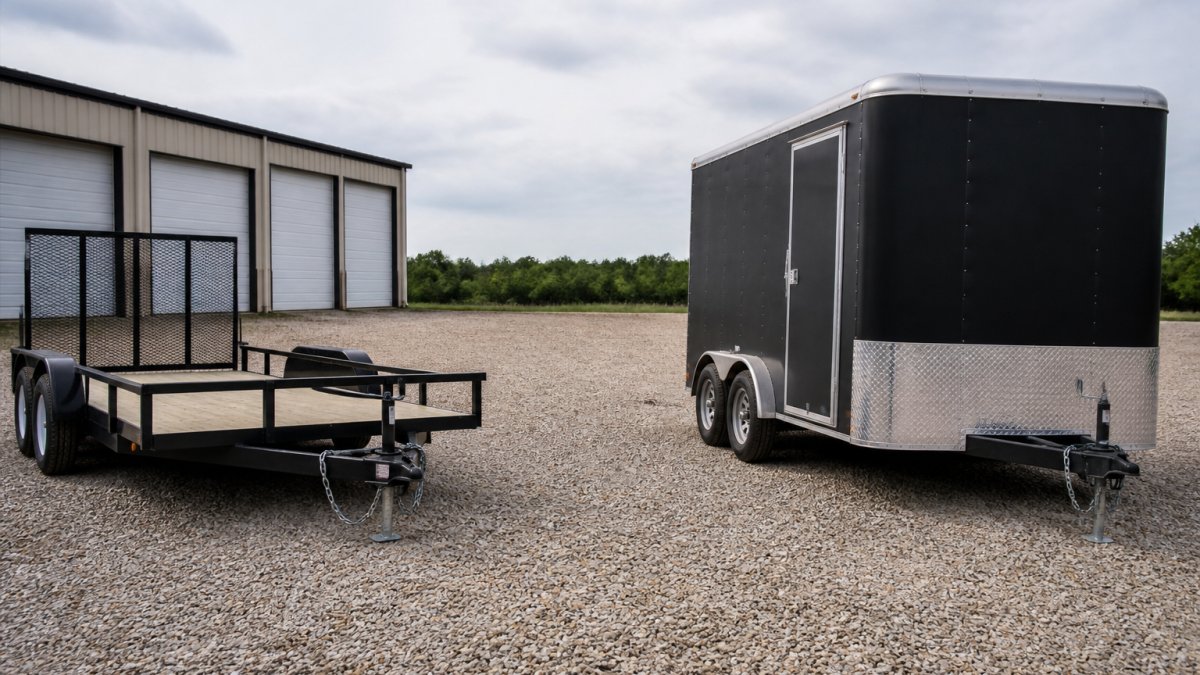
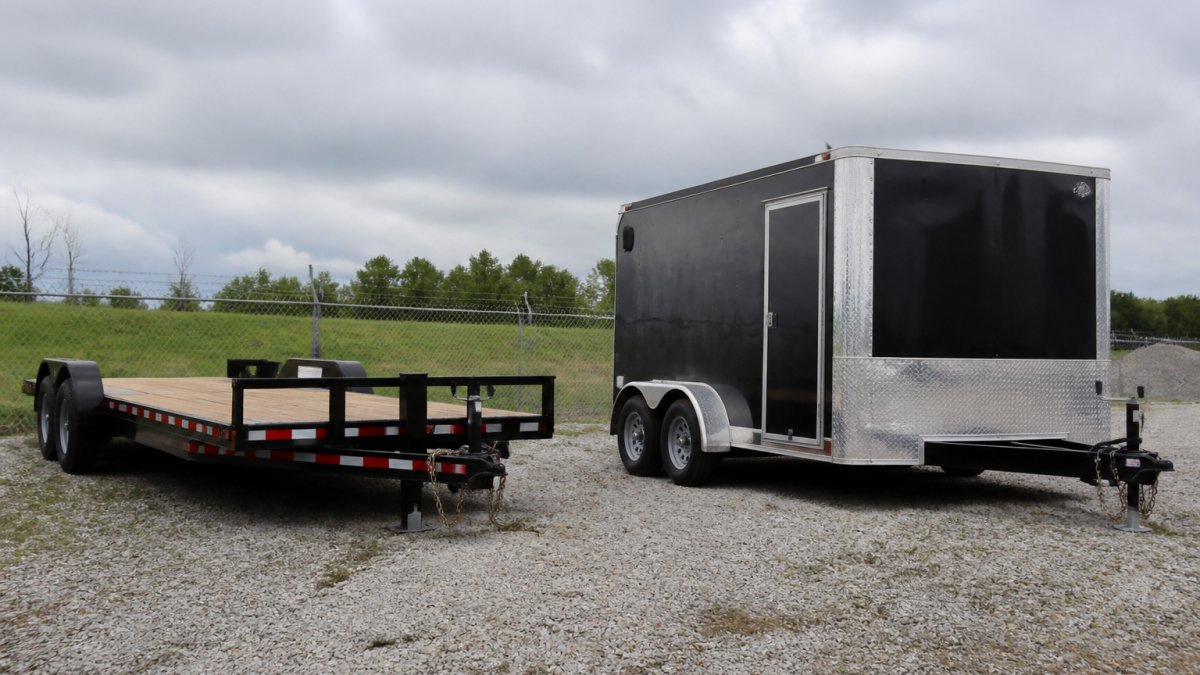
The short answer: open trailers win on cost, weight, and convenience; enclosed trailers win on protection and security. Which matters more depends on what you're hauling, how far, and how often.
| Factor | Open Trailer | Enclosed Trailer |
|---|---|---|
| Purchase price | Lower | Higher |
| Trailer weight | Lighter | Heavier |
| Fuel efficiency | Better | Worse |
| Loading speed | Fast | Slower |
| Weather protection | None | Full |
| Security | Minimal | Lockable |
| Maintenance | Simpler | More complex |
| Maneuverability | Easier | Harder |
| Resale | Steeper depreciation | Holds value better |
Cost Comparison: Purchase Price and Operational Costs
Open trailers cost significantly less than enclosed models, both at purchase and over years of ownership. The reason is structural: fewer materials, no walls or roof, and a simpler frame. A typical open car hauler uses a bare steel or aluminum deck with a pair of axles, while an enclosed trailer adds wall studs, skin, a roof, a door, and interior lighting, every one of those is a line item on the invoice and a potential repair later.
Operational costs follow the same pattern.
Weight, Fuel Efficiency, and Towing Capacity
Weight is where open car trailers pull ahead decisively. A lighter trailer means a lighter combined load, which directly affects your towing capacity, fuel efficiency, and how hard your tow vehicle has to work.
Why the Gap Widens Over Time
The purchase-price gap is only the first chapter. Over a five-year ownership window, the open trailer's advantages compound: lower insurance premiums, cheaper tires and brakes because there's less mass to stop, and simpler repairs because there are fewer systems to fail. The enclosed trailer's advantages also compound, better protection means less cosmetic wear on the cargo, and stronger resale means more of your money comes back when you sell.
How to Load a Car on an Open Trailer Safely
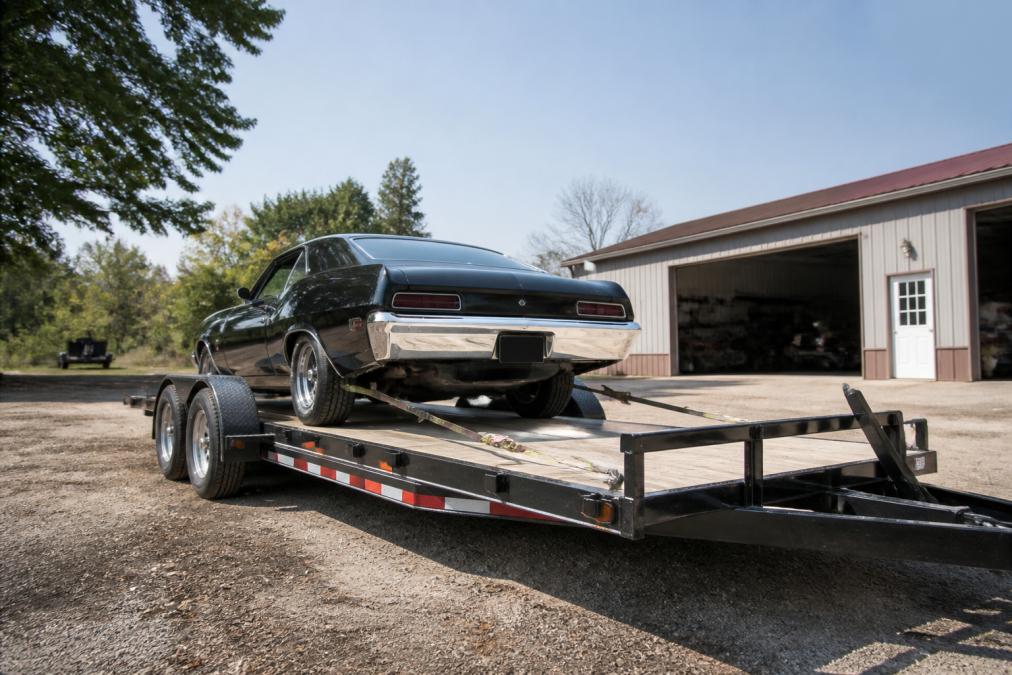
Safe loading comes down to three things: a stable ramp angle, correct weight distribution, and four solid tie-down points. Get those right and the rest is routine.
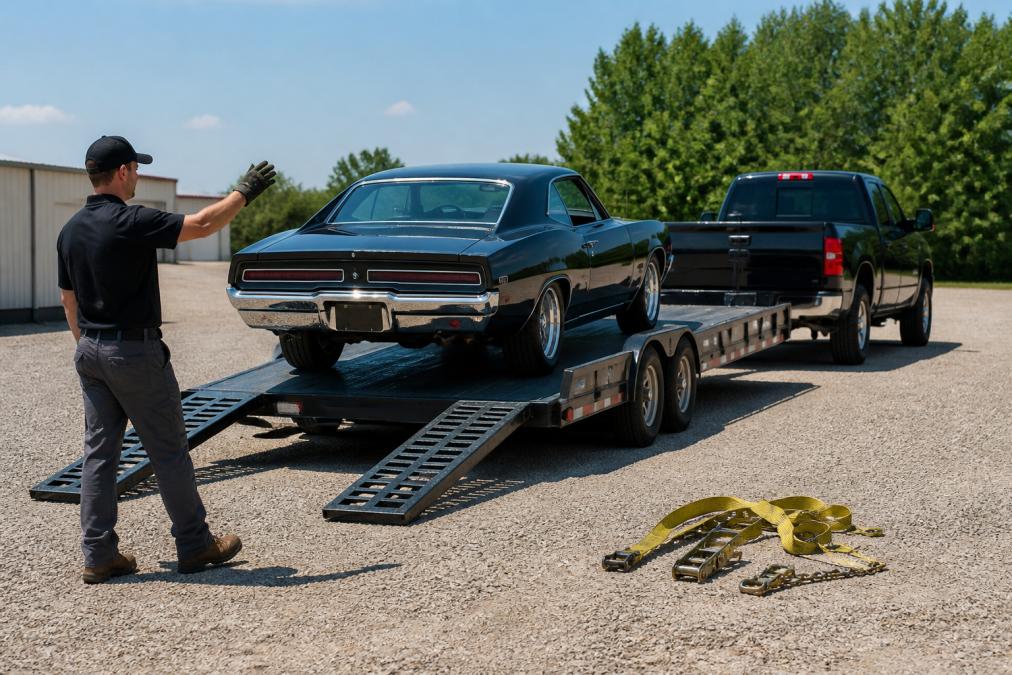
Loading Ramp Setup and Tie-Down Points
Start by parking the tow vehicle and trailer on level ground. Set the loading ramp at a shallow angle, and check that it's secured before the wheels touch it.
Then follow this sequence:
- Position the ramp so the approach angle clears the car's front lip
- Line the car up straight with the trailer deck
- Move slowly, with a spotter guiding the driver
- Stop when the car sits centered over the axles
- Attach four tie-down straps at the frame or dedicated tie-down points
- Cross the straps front and rear to prevent side-to-side movement
- Recheck tension after the first few miles
Car Hauler Weight Distribution Tips for Towing Stability
Weight distribution is the single biggest factor in towing stability, and most first-timers get it wrong. Aim for roughly 60% of the vehicle's weight forward of the trailer axles, with about 10% of total trailer weight resting on the hitch.
A few practical rules:
- Pull forward until the car's engine sits just ahead of the trailer axles
- Measure tongue weight if you have a scale, or feel for a slight drop at the hitch
- Keep the load centered left to right
- Adjust your trailer hitch height so the deck sits level
Maintenance, Insurance, and Long-Term Resale Value
Open car trailers cost less to maintain and insure than enclosed models, though they depreciate a bit faster. The simplified design means fewer parts to fail and less surface area to protect. That's the summary, here's the mechanism behind each claim, plus a maintenance schedule you can actually follow.
Why Insurance Costs Less
Insurance premiums reflect risk and replacement value. An open trailer has less to damage and less to replace, so premiums are typically lower than for a comparable enclosed unit. The bigger variable is how you use it: a trailer stored in a locked yard and towed occasionally will usually rate lower than one parked on the street and towed weekly.
What Drives Maintenance Cost
Open trailers have fewer systems, but the systems they do have still wear. The big three are tires, bearings, and lights. Tires age out even when they aren't worn out, bearings need grease on a schedule, and lights fail from corrosion and vibration. Enclosed trailers add roof seams, door hardware, and interior wiring to that list, more places for water to get in and more parts to replace.
DIY Maintenance Checklist
Routine checks keep an open trailer safe and protect its resale value. Run through this list before every long-distance transport, and do the deeper items on the schedule noted:
- Inspect tires for wear, cracking, and correct pressure (before every trip)
- Test brake systems and breakaway cable function (before every trip)
- Check all lights: running, brake, and turn signals (before every trip)
- Lubricate bearings and check for play (annually, or every 12,000 miles, whichever comes first)
- Inspect tie-down points and straps for fraying or rust (before every trip)
- Confirm the loading ramp and its hinges are secure (before every trip)
- Check the trailer hitch and coupler for wear (before every trip)
- Inspect the deck for rust, soft spots, or loose fasteners (seasonally)
- Repack or replace bearings and inspect seals (every few years, or after any water submersion)
Resale Value: What Actually Moves the Number
Resale value is the one area where enclosed trailers win. Their broader appeal keeps demand steadier. Open trailers still sell, especially to hobbyists and shops, but expect a steeper drop from new.
The Long-Term Ownership Picture
Over several years, the open trailer's lower purchase price, lower insurance, and simpler repairs usually outweigh its faster depreciation, but only if you actually do the maintenance. A neglected open trailer can cost more in repairs and lost resale than a well-kept enclosed one. The math rewards owners who treat the trailer as equipment, not furniture.
Towing Vehicle Compatibility and Legal Requirements
Not every vehicle can tow every trailer, and the rules vary by state. Before you hook up, match your tow vehicle's ratings to the loaded trailer weight.
Check these numbers on your vehicle:
- Towing capacity: the maximum weight your vehicle can pull
- GVWR: the maximum your fully loaded vehicle can weigh
- Payload capacity: how much weight you can add, including tongue weight
Conclusion: Is an Open Car Trailer Right for You?
Open car trailers make sense for short-distance hauling, budget-conscious buyers, and anyone who values fast loading and easy towing over weather protection. If you're moving a project car across town or getting a race vehicle to an event, the math favors open.
Frequently Asked Questions
What are the primary benefits of using an open car trailer?
Open car trailers cost significantly less than enclosed models. They weigh less, which improves fuel efficiency and reduces the towing capacity needed from your vehicle. The open-deck design makes loading and unloading faster, and the lack of walls improves visibility during transport. Maintenance is also simpler because there are fewer moving parts and no panels or doors to repair.
How does the cost of an open car trailer compare to an enclosed one?
Open car trailers typically cost far less upfront. Operational costs also favor open trailers: lower trailer weight means better fuel efficiency, and insurance premiums tend to be lower. For hobbyists and small businesses doing routine short-distance hauling, the savings are substantial. Check with 402 Car Hauler Rentals for current rental rates.
What is the 60/40 rule for trailer weight distribution?
The 60/40 rule means placing about 60% of the cargo weight in front of the trailer's axle and 40% behind it. This puts enough tongue weight on the hitch to prevent sway while keeping the tow vehicle's rear axle from being overloaded. For car haulers, this usually means pulling the vehicle forward until its engine sits slightly ahead of the trailer axle. Always check your trailer's GVWR and payload capacity before loading.
Are open car trailers easier to load and unload?
Yes. The open-deck design gives you full access to all four sides of the vehicle, so you can open doors, check strap placement, and adjust the car without squeezing past walls. Loading ramps store flat on the deck, and there are no height restrictions from a roof. This makes open trailers faster for frequent loading, which matters for mechanics and shops that move customer vehicles daily.