 comparison
Is Renting a Car Trailer Worth It for Vintage Vehicles?
Table of Contents
- Renting vs. Buying vs. Hiring a Pro: The Real Trade-Offs
- What It Actually Costs: The Cost of Renting a Car Hauler
- Matching Your Vintage Vehicle to the Right Trailer
- Best Practices for Securing Vintage Cars on Trailers
- Insurance, Liability, and Who Pays When Something Breaks
- 402 Car Hauler Rentals vs National Chains
- So, Is Renting a Car Trailer Worth It for Your Vintage Vehicle?
- Frequently Asked Questions
Last Updated: October 2, 2026
Renting vs. Buying vs. Hiring a Pro: The Real Trade-Offs
For most vintage vehicle owners, deciding whether is renting a car trailer worth it for vintage vehicles comes down to needing to move a car a few times a year. Buying a trailer only pays off if you haul monthly, and hiring a professional transport service makes sense for high-value or non-running classics. Deciding whether renting a car trailer is worth it for vintage vehicles comes down to three numbers: how often you tow, how far you're going, and what your car is worth.
Here's the throughline for this whole article: the trailer itself is rarely the problem. The real costs and risks live in the tow vehicle, the insurance, and the securement. Get those right, and renting wins almost every time.
When DIY Towing Makes Sense
DIY towing works best when you already own a capable tow vehicle and you're moving a driver-quality car on a route you know.
Towing capacity, tongue weight, and payload capacity all have to line up before you hitch anything.
If you're towing once a season to a local show, rent. If you're restoring three cars a year, run the math on ownership.
What It Actually Costs: The Cost of Renting a Car Hauler
The cost of renting a car hauler depends on trailer type, rental length, and distance. Daily rates for open trailers typically fall well below what you'd pay for an enclosed unit, and most rental agreements separate the base rate from deposits and mileage charges.
Pricing at 402 car hauler rentals depends on your dates, trailer type, and rental length. Check our website for current rates or request a quote.
Daily Rates, Deposits, and the Fees That Show Up Later
The base rate is never the final bill. Watch for these line items:
- Security deposit: Refundable, but held on your card for days after return
- Mileage fees: Some rentals cap free miles, then charge per mile
- Cleaning fees: Charged if the trailer comes back muddy or full of tire rubber
- Late return fees: Usually billed hourly, sometimes at a punitive rate
- Damage waiver: Optional coverage that adds to the daily rate
What most guides miss is that the deposit hold, not the rate, is what wrecks a tight budget. A refundable deposit can tie up hundreds of dollars for a week.
Matching Your Vintage Vehicle to the Right Trailer
Trailer selection starts with three numbers, not two: your car's curb weight, its ground clearance, and your tow vehicle's ratings. Get any one wrong and the trip is unsafe before you leave the driveway.
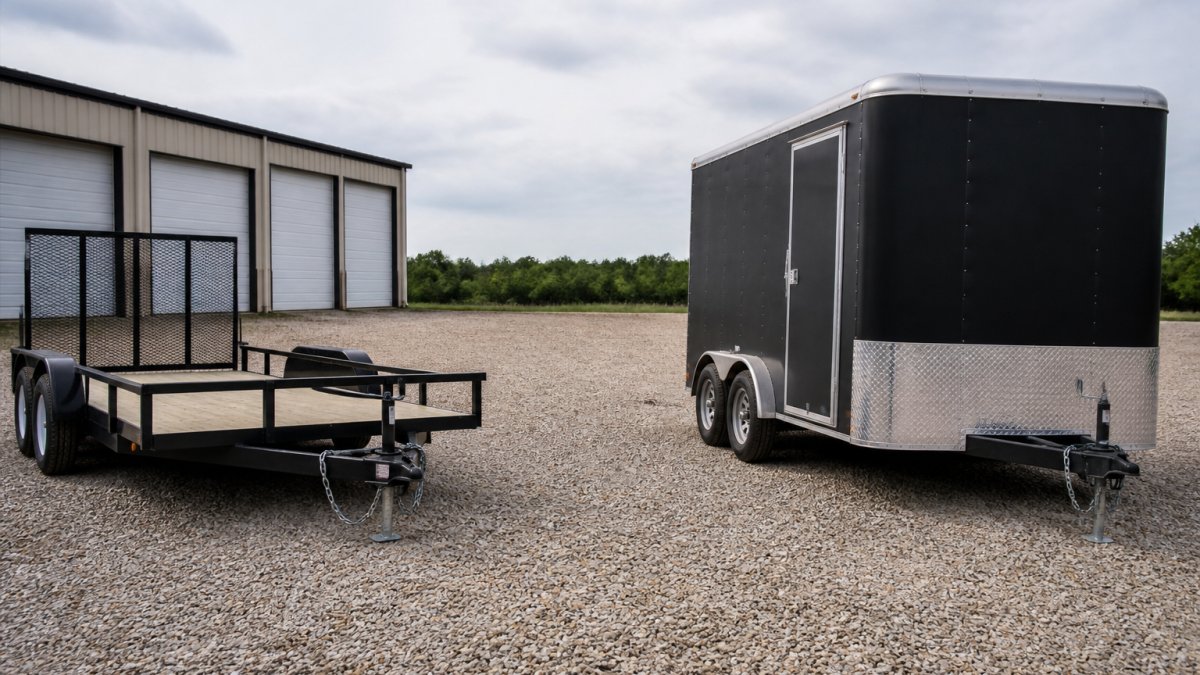
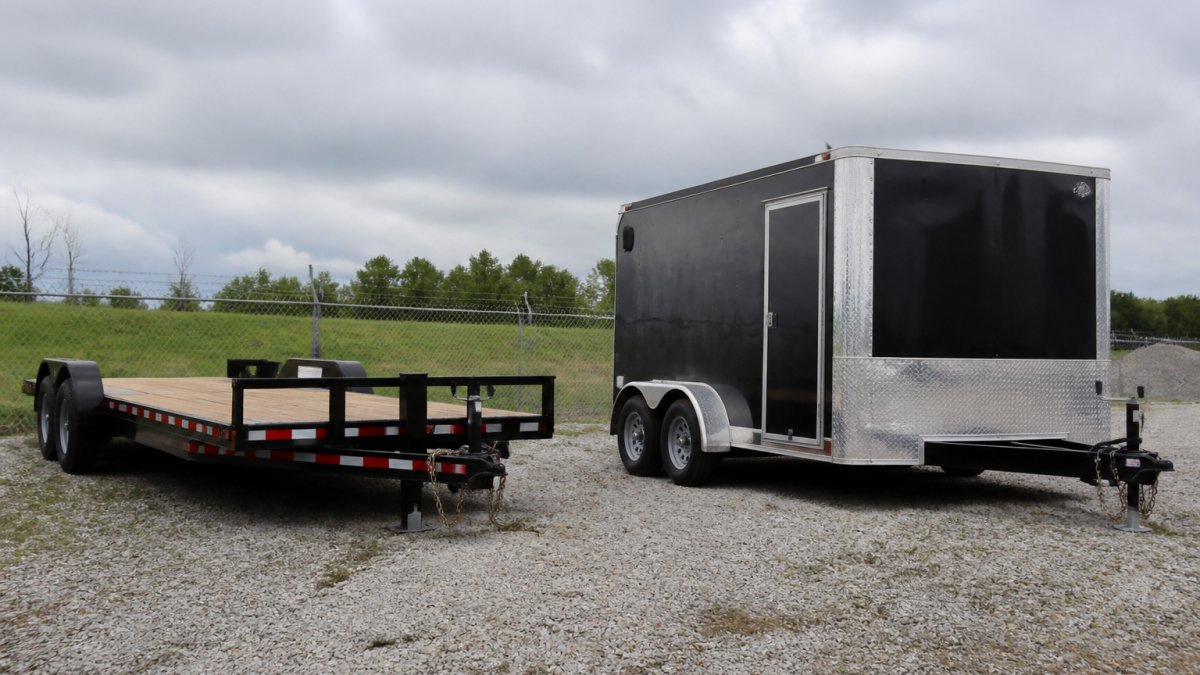
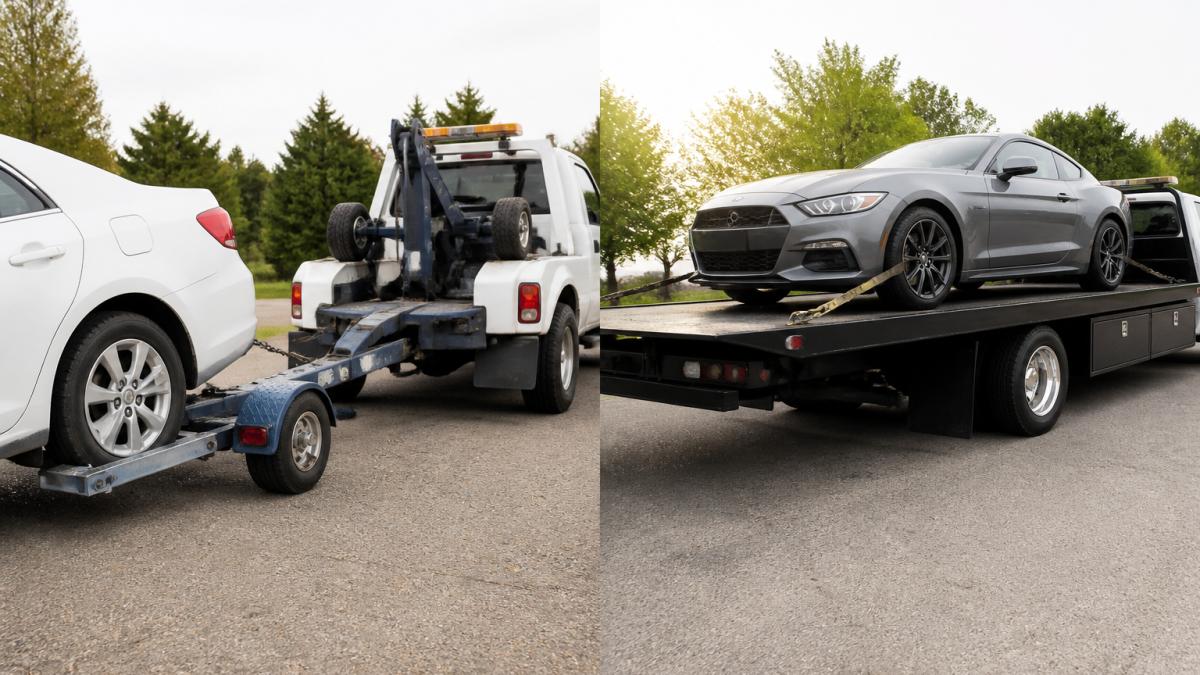
An open trailer handles most vintage vehicles fine. An enclosed trailer protects against road debris, weather, and prying eyes, which matters for concours-level cars. A tow dolly only works for running vehicles and leaves the rear wheels on the ground, fine for a driver, wrong for a car with a locked rear end or a fragile rear valance.
| Trailer Type | Best For | Trade-Off |
|---|---|---|
| Open car hauler | Driver-quality classics, short hauls | Exposed to weather and debris |
| Enclosed trailer | High-value or delicate cars | Higher rental cost, heavier tow, taller deck |
| Tow dolly | Running vehicles, tight budgets | Rear wheels stay on the ground; no protection |
| Deck-over | Low-clearance cars needing shallow ramp angle | Higher load height, more wind resistance |
The Weight Math Most Owners Skip
Three ratings on your tow vehicle's door jamb sticker decide whether the combo is legal and safe: gross vehicle weight rating (GVWR), gross combined weight rating (GCWR), and payload.
A common pattern among enthusiasts: a half-ton pickup rated to tow 9,000 pounds runs out of payload long before it runs out of tow rating once you add an enclosed trailer, a 3,500-pound classic, tools, and two people.
Look up your tow vehicle's towing and payload ratings by VIN
Ground Clearance and Ramp Angle: The Make-or-Break Number
Ground clearance decides whether your car loads at all.
The mechanism is simple geometry. The breakover angle, the angle formed between the ramp and the trailer deck, is what catches a rocker panel or exhaust.
A practical method: park on level ground, lay a straightedge from the ramp surface to the deck, and measure the angle with a digital angle finder.
Environmental Protection: Open vs. Enclosed
For a driver-quality car on a short haul, an open trailer is fine. For anything with fresh paint, replated chrome, or a convertible top, the calculus changes. Road debris, gravel kicked up by passing trucks, and even sustained highway wind can pit paint and scratch brightwork.
A middle path some owners use: an open trailer with a full car cover rated for highway use, plus mud flaps on the tow vehicle.
Best Practices for Securing Vintage Cars on Trailers
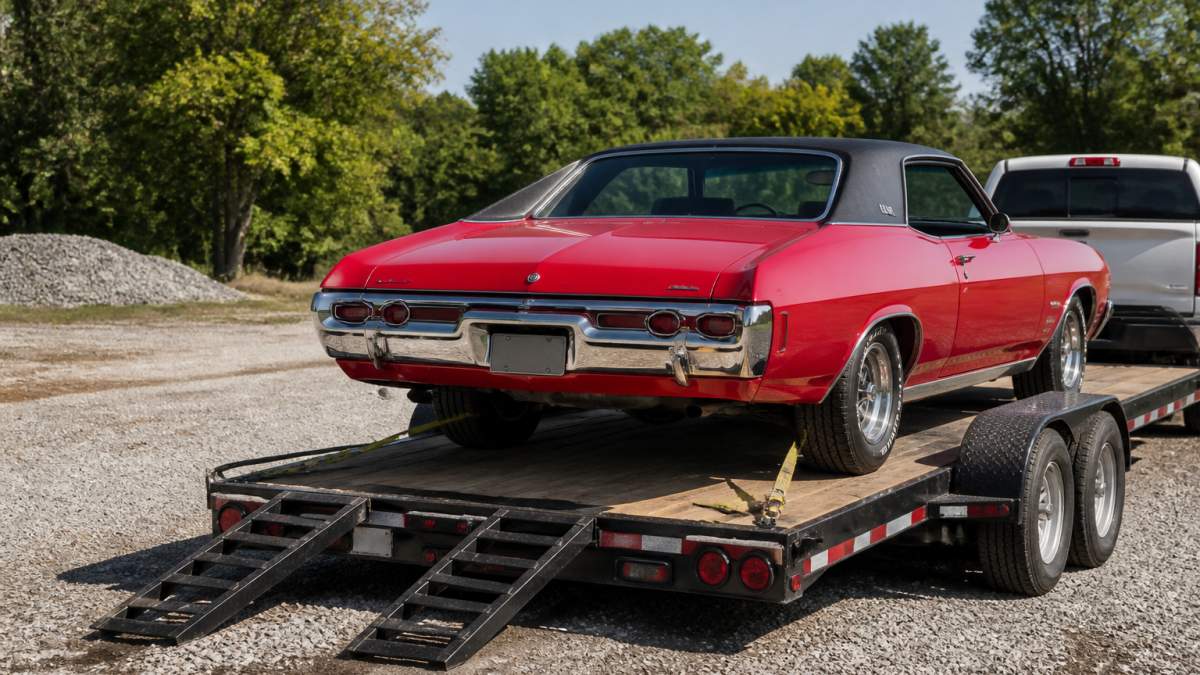
Securing a vintage car comes down to four contact points, correctly placed. Use wheel straps or basket straps over the tires, not chains through the frame. Straps that touch chrome or paint will leave marks you'll be buffing out for weeks.
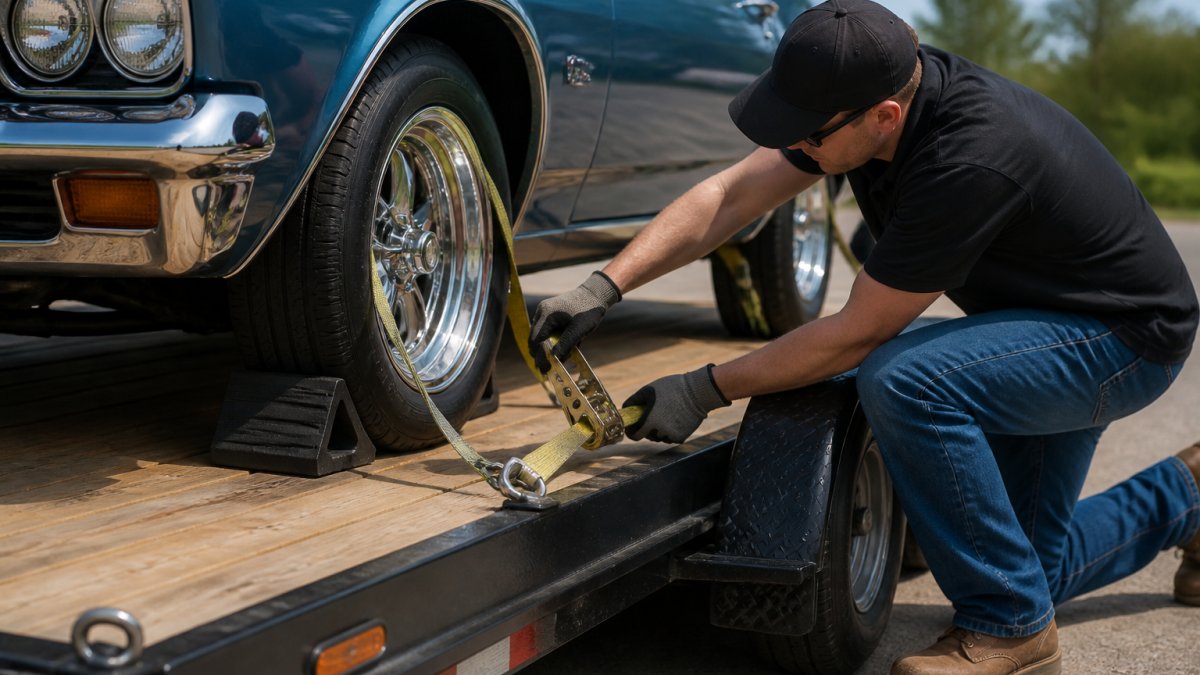
Loading a Low-Clearance Car Without Ripping the Rocker Panels
Follow this sequence, and you'll load a low car without scraping anything:
- Park the trailer on level ground and chock the wheels
- Set ramps at the shallowest angle the trailer allows
- Have a spotter guide the front wheels, watching rocker panel clearance
- Drive or winch slowly, stopping if you hear contact
- Center the car over the axles for proper tongue weight
- Set the parking brake and leave the car in gear
- Cross-strap all four tires at the wheel, not the frame
- Recheck strap tension after the first few miles
Insurance, Liability, and Who Pays When Something Breaks
Your auto policy usually covers the car you're towing, not the trailer. The rental company's insurance typically covers the trailer itself. That gap is where disputes happen, and it is the part of this decision most guides gloss over.
There are three separate exposures on every tow, and they are covered by three different policies:
- Liability, if you cause an accident, your auto policy's liability section generally follows the tow vehicle. Confirm your policy does not exclude trailers.
- Physical damage to the trailer, the rental company's coverage or your own policy, depending on the agreement. Many rental companies sell a damage waiver that shifts this risk for a daily fee.
- Physical damage to your vintage car, this is the one owners get wrong. Your tow vehicle's policy typically does not cover the car on the trailer. Your collector car policy might, but only if transport is a covered use.
The Collector Policy Nuance
Agreed-value collector policies, the kind written for vintage and antique vehicles, often include coverage for the car while it is being transported, but the details vary by carrier and by whether the transport is for pleasure, exhibition, or repair.
A common mistake is assuming the rental company's coverage protects your car. It usually doesn't. The rental agreement covers the trailer as an asset; it does not insure the cargo.
Before you tow, call your collector-car insurer and ask three specific questions:
- Is my car covered while on a trailer being towed by my own vehicle?
- Is it covered if a friend or family member tows it?
- Does the policy pay agreed value, or actual cash value, if the car is damaged in transit?
Get the answers in writing, email or a policy endorsement, not just a phone reassurance.
What the Rental Agreement Actually Says
Read the damage and liability sections of the rental contract before you sign. Look for:
- Whether the damage waiver is included or an add-on
- Whether the waiver covers tire and wheel damage (often excluded)
- Whether you are responsible for loss of use while the trailer is being repaired
- Whether the agreement requires you to carry your own liability coverage
When Hiring a Pro Shifts the Risk
For a six-figure car or a non-running project, a professional transporter with cargo insurance and a certificate of insurance naming you as loss payee may be the better risk transfer. The cost is higher, but the liability picture is cleaner: their policy covers the car in transit, and you are not relying on your own collector policy to fill a gap it may not cover.
402 Car Hauler Rentals vs National Chains
National chains win on location count and one-way rentals. Local specialists win on trailer condition, flexibility, and knowledge of what vintage cars actually need.
| Factor | 402 Car Hauler Rentals | National Chains |
|---|---|---|
| Trailer condition | Maintained for vehicle transport | Varies by location |
| Booking flexibility | Flexible terms for hobbyists | Standard daily rates |
| Vintage car knowledge | Tailored to project and race cars | Generic fleet |
| Local availability | Omaha area focus | Widespread network |
Flexible terms matter when a restoration runs long, and well-maintained trailers mean straps and tire stops that actually hold.
So, Is Renting a Car Trailer Worth It for Your Vintage Vehicle?
For most owners, the answer to is renting a car trailer worth it for vintage vehicles is yes. Renting a car trailer is worth it for vintage vehicles when you tow a few times a year, want to avoid storage and maintenance costs, and can confirm your tow vehicle and insurance cover the job.
Buying makes sense only if you haul monthly. Hiring a pro makes sense for six-figure cars or non-running projects. Everyone in between should rent.
Frequently Asked Questions
What are the risks of using a standard trailer for vintage vehicles?
Standard car hauler ramps are often too steep for vintage cars with low ground clearance, which can scrape rocker panels, exhaust, or oil pans during loading. Some national-chain trailers also use over-the-wheel straps that can stress older suspension and steering components. Confirm your car's ground clearance, wheelbase, and curb weight before booking, and ask whether the trailer has adjustable ramps or soft-loop axle straps designed for classic cars.
Is it cheaper to rent a car hauler or hire a professional transport service?
For a single local move, a car trailer rental usually costs less than a professional auto transport service, especially for short distances. Professional enclosed transport costs significantly more because it includes a driver, insurance, and specialized handling for high-value vehicles. The math flips on cross-country moves or high-value classics, where the rental truck fuel, hotel, and time off work can push DIY costs close to a professional quote. Get both numbers before deciding.
Are there specific insurance requirements for hauling vintage cars?
Your tow vehicle's liability coverage typically follows the trailer in most states, but that coverage usually protects other drivers, not your classic car. Antique auto insurance policies often include coverage during transport by a licensed carrier, but may exclude damage while you tow it yourself. Call your insurer before the rental date and ask two questions: does my policy cover the vintage car while it is on a rented trailer, and does the rental company's damage waiver cover the trailer itself?
How do I determine if my vehicle fits a standard car hauler rental?
Measure your car's curb weight, overall width, wheelbase, and ground clearance, then compare them against the trailer's gross vehicle weight rating and payload capacity. A car that weighs 3,500 pounds needs a trailer with enough payload left over after the trailer's own weight. Check the ramp angle against your front overhang and approach angle; a car with 4 inches of ground clearance often needs longer ramps or a tilt-deck trailer to load without scraping.
What safety features should I look for in a vintage car trailer rental?
Look for four-wheel electric brakes with a working brake controller in your tow vehicle, DOT-rated tires with visible tread and no sidewall cracking, secure D-ring tie-down points welded to the frame, and ratchet straps rated for at least the weight of your car. Ask to inspect the trailer before you sign the rental agreement. Bent tire stops, frayed straps, or missing lights are red flags that the trailer has not been maintained.
The hard part of moving a classic isn't the trailer. It's knowing your tow vehicle's limits, your insurance gaps, and your car's clearance before the day of the haul. 402 car hauler rentals takes that weight off your shoulders with well-maintained trailers, flexible booking terms, and rates built for hobbyists and shop owners alike. Get started with 402 car hauler rentals and haul your project car with confidence.