 how-to
Benefits of Using a Flatbed Car Hauler for Track Days
Table of Contents
- Why a Flatbed Car Hauler Makes Track Days Easier
- Flatbed vs Enclosed Car Trailer: Which Suits Your Track Car?
- How to Load a Car Onto a Flatbed Trailer Safely
- How to Tie Down a Car on a Trailer So It Stays Put
- Choosing Trailer Capacity and Tow Vehicle Compatibility
- Your Track Car Transport Checklist Before You Leave
- Conclusion: Is Renting a Flatbed Car Hauler Worth It?
- Frequently Asked Questions
Last Updated: October 7, 2026
Why a Flatbed Car Hauler Makes Track Days Easier
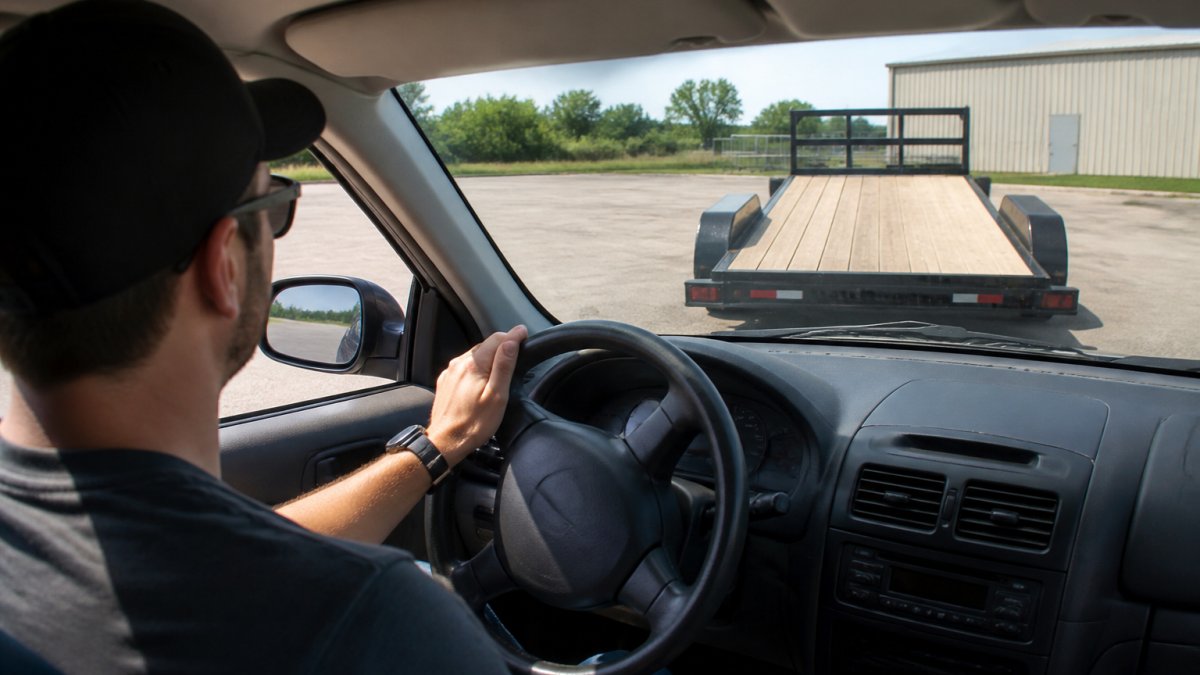
A flatbed car hauler is an open trailer with a low, flat deck built to carry a vehicle.
Track days punish drivers who guess. If your race car has no plates, no lights, or a fuel cell, it rides on a trailer. Drivers who plan their transport early spend the morning checking tire pressures and brake pads.
The benefits of using a flatbed car hauler for track days come down to four things:
- Low deck height. Ramps are shorter and the approach angle is gentler, so low-slung cars clear without scraping.
- Open access. You can reach every corner of the car from the deck. No crawling into a dark box.
- Flexible loads. Spare wheels, jacks, fuel jugs, and a tool chest ride alongside the car.
- Simple inspection. Tie-downs and tires stay visible the whole trip.
HPDE weekends are long. Anything that shortens load-in and load-out gives you more time on track.
Flatbed vs Enclosed Car Trailer: Which Suits Your Track Car?
An open flatbed wins on cost, weight, and access. An enclosed trailer wins on weather protection and security. For track days specifically, the decision usually comes down to three questions: how far you tow, whether you sleep at the track, and how much gear you bring.
When an Open Flatbed Wins
Choose an open flatbed car hauler when:
- You tow short to medium distances to local tracks
- Your car is a dedicated race car or a track-day build
- You want to carry tires, tools, and gear on the same deck
- You tow with a half-ton truck or SUV and care about trailer weight
- You want to see the load in your mirrors at all times
- You load and unload solo at the paddock
The open design keeps the overall footprint smaller and the tow weight lower. That matters for turning radius in a crowded paddock and for fuel on the highway. It also matters at the scales: an open aluminum flatbed in the common 16-to-20-foot range typically weighs far less than a comparable enclosed trailer, which leaves more of your tow vehicle's payload for the car, wheels, and fuel.
When an Enclosed Trailer Is Worth the Extra Cost
An enclosed trailer makes sense when:
- You tow long distances and want the car out of the weather
- You store the car in the trailer between events
- You carry expensive spares and want them locked up
- You want a rolling workshop with lights and a bench
- You run multi-day events and leave the rig overnight in an unsecured lot
The trade-off is real. Enclosed trailers weigh more, cost more, and block your rear view. You also need a bigger tow vehicle and more space to park. At a packed paddock, an enclosed trailer can be harder to maneuver into a tight spot than a flatbed of the same deck length.
Track-Day Decision Factors
| Factor | Open Flatbed | Enclosed Trailer |
|---|---|---|
| Weight | Lighter | Heavier |
| Cost | Lower | Higher |
| Weather protection | None | Full |
| Load access | Full walk-around | Side door only |
| Gear security | Open | Lockable |
| Overnight storage | Car exposed | Car secured |
| Paddock footprint | Smaller | Larger |
| Best for | Local track days | Long-distance towing |
How to Load a Car Onto a Flatbed Trailer Safely
Loading a car onto a flatbed trailer safely means matching your ramps to the deck height, keeping the approach angle shallow, and using a spotter the whole way up.
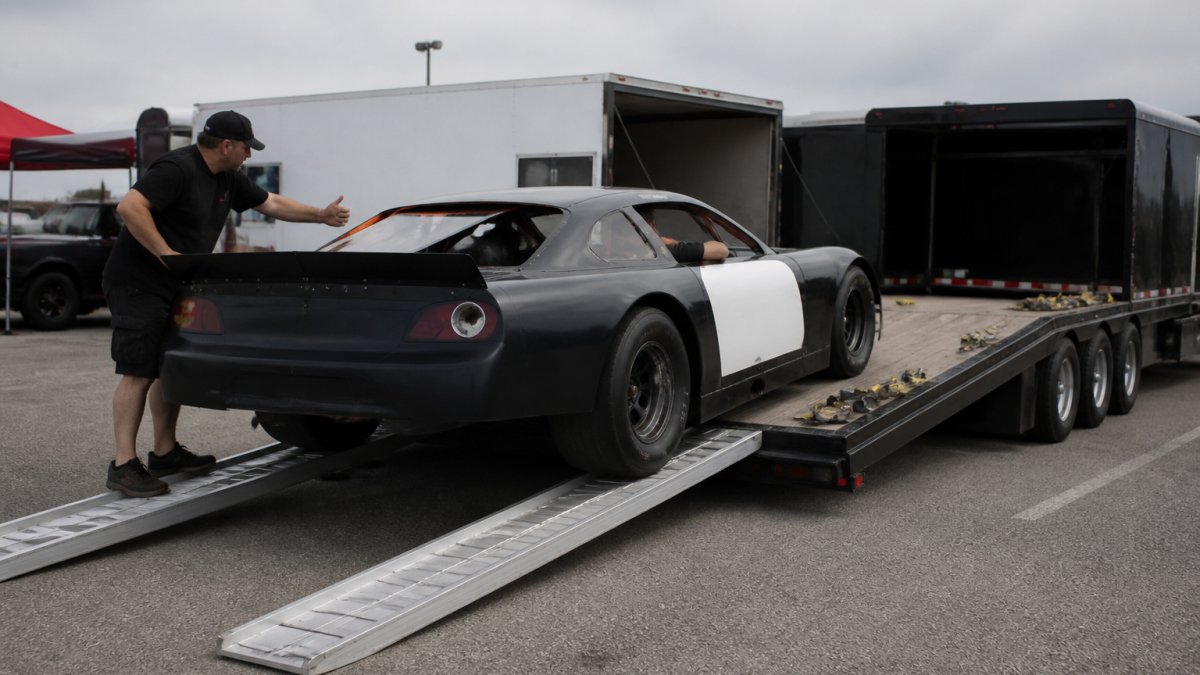
Follow this order every time:
- Park the trailer on level ground and set the tow vehicle's parking brake.
- Chock the trailer wheels so it cannot roll.
- Check that ramps are rated for the car's weight and locked to the deck.
- Line the car up square with the deck before you touch the throttle.
- Use a spotter to guide the driver up and signal stop.
- Set the parking brake and leave the car in gear once it is on the deck.
Ramps, Winches, and Approach Angles
The approach angle is the angle between the ramp and the ground. A steep ramp scrapes front splitters and exhausts. Longer ramps lower the angle.
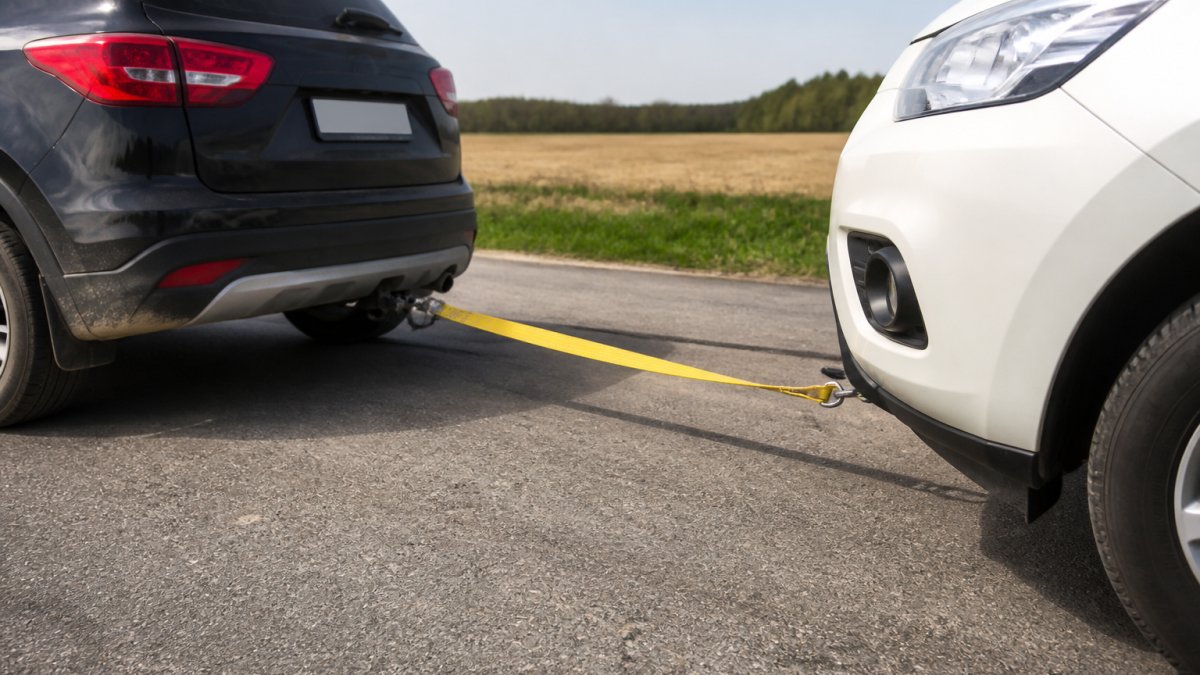
If your car is too low to drive up, use a winch. A winch pulls the car up at a steady speed and removes the risk of a clutch dump or a stall halfway up the ramp. Check the winch rating against the car's weight before you start.
How to Tie Down a Car on a Trailer So It Stays Put
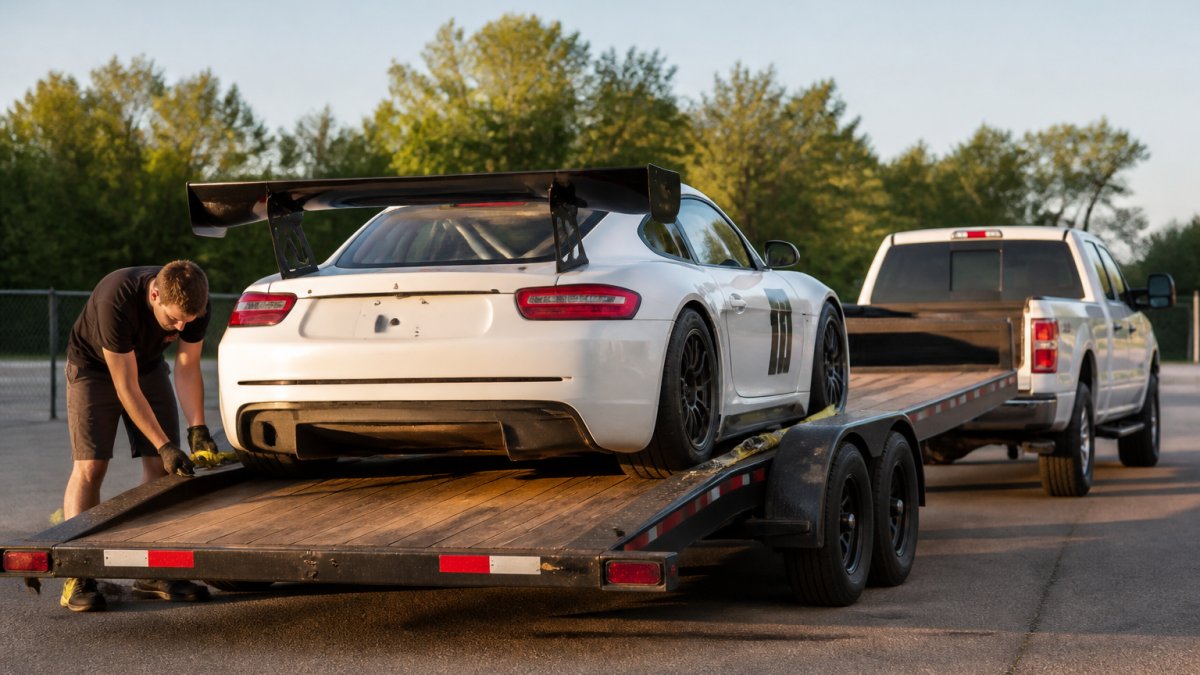
Tie down a car on a trailer by anchoring the four corners to the trailer frame or dedicated tie-down points, not to sheet metal or suspension parts that can bend.
Strap Placement and Load Securement Basics
Use four straps at minimum, one per corner. Cross them where the trailer design allows so the car cannot slide sideways.
- Anchor to the frame or axles, not brake lines or fuel lines.
- Use rated straps with a working load limit above the car's weight.
- Keep straps straight, not twisted, so they hold full strength.
- Check tension after the first few miles and again at every stop.
- Add wheel chocks or basket straps over the tires for extra hold.
Choosing Trailer Capacity and Tow Vehicle Compatibility
Match the trailer capacity to the loaded weight of the car plus gear, then confirm your tow vehicle can pull that total safely. This is the step where most track-day towing mistakes start, because the car is only part of the load.
Do the Loaded-Weight Math
Add up the real numbers before you book anything:
- Car weight with fuel and driver
- Spare wheels, tools, and fuel jugs
- Trailer weight empty
- Total payload against the trailer's rated capacity
A typical track-day load looks like this: a 3,000-pound car, four spare wheels at roughly 40 pounds each, a toolbox, a jack, jack stands, and a few fuel jugs. That gear alone can add several hundred pounds. The trailer's gross vehicle weight rating (GVWR) must cover the car, the gear, and the trailer itself. The trailer's payload capacity is the GVWR minus the empty trailer weight, and that is the number your car and gear have to fit inside.
Match the Tow Vehicle to the Loaded Trailer
Your tow vehicle needs enough towing capacity to cover the loaded trailer, plus a hitch and ball rated for the same. Check these numbers on the driver's door jamb sticker and in the owner's manual:
- Gross vehicle weight rating (GVWR)
- Gross combined weight rating (GCWR)
- Payload capacity
- Tongue weight limit
- Hitch class and ball rating
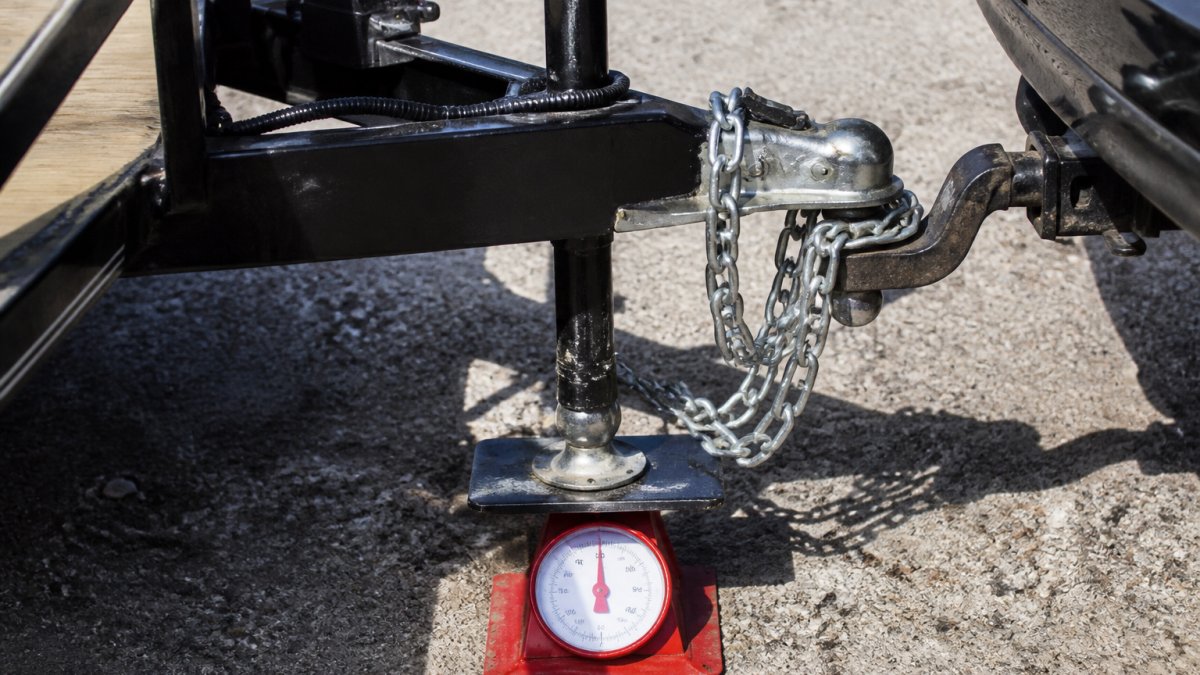
Tongue weight is the downward force the loaded trailer puts on the hitch. Too little and the trailer can sway; too much and you overload the rear axle and steering. A common target is roughly 10 to 15 percent of the loaded trailer weight on the tongue, but confirm the figure your tow vehicle and hitch manufacturer specify.
Trailer Brakes and State Rules
Trailer brakes matter here. Many states require brakes on trailers above a certain weight, and brakes make a loaded trailer far easier to stop. Requirements vary by state and by trailer weight, so confirm the rules that apply to your setup before you tow. The Federal Motor Carrier Safety Administration publishes guidance on load securement and towing safety that is worth reading before a long haul.
Pre-Trip Mechanical Checks
Check the trailer tires, wheel bearings, and lights before every trip. A bearing that runs dry on the highway can seize and take the wheel with it. Tire age matters too: trailer tires often age out before they wear out, so check the date code on the sidewall, not just the tread.
Your Track Car Transport Checklist Before You Leave
Run this checklist before every track weekend. It takes ten minutes and prevents most roadside problems.
- Trailer tires at correct pressure, no cracks or bulges
- Wheel bearings greased and cool to the touch after a short roll
- Trailer brakes working and adjusted
- All lights and turn signals tested
- Ramps rated, secured, and stowed
- Four tie-down straps rated and free of fraying
- Wheel chocks in place
- Car fluids topped off and battery secured
- Tools, spares, and fuel jugs loaded and strapped
- Vehicle condition documented with photos
- Tow vehicle fuel, tires, and hitch checked
- Track schedule and paddock plan confirmed
Pack for the paddock, not just the road. A jack, jack stands, a torque wrench, and a spare set of brake pads cover most track-day fixes. Strapping your gear to the deck keeps it from sliding into the car.
Conclusion: Is Renting a Flatbed Car Hauler Worth It?
Renting a flatbed car hauler is worth it for any driver who tows to track days. You skip the cost of buying, storing, and maintaining a trailer, and you still get a low deck, easy loading, and full access to the car.
The benefits of using a flatbed car hauler for track days show up in the small stuff: a shorter load-in, a strap you can see from the cab, and gear that rides with the car instead of in the back seat.
Frequently Asked Questions
What are the main benefits of using a flatbed car hauler for track days?
A flatbed car hauler loads from ground level, so low-slung race cars clear the ramps without scraping. You can carry spare tires, tools, and a jack on the open deck, and you keep an eye on the car the whole drive. Flatbeds also cost less to rent than enclosed trailers and fit more tow vehicles within their weight limits, which matters when you haul to an HPDE or track event several times a season.
Is a flatbed or enclosed trailer better for a track car?
It depends on distance, weather, and budget. An enclosed trailer protects the car from road debris and rain and gives you a locked space for gear, but it weighs more, costs more, and needs a stronger tow vehicle. A flatbed car hauler is lighter, cheaper, and easier to load, which suits most track day trips. For long-distance towing in winter, an enclosed trailer earns its price. For local events, a flatbed usually wins.
How do you safely load a race car onto a flatbed trailer?
Line the ramps up with the trailer deck and check the approach angle so the front splitter clears. Have a spotter guide the driver up the ramps at a slow, steady speed, and stop once the car sits centered over the axles. If the car does not run, use a winch with the strap hooked to a solid point on the chassis. Set the parking brake, leave the car in gear, and chock the wheels before you touch a single strap.
What size trailer do I need to haul a track car?
Measure your car's overall length, width, and weight first. Most track cars fit a 16- to 20-foot flatbed with a 7,000-pound gross vehicle weight rating, but a full-size car or one with a wide body kit may need more deck length. Check that the deck width clears your tires and that the loaded weight, plus gear, stays under both the trailer's capacity and your tow vehicle's rating.
Track weekends are stressful enough without worrying about your trailer. 402 car hauler rentals offers reliable trailer rentals, flexible terms, and competitive rates for project cars and race vehicles alike. Our dependable trailers and top-notch service keep your focus on the track, not the tow. Get started with 402 car hauler rentals and haul your car with confidence.