 how-to
How to Load a Car Onto a Trailer Safely: Step-by-Step
Table of Contents
- Before You Load: Pre-Loading Safety Checks
- How to Winch a Car Onto a Trailer
- How to Load a Non-Running Car Onto a Trailer
- Car Trailer Weight Distribution: The 60/40 Rule
- How to Secure a Car to a Trailer
- Ramp Angle, Ground Conditions, and Trailer Stability
- Post-Loading Inspection and Emergency Response
- Frequently Asked Questions
Last Updated: October 6, 2026
Before You Load: Pre-Loading Safety Checks
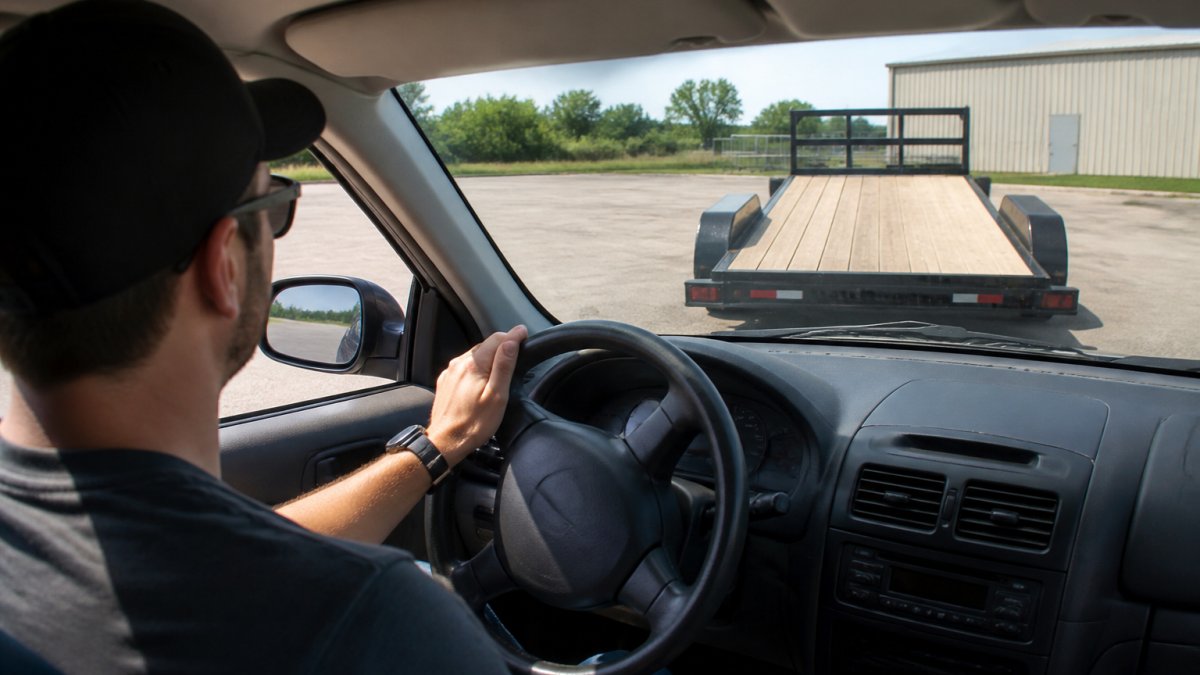
Learning how to load a car onto a trailer safely starts long before the car moves an inch. The work happens on the ground: inspecting the trailer, checking your tow vehicle, and confirming the numbers add up.
A car trailer is a flatbed platform that carries a vehicle on two axles while a separate tow vehicle pulls it. Get the setup right and the load rides steady.
Trailer and Tow Vehicle Inspection
Walk the trailer before it goes anywhere near a car.
- Check tire pressure and look for sidewall cracks
- Test the lights, turn signals, and brake lights
- Inspect the coupler for wear and confirm it locks onto the hitch
On the tow vehicle, check the hitch rating, the ball size, and the connector for the trailer wiring. A loose or corroded connector is one of the most common reasons trailer lights fail mid-trip.
Weight Limits and Capacity Verification
Add up every number before you commit. The trailer has a gross vehicle weight rating, and the tow vehicle has its own limit. Your cargo weight includes the car, any tools, spare tires, and passengers in the cab.
Check the door sticker on the tow vehicle for its ratings. Then compare that against the trailer weight plus the vehicle weight plus everything else on board.
How to Winch a Car Onto a Trailer
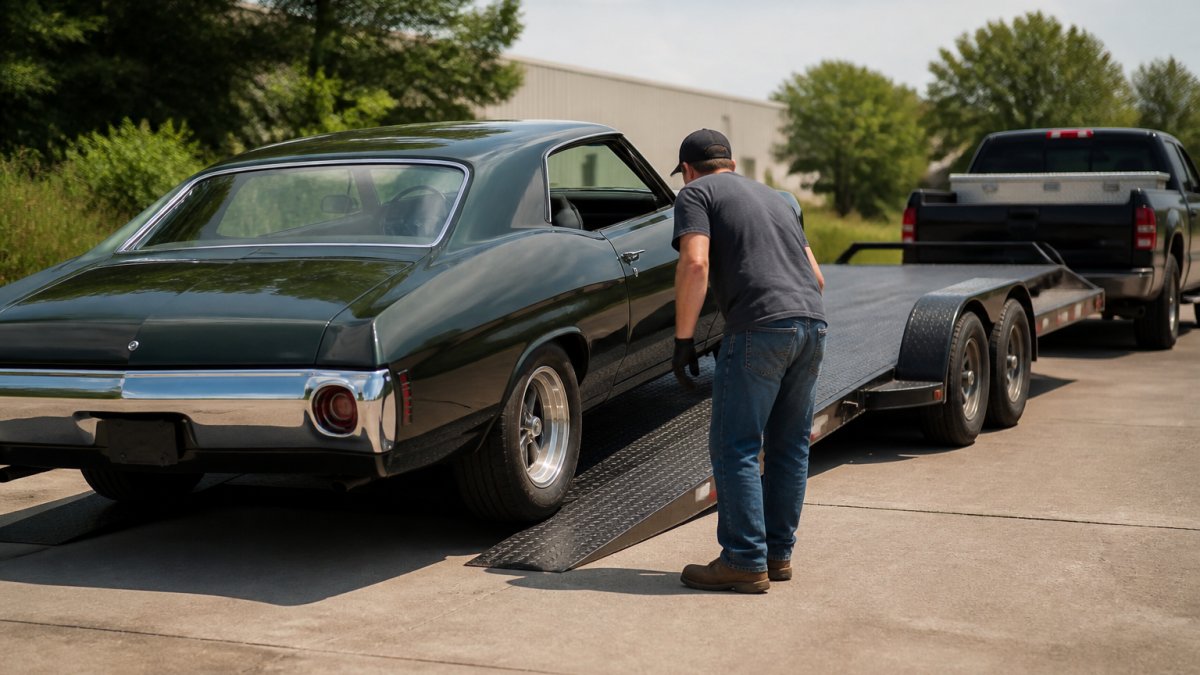
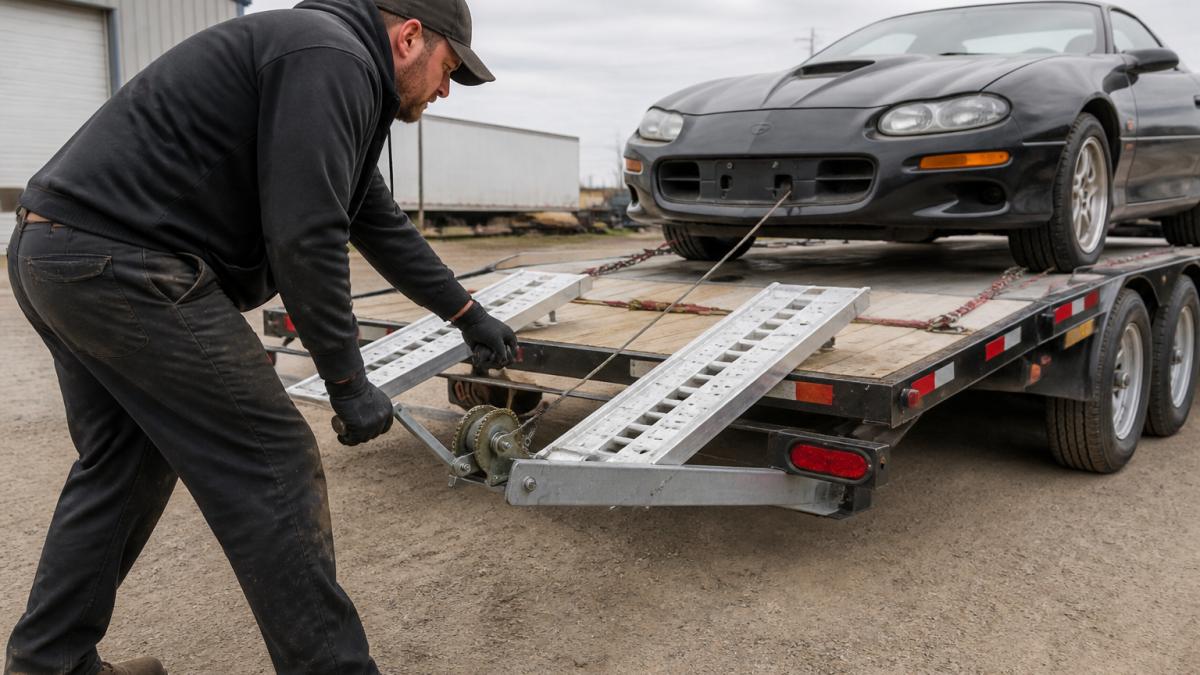
Winching is the safest way to load a car that cannot drive itself up the ramps. It also works well when the car runs but you want full control of the approach.
Sizing the Winch to the Load
Before you pull, confirm the winch can handle the job. A winch is rated by line pull, and that rating drops as more cable spools onto the drum. A winch rated at 5,000 pounds on the first layer may only pull 3,500 pounds on the third layer.
- Look up the vehicle's curb weight, not its gross weight
- Add the weight of any cargo still inside the car
- Compare that total against the winch's rated line pull at the layer you will actually use
A come-along or ratchet puller is fine for a light car on a shallow ramp, but it is a poor choice for a full-size vehicle or a steep approach.
Setting Up the Winch and Cable
Mount the winch to the trailer frame at the front, not to a removable part. Route the cable straight back toward the car so it pulls in line with the trailer centerline.
- Attach the hook to a solid point on the car, never to a bumper cover or trim
- Use a hook with a safety latch, or better, a closed shackle through a frame-mounted point
- Lay the cable flat and free of kinks before you start
Operating the Winch Safely
Stand to the side of the cable, never in line with it. If the cable snaps under load, it whips back along its own path.
Crank or run the winch slowly and watch the car as it climbs. Stop the moment the car drifts off center. Keep your hands and clothing clear of the drum and the fairlead. Never let anyone stand between the car and the trailer while the winch is under load.
When the car reaches the front of the trailer, stop the winch, set the car's parking brake if it works, and leave the winch cable attached until at least two tie-down straps are tight. The winch is a loading tool, not a tie-down.
How to Load a Non-Running Car Onto a Trailer
A non-running car needs more prep because you cannot steer or brake it during the load. Plan the whole pull before you touch the winch. If the car rolls, nothing on board will stop it.
Preparing the Disabled Vehicle
- Confirm the parking brake is off and the transmission is in neutral
- Unlock the steering so the front wheels can follow the ramps
- Remove anything loose from the car
Using a Winch or Come-Along for Non-Running Vehicles
For a car that will not start, a winch or a come-along does all the work. Set the trailer on level ground first. Chock the trailer wheels and lower the ramps so they sit flat on the surface.
Pull the car up in one slow, even motion. Watch the front tires as they meet the ramp. If the car starts to crab sideways, stop, lower it back, and reset the alignment.
Car Trailer Weight Distribution: The 60/40 Rule
Weight distribution decides how the trailer tracks behind you. Aim for about 60 percent of the car's weight in front of the trailer axles and 40 percent behind. That puts enough weight on the tongue to keep the trailer from swaying.
Too little tongue weight and the trailer fishtails. Too much and the rear of the tow vehicle sags and steers poorly.
| Load Position | Tongue Weight | Result |
|---|---|---|
| Car too far back | Too light | Trailer sways at speed |
| Car centered at 60/40 | Correct | Stable tracking |
| Car too far forward | Too heavy | Tow vehicle sags, poor steering |
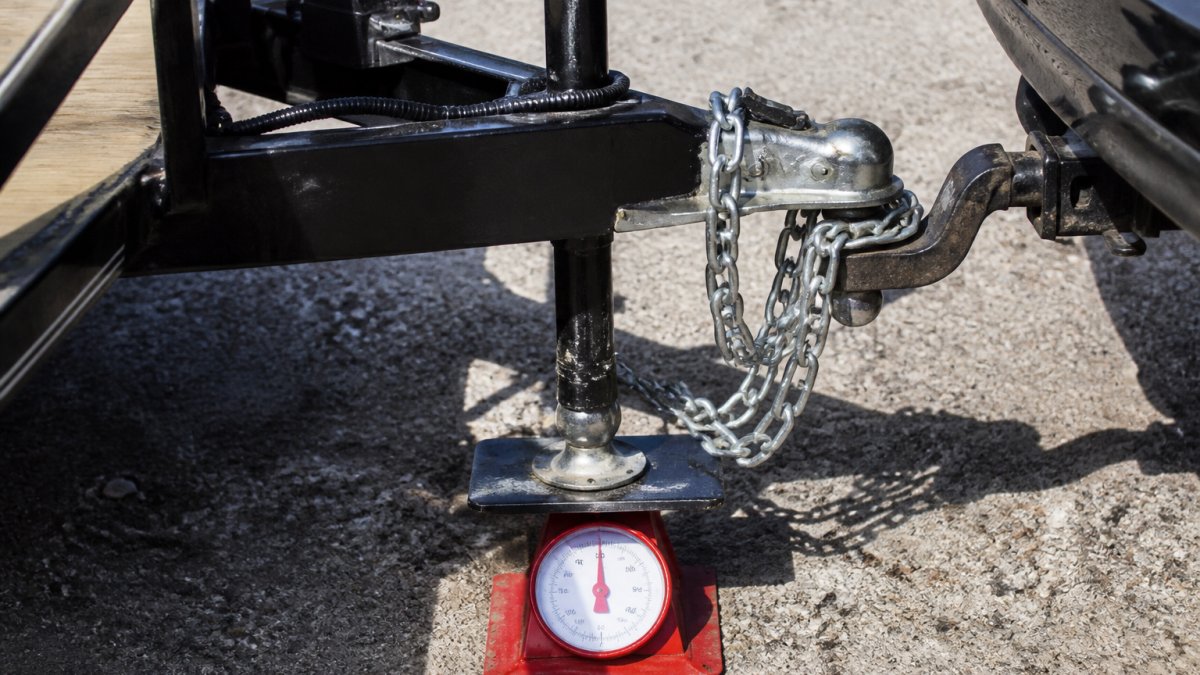
Measuring Tongue Weight Without a Scale
A tongue-weight scale is the only exact method, but most people loading a car at home do not own one. A bathroom scale and a lever arm get you close.
If you do not have a scale, use the rise method as a rough check. Measure the height of the tow vehicle's rear bumper before the trailer is coupled, then again after the car is loaded and the trailer is hitched.
Positioning the Car Over the Axles
Start by placing the car so its center of gravity sits slightly forward of the trailer axles. On most car haulers, that puts the front tires a few inches past the front axle line and the rear tires well behind the rear axle line. The exact spot depends on the car's weight balance and the trailer's axle placement.
- Roll the car forward in small increments, checking the tongue rise each time
- Mark the trailer deck with tape once you find the right spot for that specific car
- Note the position in your phone so you can repeat it next time
Correcting a Misloaded Trailer
If the trailer sways at speed, the fix is almost always more tongue weight. Pull over, move the car forward a few inches, and re-strap. Do not try to correct sway with the tow vehicle's steering or by speeding up, both make it worse.
If the rear of the tow vehicle sags and the steering feels light, the car is too far forward. Move it back in small steps and recheck the bumper height.
How to Secure a Car to a Trailer
Straps hold the car to the trailer, and they matter as much as the winch. Use four tie-down straps at minimum, one at each corner. Route each strap from a solid point on the car to a tie-down point on the trailer frame.
Tie-Down Points and Strap Placement
- Use the car's built-in tie-down slots or frame holes, not the body panels
- Cross the rear straps to limit side-to-side movement
- Keep straps away from brake lines and fuel lines
An axle strap wraps around the axle and gives you a clean anchor point when the car has no factory tie-downs. It spreads the load and protects the suspension.
Tensioning and Knot Alternatives
Tighten each strap with a ratchet until it is firm, not crushing. Then press down on the car and watch for slack. Retighten any strap that loosens.
Skip knots. Ratchet straps and cam buckles lock in place and release cleanly. A knot can slip once the load shifts.
Four straps, crossed at the rear, tightened firm, and rechecked after the first few miles. That combination keeps a car planted on the trailer.
Ramp Angle, Ground Conditions, and Trailer Stability
Ramp angle decides whether a low car scrapes or a tall one clears. A steep ramp is hard to climb and shifts weight fast.
Ground conditions matter just as much. Soft grass, gravel, or a slope under the ramps can let them sink or slide.
- Park on level, solid ground
- Lower ramps so they rest flat, not floating
- Chock the trailer wheels before loading
For a lowered car, drive it up at a slight angle or add wood blocks under the ramp feet to soften the transition.
Post-Loading Inspection and Emergency Response
A final walk-around catches the problems that cause breakdowns. Do it every time, even on a short trip.
- Tug each strap and confirm it is tight
- Check that the car sits centered on the trailer
- Confirm all lights work: running, brake, and turn
- Verify the coupler is locked and the safety chains are crossed
Stop after the first few miles and recheck the straps. New straps stretch, and the load settles once it is rolling.
If a strap breaks or the load shifts while you are moving, slow down gradually. Do not slam the brakes. Pull onto the shoulder, set the parking brake, and re-secure the car before you continue.
Frequently Asked Questions
How do I properly secure a car to a trailer?
Use four tie-down straps rated for the vehicle's weight, attaching them to the trailer frame or dedicated tie-down points and the car's axle straps. Cross the straps for lateral stability and tighten with ratchets until snug. Check tension after the first few miles and every 50-100 miles. Avoid attaching to bumpers or sheet metal. Ensure the parking brake is set and the transmission is in park or gear.
What is the 60/40 rule for loading a trailer?
The 60/40 rule means placing about 60% of the cargo weight in front of the trailer's axle and 40% behind it. This positions the center of gravity slightly forward of the axle, increasing tongue weight for stable towing. For a car, drive it forward until the engine is over or slightly ahead of the axle. This prevents sway and improves handling.
How do you line up a car with trailer ramps?
Position the trailer on level ground and chock the wheels. Align the ramps with the trailer's wheel tracks and secure them. Have a spotter guide you as you slowly approach, keeping the car's wheels centered on the ramps. Use low gear and steady throttle. If needed, adjust the tow vehicle or trailer to create a straight path. Stop immediately if the car drifts off the ramps.
Where should a car sit on a trailer for proper weight distribution?
The car should sit so its center of gravity is slightly forward of the trailer's axle, achieving 10-15% of the total trailer weight as tongue weight. For most cars, this means the engine compartment is over or just ahead of the axle. Use a tongue weight scale to verify. Adjust the car's position forward or backward until the tongue weight is within the tow vehicle's rating.
Loading a car onto a trailer safely comes down to prep, patience, and the right gear. A worn strap or a bent ramp pin can turn a simple haul into a serious risk. At 402 car hauler rentals, we keep our trailers maintained and ready, with flexible terms that fit project timelines and race schedules. Our dependable trailers, competitive rates, and Omaha-based service make hauling your car simpler. Get started with 402 car hauler rentals and move your vehicle with confidence.