 blog
7 Tips for Towing a Car Long Distance Safely
Table of Contents
- 1. Match Towing Capacity and Payload to Your Load
- 2. Learn How to Secure a Car on a Trailer the Right Way
- 5. Plan Your Route Around Weight, Weather, and Parking
- 6. Know the Legal and Insurance Requirements Before Crossing State Lines
- 7. Prepare for Breakdowns and Roadside Emergencies
- What to Do When You Arrive: Handoff, Inspection, and Unloading
- Frequently Asked Questions
Last Updated: October 14, 2026
1. Match Towing Capacity and Payload to Your Load
The first rule of towing a car long distance is simple: when towing a car, your tow vehicle must be rated for the load behind it. Overloading a truck or trailer is the fastest way to lose control on the highway.
Your towing capacity is not one number. It is a set of limits, and the lowest one wins.
Reading Your Ratings: GVWR, GCWR, and Tongue Weight
Gross Vehicle Weight Rating (GVWR) is the most your truck can weigh when fully loaded, including passengers and cargo. Gross Combined Weight Rating (GCWR) is the ceiling for the truck and trailer together. Tongue weight is how much of the trailer's weight presses down on your hitch.
Check the driver's door jamb sticker and your owner's manual for the real numbers. The NHTSA vehicle safety ratings database is a good place to confirm your vehicle's specs.
| Rating | What It Measures | Where to Find It |
|---|---|---|
| GVWR | Max weight of the tow vehicle alone | Door jamb sticker |
| GCWR | Max weight of truck plus trailer | Owner's manual |
| Tongue weight | Downward force on the hitch | Owner's manual |
| Hitch rating | Max weight your hitch can pull | Hitch label |
Tongue weight should land between 10% and 15% of the trailer's loaded weight. Too little and the trailer sways. Too much and your steering gets light.
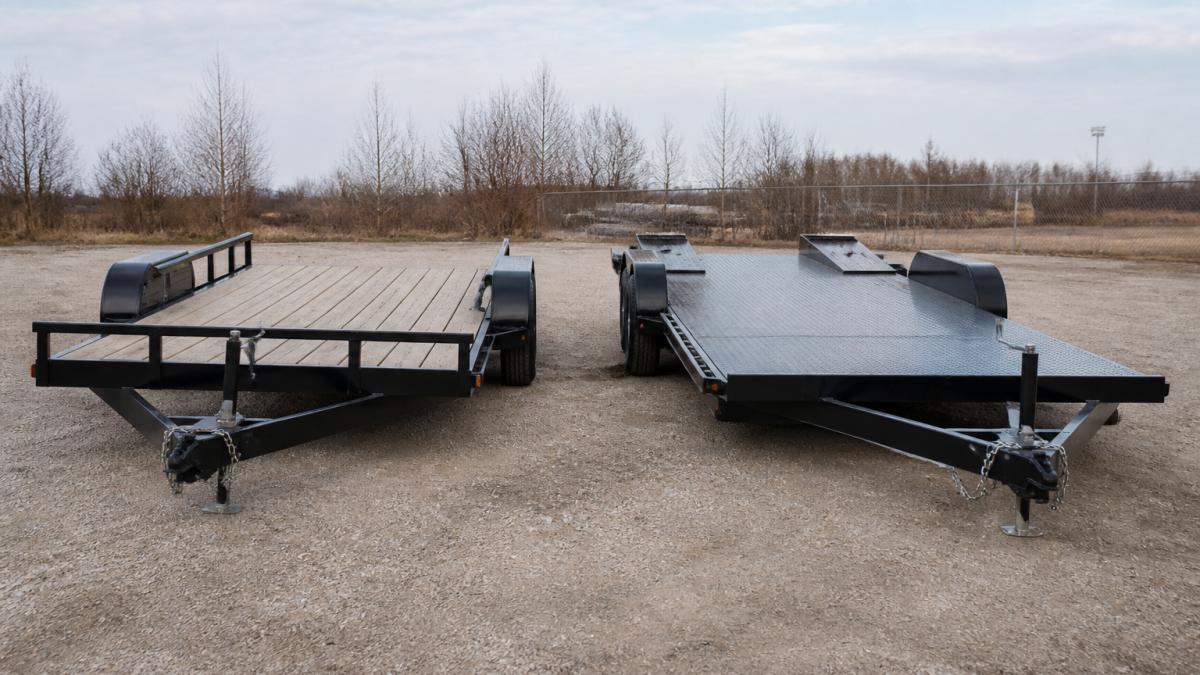
Tow Dolly, Flatbed, or Professional Transport? A Decision Guide
Most guides tell you the three options exist.
Start with the drivetrain. This single fact eliminates most of the wrong answers:
- Front-wheel drive: A tow dolly works. The rear wheels roll on the ground, which is fine because they are not driven. This is the cheapest self-tow option and the easiest to load.
- Rear-wheel drive: Do not use a dolly. The driven rear wheels would spin the transmission internals with no lubrication circulating. Use a flatbed or a dolly that lifts the rear (rare and hard to find).
- All-wheel drive or 4WD: Flatbed only, unless the manufacturer explicitly lists a recreational towing procedure in the owner's manual. Even then, most AWD systems require all four wheels off the ground. Check the manual before you assume.
Then weigh your own experience. A dolly is the most forgiving first-tow option for a front-wheel-drive car on a short haul.
When to skip self-towing entirely. Professional transport, usually an open multi-car carrier or an enclosed single-car carrier, makes sense when:
- The car does not run, roll freely, or steer
- The distance is extreme and you cannot spare the days
- The vehicle is valuable enough that enclosed transport is worth the premium
Open carriers are the budget option and expose the car to road debris and weather.
The short version: front-wheel drive and a short haul, a dolly is fine.
For most classic and race cars, a flatbed is the safer pick.
2. Learn How to Secure a Car on a Trailer the Right Way
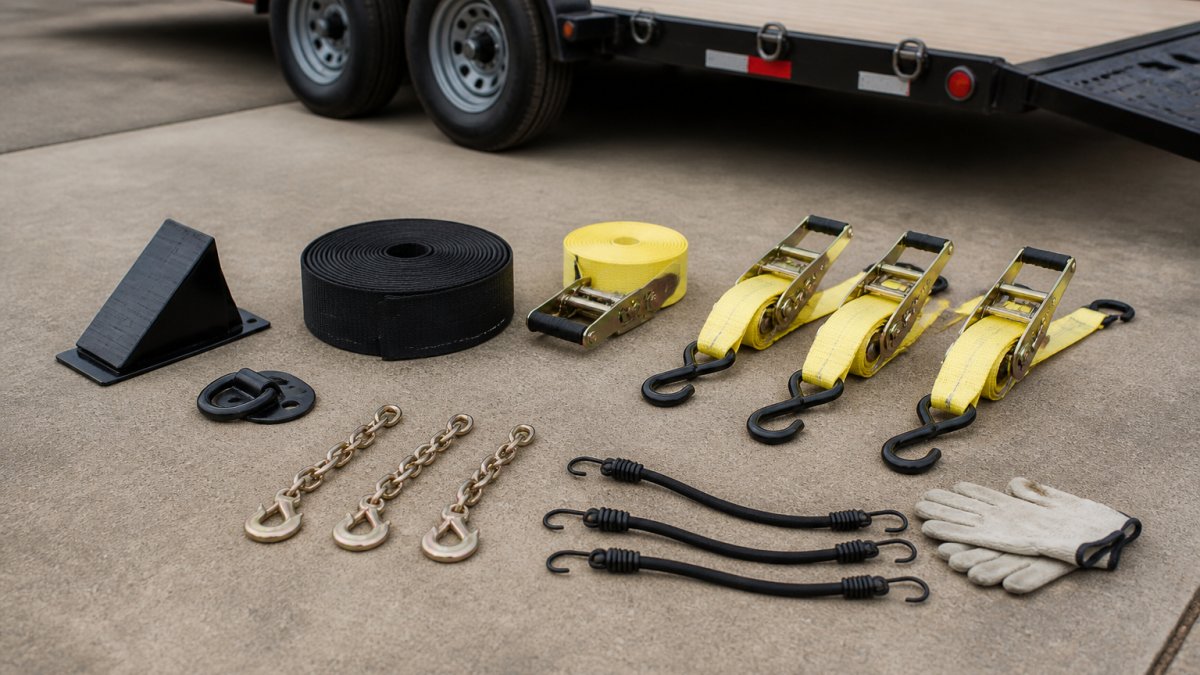
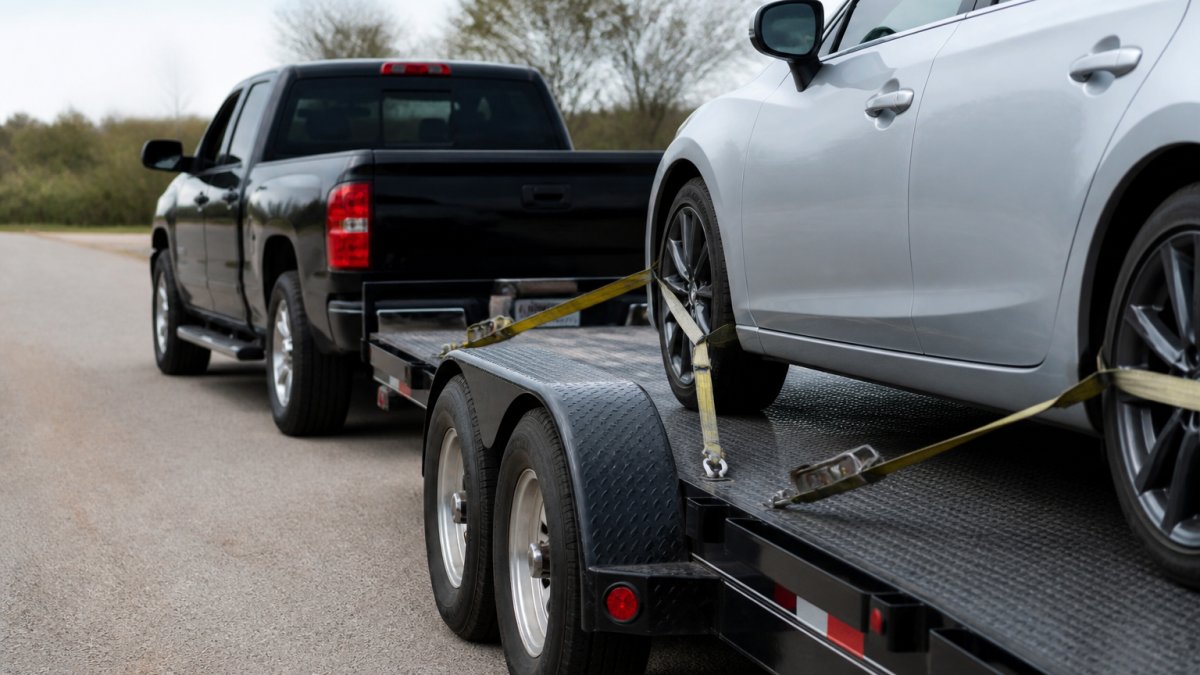
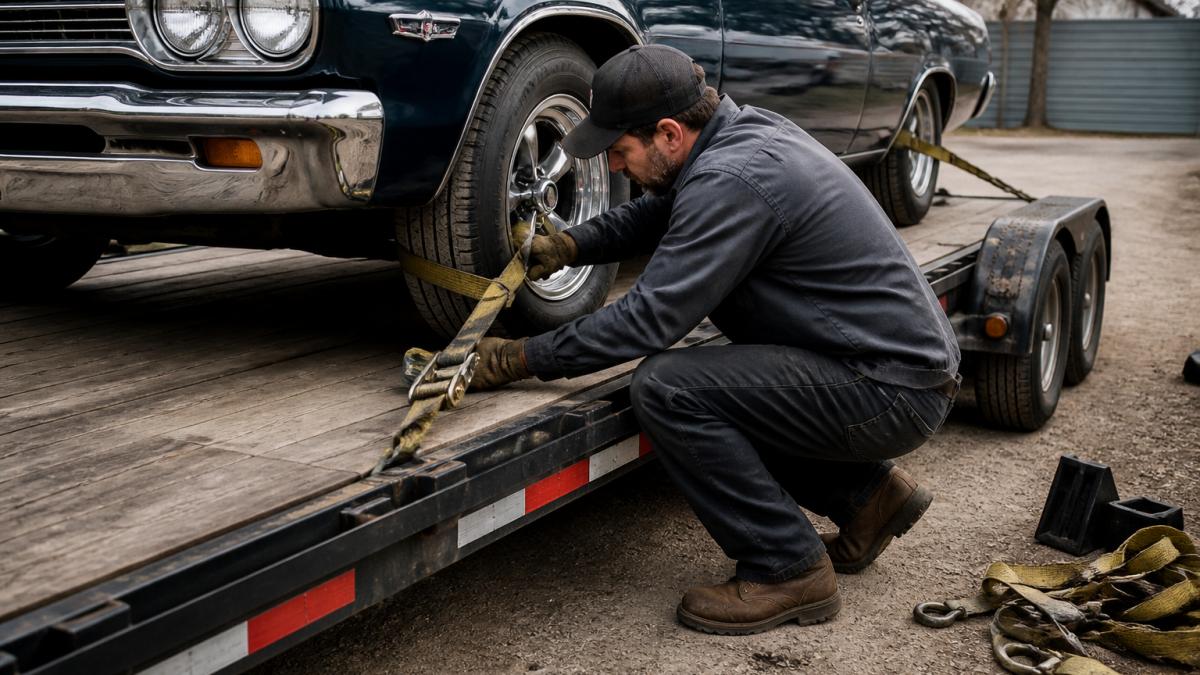
Securing a car on a trailer comes down to four anchor points and the right straps. Done wrong, a car can shift, and a shifting load causes most trailer accidents.
Tires, Brakes, Lights, and Fluids
Start with tires. Check tire pressure on the truck and the trailer while they are cold. Look for cracks, bulges, and uneven wear. Low tire pressure is a leading cause of blowouts under load.
- Test trailer brakes and confirm brake synchronization with the tow vehicle
- Check all lights: running, brake, turn, and reverse
- Verify the electrical connections between truck and trailer
5. Plan Your Route Around Weight, Weather, and Parking
Route planning matters more than most drivers expect. Steep grades, tight turns, and low bridges all become hazards with a trailer in tow.
Map your fuel stops in advance. A loaded truck burns more fuel, and not every station has room to maneuver a trailer.
Check the weather before you leave. Wind, rain, and ice all cut your margin for error.
6. Know the Legal and Insurance Requirements Before Crossing State Lines
Towing rules change at state borders, and a long-distance tow almost always crosses at least one. The trap is that you are generally governed by the rules of the state you are driving through, not the state where you registered the trailer. That means the legal setup that is fine at home can be a citation 400 miles away.
What Actually Changes State to State
There is no single national towing code for private vehicles. The rules that vary most often:
- Trailer brake requirements. Many states require brakes on a trailer once it exceeds a certain gross weight, commonly somewhere in the 1,500 to 3,000 lb range, but the threshold and whether it applies to one axle or both differ. Some states also require a breakaway brake system that applies the trailer brakes if the trailer separates from the tow vehicle.
- Speed limits for towing vehicles. Several states set a lower maximum for any vehicle pulling a trailer, and some lower it further at night. Posted truck speed limits often apply to you.
- Lighting and reflectors. Requirements for clearance lights, side markers, and reflectors on trailers vary. A trailer legal in one state may be missing a marker light another state requires.
Licensing: The Part Most Drivers Miss
Your regular driver's license covers most private car-and-trailer combinations, but not all. Some states issue a separate endorsement or a non-commercial class for combinations above a certain weight or length, and a few require it based on the trailer's gross weight alone. If your combined rig is heavy, check your home state's licensing rules and the rules of the states you will cross before you leave.
Where to Verify
Start with the FMCSA commercial and safety regulations for federal rules that apply to commercial carriers and for general safety guidance. Then check each state's department of transportation or motor vehicle agency website for the specific towing, brake, lighting, and speed provisions. A quick call to the state highway patrol is often faster than reading a statute.
Insurance: Confirm Coverage Before the Wheels Roll
Call your insurance agent before the trip, not after. Ask three specific questions:
- Does my auto policy cover the trailer I am towing, or only the tow vehicle?
- If I rent the trailer, does my policy extend to it, or do I need the rental company's damage waiver?
- If I hire a carrier, does the carrier's cargo insurance cover my car, and at what declared value?
Many standard auto policies do not cover a rented trailer, and liability for a trailer you are pulling usually follows the tow vehicle, but the details vary by policy and state. Get the answer in writing if you can.
Documents to Carry in the Cab
Keep these within reach, not in the trailer or the trunk of the towed car:
- Driver's license, and any towing endorsement if required
- Vehicle registration for the tow vehicle
- Trailer rental agreement or bill of sale
A printed copy matters. Cell service is unreliable on rural stretches, and a trooper who can see your paperwork is a trooper who is more likely to send you on your way.
7. Prepare for Breakdowns and Roadside Emergencies
Breakdowns happen. Being ready for one is the difference between a delay and a disaster.
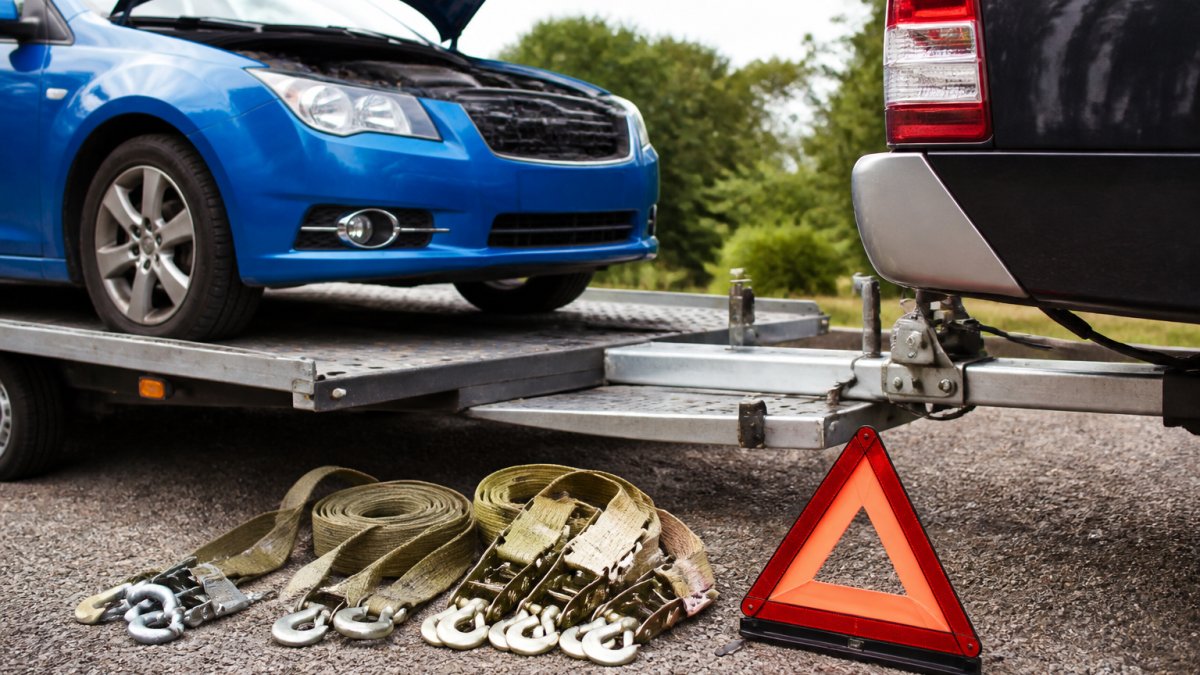
Pack a roadside kit with a spare tire, jack, lug wrench, flares, and a flashlight. Carry a phone charger and a printed list of emergency numbers. If you get a flat on the trailer, pull as far off the road as you can and put out warning triangles.
Never crawl under a loaded trailer on the roadside. Call for help and wait in a safe spot.
What to Do When You Arrive: Handoff, Inspection, and Unloading
Arriving safely is only half the job. Park on level ground before you unload. Chock the trailer wheels so it cannot roll.
Walk around the car and trailer and check for damage. Take photos before and after the trip to document the condition of both.
If you rented the trailer, inspect it with the provider before you return it. Note any damage in writing.
Frequently Asked Questions
How often should I stop to check a car trailer during a long trip?
Stop every 100 to 150 miles or roughly every two hours, whichever comes first. At each stop, walk the full length of the rig and check strap tension, tire pressure and temperature, lug nut tightness, and that all lights still work. Straps stretch and settle in the first 50 miles, so the earliest check matters most. If you notice a strap that has gone slack or a tire running hot, fix it before getting back on the highway rather than waiting for the next scheduled stop.
Is it safer to tow a car on a trailer or with a tow dolly?
A flatbed trailer is the safer choice for long-distance towing because all four wheels are off the ground, so there is no wear on the towed vehicle's drivetrain and no steering input from a dolly. A tow dolly works for short hauls with front-wheel-drive cars, but it adds an extra pivot point that can contribute to trailer sway at highway speed and requires you to crawl underneath to disconnect the driveshaft on rear-wheel-drive vehicles. For anything over a few hundred miles, a flatbed or professional transport is worth the extra cost.
What should I check before towing a car long distance?
Work through a full car trailer towing checklist: confirm your towing capacity and payload numbers, verify tongue weight sits at 10 to 15 percent of the loaded trailer weight, inspect trailer tires for pressure and sidewall condition, test trailer brakes and brake synchronization, check all lights and electrical connections, and confirm the tow vehicle's fluids, belts, and hitch hardware. Also check the towed vehicle's tire pressure and battery, since a dead battery can make loading and unloading harder at the far end.
How do I know if my truck can actually handle towing a car long distance?
Check three numbers in your owner's manual: gross vehicle weight rating, gross combined weight rating, and the hitch rating stamped on your receiver. Your loaded trailer plus everything in the truck must stay under the gross combined weight rating, and tongue weight must not exceed the hitch rating. Payload counts too, since passengers, tools, and cargo in the truck reduce how much trailer weight you can pull. If your truck is modified, confirm the modifications did not lower any of these ratings before you hook up.
Towing a car long distance takes the right trailer, the right ratings, and a checklist you actually follow. If you are hauling a project car, a race car, or a customer vehicle around the Omaha area, 402 car hauler rentals can help. We offer reliable trailers, flexible booking terms, and competitive rates for hobbyists and shops alike. Get started with 402 car hauler rentals and haul your next vehicle with confidence.