 how-to
How to Transport a Car Across Nebraska: 2026 Guide
Table of Contents
- Step 1: Choose Your Transport Method and Get a Quote
- What Car Transport Across Nebraska Cost Actually Includes
- How to Prepare a Car for Transport: A Handoff Checklist
- How Long Does Car Shipping Take Across Nebraska?
- Step 2: Verify the Carrier, Broker, Insurance, and Contract
- Car Hauler Rental Omaha: When to Tow It Yourself
- Nebraska Weather, Rural Access, and Auction Pickups
- What to Do When a Vehicle Is Delayed or Damaged
- Frequently Asked Questions
Last Updated: October 5, 2026
Step 1: Choose Your Transport Method and Get a Quote
The fastest way to transport a car across Nebraska is to pick your method before you request pricing, because the method drives the quote. Open transport, enclosed trailer, and rail each price differently.
Car transport is moving a vehicle from an origin to a destination without driving it, using a multi-car carrier, a towed trailer, or a train. Most interstate moves across Nebraska use open multi-car carriers on the I-80 corridor.
Open Carrier, Enclosed Trailer, or Rail
Open transport is the default for daily drivers. Vehicles ride two or three levels high on a multi-car carrier, exposed to weather and road debris.
Enclosed transport costs more and suits classics, race cars, and anything with fresh paint. Rail moves vehicles in enclosed railcars between train yards, cheaper on long routes, but slower and terminal-to-terminal rather than driveway.
| Method | Best For | Door-to-Door? | Trade-Off |
|---|---|---|---|
| Open carrier | Daily drivers, short notice | Yes | Weather exposure |
| Enclosed trailer | Classics, race cars | Yes | Higher price |
| Rail transport | Long-distance, flexible timing | No, terminal to terminal | Slower, less flexible |
What Car Transport Across Nebraska Cost Actually Includes
Car transport across Nebraska cost depends on distance, method, season, and how easily a carrier can fill its remaining spots. Treat any quote as specific to your dates, not a fixed market rate.
A quote typically bundles the carrier's line-haul charge, a broker fee if one is involved, and sometimes a fuel surcharge. Door-to-door delivery adds a final-mile leg, so ask what is included before comparing numbers, a low quote often excludes the last few miles.
What Actually Moves the Number
Four variables explain most of the spread between two quotes for the same vehicle:
- Distance. Line-haul is priced per loaded mile, so a 50-mile in-state move and a 1,500-mile cross-country move are not comparable line items.
- Method. Enclosed transport carries a premium over open carrier because the trailer holds fewer vehicles and the equipment costs more to run.
- Season. Demand peaks in late spring and again when snowbirds and military moves cluster, and capacity tightens around them.
- Fill rate. A carrier that already has seven of eight spots sold on a run can price the last spot aggressively. A carrier building a load from scratch cannot.
Route, Distance, and Timing Estimates
Major lanes follow the interstate system, and I-80 is the spine of the state. The table below uses approximate road distances and typical transit windows for open-carrier, door-to-door service. Treat the windows as planning ranges, not guarantees.
| Lane | Approx. Distance | Typical Transit Window | Notes |
|---|---|---|---|
| Omaha to Lincoln | ~50 mi | Same day to 1 day | Often folded into a regional run |
| Omaha to Grand Island | ~150 mi | 1-2 days | I-80 corridor |
| Omaha to North Platte | ~280 mi | 1-3 days | I-80 corridor |
| Omaha to Denver | ~540 mi | 2-4 days | Regional lane |
| Omaha to Kansas City | ~190 mi | 1-3 days | Regional lane |
| Omaha to Chicago | ~470 mi | 2-4 days | Regional lane |
| Omaha to Scottsbluff | ~460 mi | 2-4 days | I-80 to I-76, then US-26 |
| Omaha to Los Angeles | ~1,550 mi | 5-8 days | Cross-country |
| Omaha to Seattle | ~1,700 mi | 6-9 days | Cross-country |
| Omaha to New York | ~1,250 mi | 5-8 days | Cross-country |
For a practical Nebraska car transport guide, plan around these realities:
- Short in-state moves often book within days, because a carrier running I-80 can absorb a short leg between larger loads.
- Regional runs depend on whether a carrier is already heading your direction. Omaha to Denver is a common lane; Omaha to a small town off the interstate is not.
- Long-distance transport needs the widest pickup and delivery window, because the carrier is assembling a load from several states.
- Terminal-to-terminal rail can beat open carrier on price for coast-to-coast moves, but adds several days on each end.
How to Prepare a Car for Transport: A Handoff Checklist
Preparing a car for transport takes about an hour and prevents most disputes. Do it the day before pickup.
- Wash the vehicle so existing scratches and dents are visible
- Photograph all four sides, the roof, and the odometer
- Remove personal items, toll transponders, and loose electronics
- Leave about a quarter tank of fuel to cut weight
Document the vehicle condition in writing with the driver at both ends. That signed condition report is what an insurance claim is built on.
How Long Does Car Shipping Take Across Nebraska?
Car shipping across Nebraska usually takes one to three days for in-state and regional moves and five to ten days for cross-country routes, depending on carrier availability and weather. How quickly a carrier fills its load matters as much as distance.
Delivery windows exist because carriers consolidate vehicles. A multi-car carrier will not leave Omaha with two cars when it can wait a day and leave with eight.
Step 2: Verify the Carrier, Broker, Insurance, and Contract
Verification is the step buyers skip, and it is the one that protects them. Before you pay a deposit, confirm who holds your vehicle and who insures it.
Start with the carrier's motor carrier authority and operating status through the FMCSA's SAFER company snapshot tool, which shows whether a company is authorized to operate and what its safety record looks like.
A broker arranges transport; a carrier performs it. Know which one you are signing with. If a broker is involved, ask for the carrier's name and insurance before pickup, not after.
Car Hauler Rental Omaha: When to Tow It Yourself
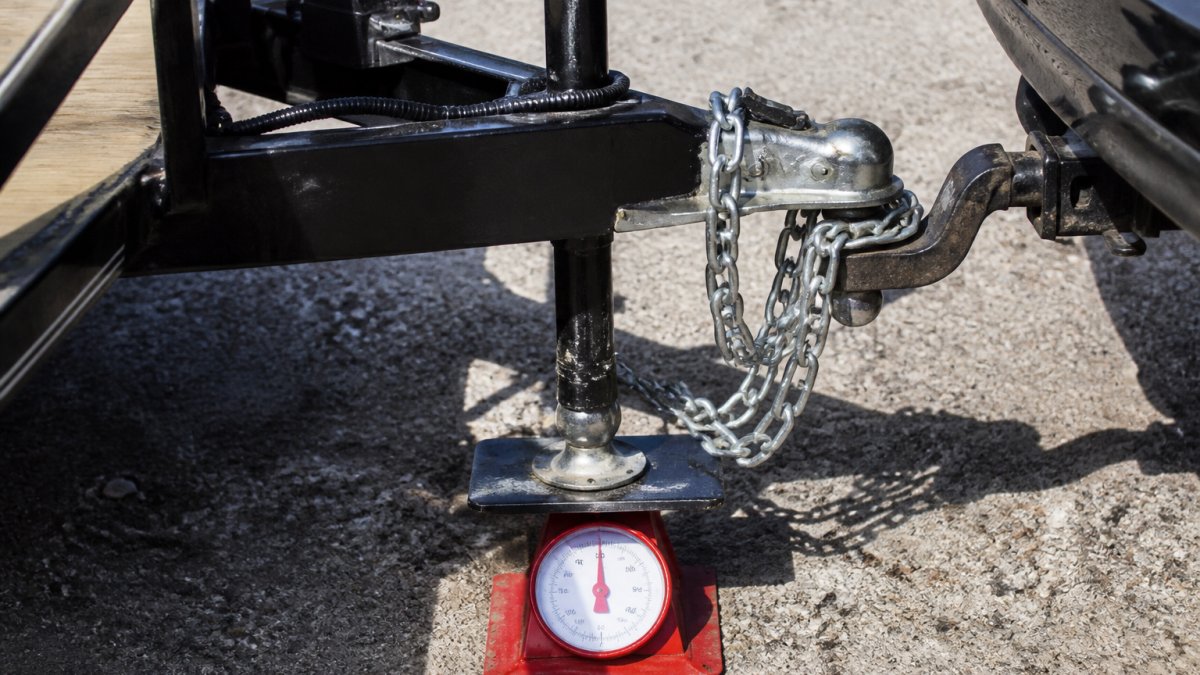
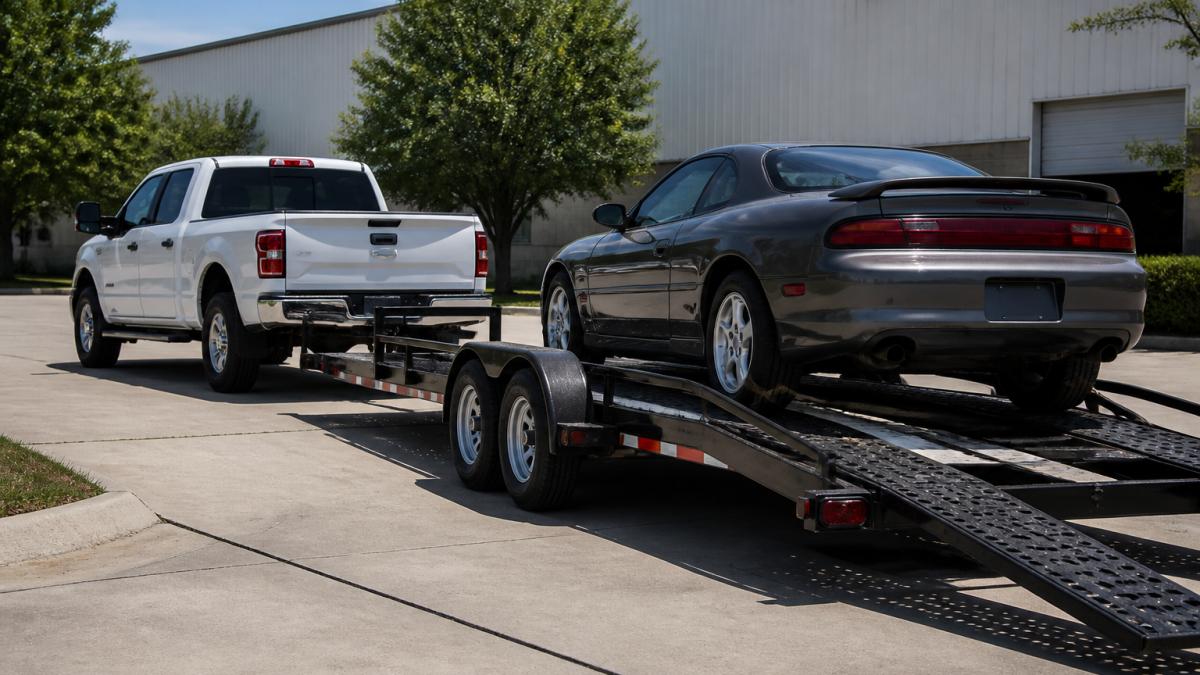
Renting a car hauler in Omaha makes sense when you want full control of the schedule, the distance is short, or you already own a capable tow vehicle.
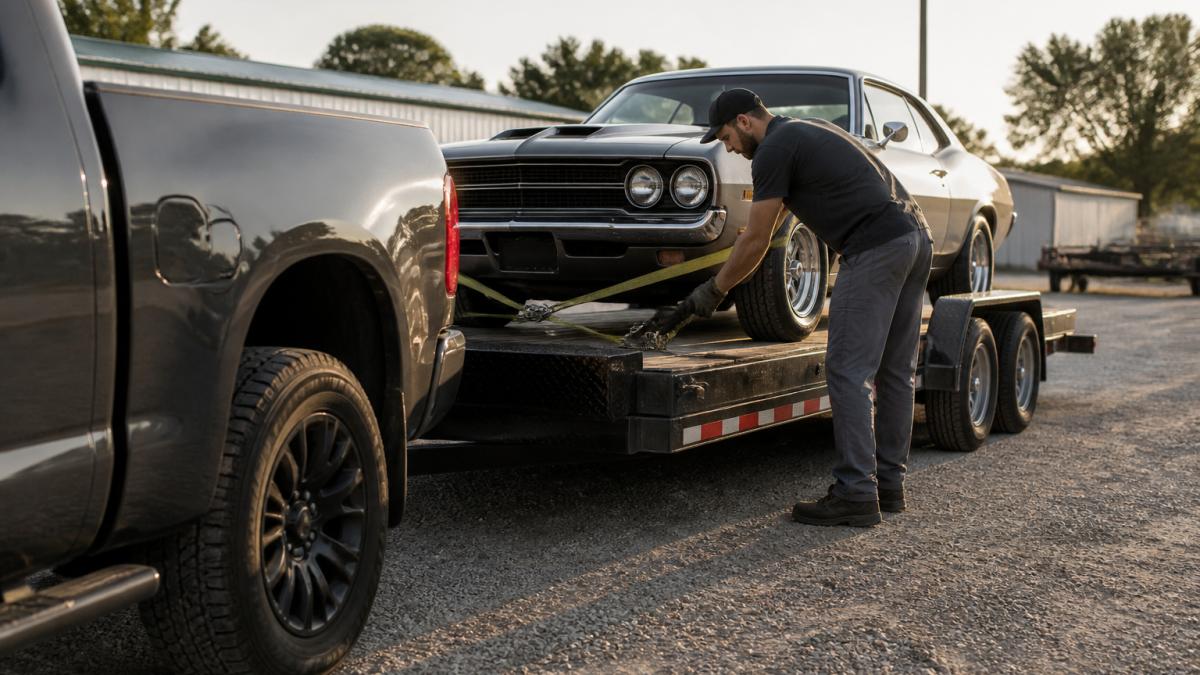
If you go the rental route, match the trailer to the job. A flatbed car hauler handles most project cars and race vehicles.
Nebraska Weather, Rural Access, and Auction Pickups
Most car transport guides treat weather as a footnote. In this state it is a scheduling variable, and the carriers who run here plan around it. Three local factors decide whether your transport goes smoothly: seasonal conditions, rural access, and auction release rules.
Seasonal Logistics on the I-80 Corridor
I-80 is the main east-west artery for multi-car carriers, and the road most likely to close.
Spring brings sustained crosswinds: a multi-car carrier is a tall, high-profile load, and drivers slow or hold position when gusts pick up. Summer heat stresses tires on long hauls and causes unscheduled roadside stops.
A practical rule: if your move is time-critical, avoid scheduling pickup during an active winter storm warning or a high-wind advisory.
Rural Access and the Meet-Point Workaround
A full-size multi-car carrier is roughly 80 feet long and needs room to load, unload, turn around, and reach a paved road.
When a carrier cannot reach your address, the standard workaround is a meet point: a large, paved lot, a truck stop, Walmart, fairgrounds, or dealership, within a reasonable drive, where the carrier loads or unloads.
If you are the one meeting the carrier, arrive early, bring the keys and the signed condition report, and have a way to get yourself home after the vehicle is loaded.
Auction and Dealer Pickups
Buying from a vehicle auction adds logistics a private-party sale does not. Auction sites have their own release rules governing when and how a carrier can pick up your vehicle:
- Release authorization. The auction must release the vehicle to the carrier before the carrier can load it. If the paperwork is not clear, the carrier is turned away.
- Pickup hours. Auction lots usually have limited pickup windows, often weekday business hours only. A carrier that arrives outside the window waits, and waiting costs money.
- Check-in and gate rules. Many auction locations require the carrier to check in at a gate, present a release number, and follow a specific route through the lot.
- Storage fees. Storage starts accruing quickly once the free-storage window closes. Confirm the window before you book transport, and book the carrier to arrive inside it.
Dealer pickups are usually simpler, most franchised dealerships have a loading area and experienced staff, but independent lots may not. Ask about the loading area and pickup hours before you book.
What to Do When a Vehicle Is Delayed or Damaged
Delays and damage are rare, but knowing the process protects you. Call the carrier first, then document everything in writing.
For a delay, ask for a revised delivery window in writing. For damage, photograph it before the driver leaves, note it on the condition report, and file a claim with the carrier's insurance. Keep your pre-transport photos as proof of prior condition.
Frequently Asked Questions
Is it cheaper to drive or ship a car across Nebraska?
Driving costs fuel, a night or two of lodging, and puts wear on the vehicle. Shipping an open carrier usually costs more than fuel alone but less than fuel plus hotels plus mileage depreciation on a long haul. For a single car crossing the state, driving is often cheaper out of pocket. Once you factor in your own time, airfare to return home, and the risk of a breakdown on I-80, shipping becomes competitive. Get a quote for your exact origin and destination before deciding.
Can I ship a non-running car?
Yes, but tell the transport provider upfront. Non-running vehicles need a winch or forklift to load, and many carriers charge a fee for that. The vehicle must still roll, steer, and brake well enough to be positioned on the trailer. If it does not roll at all, you may need a specialty carrier with a flatbed and a winch. Inflate the tires, remove loose parts, and note the condition in writing before pickup.
Should I rent a car hauler or hire an auto transport company?
Rent a car hauler if you have a capable tow vehicle, the time to drive the route yourself, and a car that rolls and steers. A car hauler rental in Omaha works well for project cars, race cars, and short regional moves. Hire a transport company when the distance is long, the schedule is tight, or you would rather not tow through winter weather. Request a quote for your dates.
How long does it take to transport a car across Nebraska?
An open carrier crossing Nebraska on I-80 typically takes one to three days once the driver picks up the vehicle, depending on stops and how full the truck is. Door-to-door service adds time for the carrier to reach rural addresses off the interstate. Enclosed transport and rail can take longer because of scheduling. Ask for a pickup window and a delivery window, not a single date, and confirm whether the quote is door-to-door or terminal-to-terminal.
Moving a vehicle across Nebraska comes down to one decision: hand it to a carrier or tow it yourself. If you want control over the schedule and the distance is manageable, 402 car hauler rentals offers reliable trailer rentals in Omaha with flexible terms, well-kept equipment, and rates built for both hobbyists and shops. Get started with 402 car hauler rentals and haul your project car, race vehicle, or customer delivery on your own timeline.