 listicle
Car Trailer Rental Checklist 2026: Before You Tow
Table of Contents
- Why a Pre-Rental Checklist Matters
- Car Trailer Rental Requirements: Documents and Compatibility
- Pre-Pickup Exterior Inspection
- Verify Lights and Electrical Connections
- Weight Distribution for Car Haulers: Loading Your Vehicle
- How to Secure a Car on a Trailer: Straps and Tie-Downs
- Insurance, Liability, and Damage Documentation
- Post-Rental Return Inspection
- Final Checklist Summary
- Frequently Asked Questions
Last Updated: September 7, 2026
Renting a car trailer sounds simple until you are standing in a rental lot at 6 a.m. with a classic car on jack stands and a hitch that does not fit. A structured car trailer rental checklist 2026 prevents that scenario, covering everything from the rental agreement to the final return inspection. This guide compiles the exact steps we recommend checking before you tow.
Why a Pre-Rental Checklist Matters
A pre-rental checklist is the difference between a routine haul and an expensive roadside emergency. Towing failures rarely come from driving; they come from overlooked details like an incorrect hitch ball size, worn safety chains, or structural damage never inspected. Many rental providers maintain equipment well, but verifying condition falls on you as the renter.
A failed coupler latch at highway speed can damage your vehicle, the trailer, and other road users. Damage disputes often hinge on documentation you did or did not collect at pickup. Twenty minutes with a checklist protects your deposit and your car.
Car Trailer Rental Requirements: Documents and Compatibility
Car trailer rental requirements begin with your towing vehicle. Most rental agreements require you to confirm your tow vehicle's Gross Combined Weight Rating (GCWR) and Gross Vehicle Weight Rating (GVWR) before you arrive. The GCWR is the maximum combined weight of your truck, trailer, and loaded car; the GVWR is the maximum weight of your truck alone when loaded. Your owner's manual lists both figures, and the door jamb sticker provides payload and axle ratings.
Here is the compatibility check most renters skip: matching the trailer type to your tow vehicle's class. A standard utility trailer with a 2-inch receiver and a 3,500-pound GVWR suits a mid-size SUV like a Ford Explorer or a half-ton pickup. A car hauler with dual axles and a 7,000-pound GVWR requires a heavy-duty truck with a Class IV or V hitch receiver. If you show up with a crossover and a 7,000-pound trailer, the provider should refuse the transaction, but not all do. Know your limits before you book.
Check the hitch receiver class stamped on the underside of your bumper. Class III receivers handle up to 5,000 pounds gross trailer weight; Class IV up to 10,000 pounds; Class V exceeds that. The ball mount must match the receiver class, and the ball size must match the coupler, typically 2 inches or 2-5/16 inches for car haulers. A mismatched ball will not seat or will rattle loose. Measure the ball diameter with a caliper if unsure.
Most modern trucks use a 7-pin round connector for trailers with electric brakes. Older vehicles may have a 4-pin flat connector, which does not power trailer brakes. If your truck only has a 4-pin, you need an adapter and a separate brake controller, or you cannot legally tow a braked trailer in most states. Confirm your connector before you arrive.
Documentation requirements are straightforward but non-negotiable. Bring a valid driver's license and the credit card used for the reservation. Most providers require a security deposit, held on your card. Ask about mileage limits, some charge per mile over a set daily limit. Clarify late return fees, which often accrue hourly.
National Highway Traffic Safety Administration towing safety guidance recommends confirming that your hitch receiver, ball mount, and electrical plug configuration match the trailer before you leave the lot. Mismatched components are the most common reason renters return late or damage equipment.
Pre-Pickup Exterior Inspection
Walk the full perimeter of the trailer and look for structural damage, rust that compromises the frame, or bent components. Check that the coupler latch engages smoothly and locks securely, and confirm the safety chains are present, untangled, and long enough to cross under the coupler.
A common mistake is assuming the rental company already did this. Your inspection protects you from liability for pre-existing damage, so photograph every scratch, dent, and worn component before you hitch up.
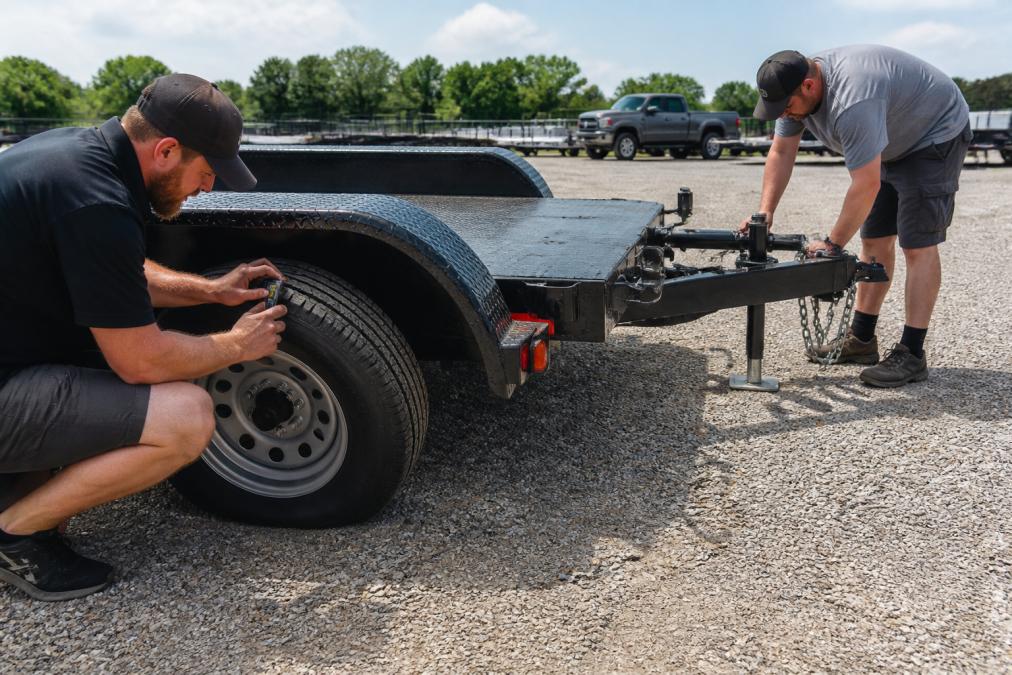
Hitch, Coupler, and Safety Chains
The hitch connection is the single most critical safety point on your rig. Confirm the hitch ball size matches the coupler exactly; a ball that is too small will rattle and can detach, while one that is too large will not seat properly. The coupler latch must close fully over the ball and lock.
Safety chains must cross under the coupler to catch the trailer tongue if the hitch fails. Attach them to the vehicle's frame, not the bumper or ball mount. Check for broken links and worn or bent hooks. If the trailer has a breakaway cable, connect it and verify it has enough slack to avoid engaging during turns.
Tires, Wheels, and Brakes
Trailer tires carry heavy loads and degrade faster than passenger tires. Check tread depth across each tire and look for cracks, bulges, or dry rot on the sidewalls. Confirm tire pressure matches the rating on the sidewall, and inspect lug nuts to ensure none are missing or loose.
If the trailer has surge or electric brakes, verify they function before loading. Test the brake controller in your towing vehicle if you have one, and confirm the emergency brake engages when you pull the breakaway pin. A trailer without functioning brakes is unsafe at any load and illegal in most states.
Federal Motor Carrier Safety Administration trailer safety standards outlines the minimum requirements for brakes, tires, and lighting on towed equipment, which is a useful reference when evaluating rental condition.
Verify Lights and Electrical Connections
Electrical failures are the most common cause of roadside stops with a trailer. Before loading, connect the wiring harness and test every light function, turn signals, brake lights, tail lights, and clearance lights on both sides.
Have a second person watch the lights while you operate the controls in the cab. Faulty grounds are the usual culprit when lights work intermittently, so if you see flickering, check connection points for corrosion or loose pins.
A test drive around the block with the trailer connected confirms the lights stay functional under vibration and the connection does not pull loose on the first bump.
Weight Distribution for Car Haulers: Loading Your Vehicle
Weight distribution for car haulers determines whether your rig tracks straight or sways dangerously. Position your vehicle so roughly 10-15% of the total loaded weight rests on the trailer tongue. Too little tongue weight causes sway at speed; too much overloads the rear axle of your towing vehicle.
Load your car with the heaviest end facing the trailer tongue, for most front-engine vehicles, drive the car on forward. Center the vehicle side to side on the deck, and chock the wheels before strapping.
The gross vehicle weight rating of the trailer is a limit, not a target. If your car plus cargo approaches that rating, you have no margin for error. Check the axle capacity and confirm your load stays well under it.
How to Secure a Car on a Trailer: Straps and Tie-Downs
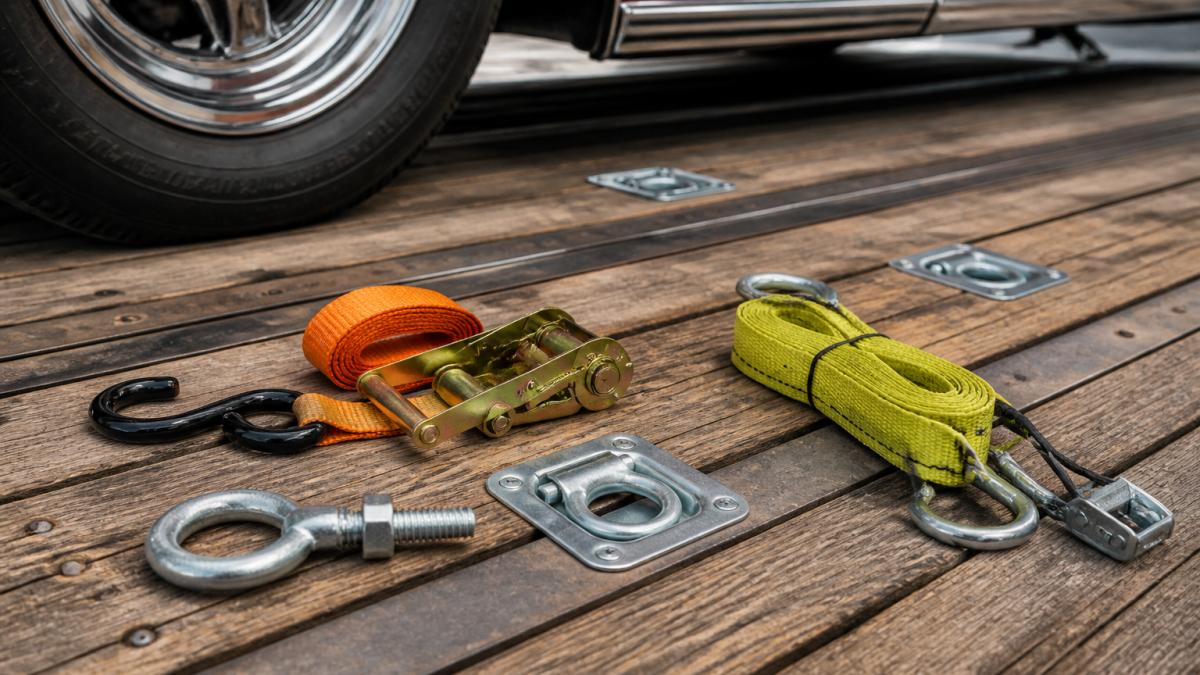
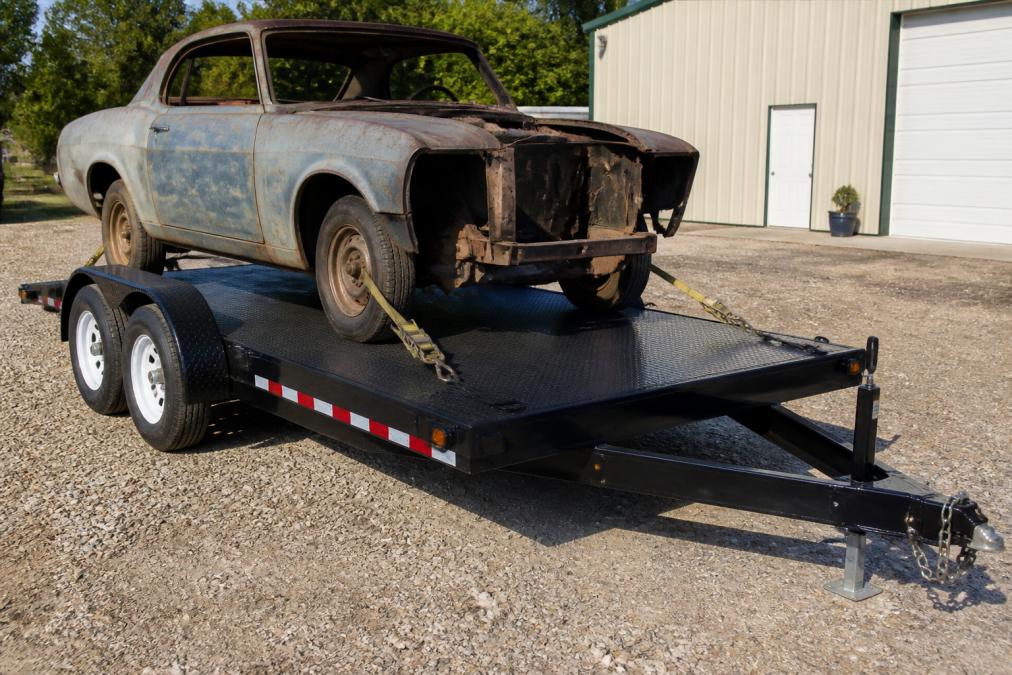
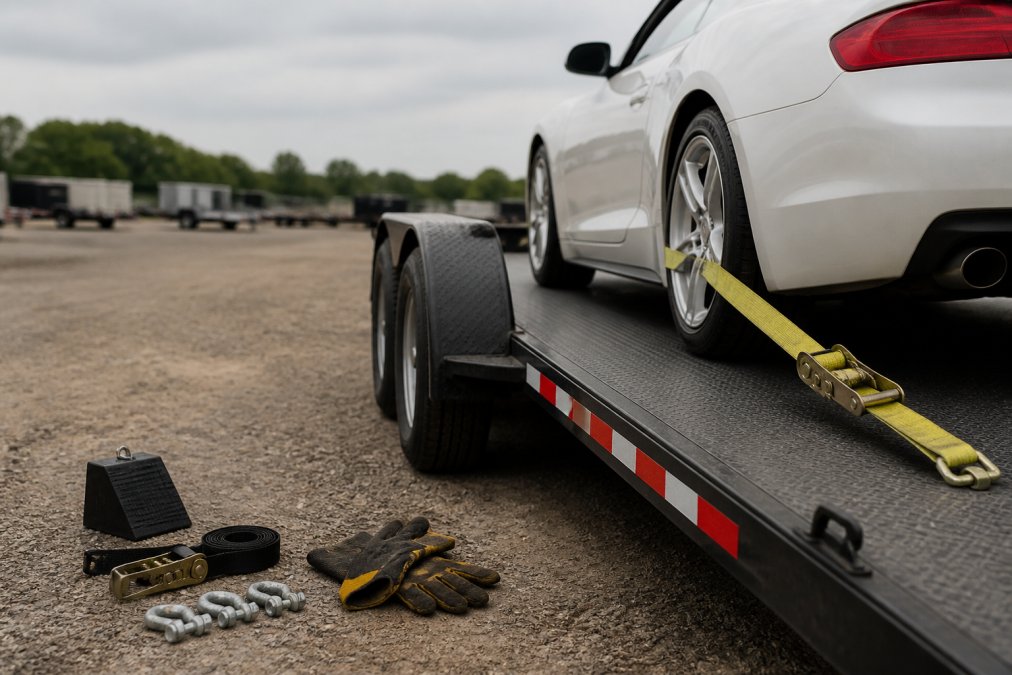
How to secure a car on a trailer comes down to four contact points and correct strap routing. Use wheel straps that wrap through the wheels and attach to the trailer's tie-down points, or use axle straps if your vehicle has exposed frame points. Never attach straps to suspension components, which can shift and loosen during transit.
Each strap must be rated for the weight it carries, and ratchets should be tightened until the vehicle sits firmly on its suspension without bouncing. After driving five to ten miles, stop and re-check the straps, they stretch slightly as they seat, and re-tightening prevents load shift.
The spare tire and any loose items in the car must be secured or removed. A loose object can shift the center of gravity and cause instability at highway speeds.
Insurance, Liability, and Damage Documentation
Insurance is the part of the rental most people skip, and the part that hurts most when something goes wrong. Ask not "Am I covered?" but "What does my auto policy actually say about trailers?" Most personal auto policies extend liability coverage to a trailer you own or rent, but it is secondary to the rental provider's policy. If you cause an accident, the provider's liability limit pays first, and your policy picks up the remainder up to your limits. If damages exceed your limits, you are personally responsible for the difference.
Physical damage to the trailer is a separate question. Your auto policy's comprehensive and collision coverage typically does not extend to a rental trailer. The provider will offer a damage waiver (CDW), transferring the risk of damage from you to them. Read it carefully: most exclude off-road use, overloading, or improper securing. If you decline the waiver, you are liable for the full replacement value.
Commercial use changes everything. If you are hauling a car you intend to sell, or transporting a vehicle for a friend who is paying you, your personal auto policy likely excludes coverage. You need a commercial policy or a separate inland marine policy covering the trailer and cargo. Ask your agent for a specific endorsement before you book, not after a claim.
The rental agreement is the controlling document. It states who is liable for equipment failure, tire blowouts, and strap breakage. Most agreements hold the renter responsible for all damage regardless of cause, unless it results from a manufacturing defect. A blowout from a pre-existing sidewall crack is a defect; one from overloading is your fault. The agreement also specifies the damage waiver deductible.
Digital documentation is your strongest defense. At pickup, take a time-stamped video walkaround covering every panel, the tires, the coupler, the lights, and the underside of the deck. Enable location and date stamp in your camera settings. Photograph any pre-existing damage in close-up and wide shots, and send the images to the provider via email or text before you leave the lot.
At return, repeat the process. Take a second video walkaround, photograph the same angles, and send the files to the provider stating the trailer is returned in the same condition as pickup. If the provider claims damage later, you have a verifiable record at both ends. Most disputes are resolved by documentation, not argument.
Insurance Information Institute guidance on towing and trailer coverage explains how auto policies typically treat trailers, which helps you ask the right questions of both your insurer and the rental company.
Post-Rental Return Inspection
The return inspection is where disputes happen, so treat it with the same care as pickup. Remove all straps, chocks, and personal items. Inspect the deck for loading damage, and check that the tires, lights, and coupler are in the same condition as when you picked it up.
Walk the trailer with the provider and point out any wear from normal use. Photograph the trailer again at return. Confirm the odometer or rental agreement details match, and ask for a receipt stating the trailer was returned undamaged.
Return the trailer with fuel or consumables at the level specified in the agreement. A clean, documented return is the fastest way to get your deposit back and maintain a good relationship for future rentals.
Final Checklist Summary
| Checkpoint | What to Verify | Common Mistake |
|---|---|---|
| Vehicle compatibility | Towing capacity, hitch size, electrical plug | Assuming any truck can tow any trailer |
| Exterior inspection | Frame damage, coupler latch, tire tread | Skipping the walkaround |
| Lights and brakes | All signals, brake function, wiring | Testing only in daylight |
| Loading | Tongue weight, axle capacity, centering | Overloading the rear axle |
| Securing | Four straps, correct routing, re-tightening | Single strap per corner |
| Documentation | Insurance, damage photos, rental terms | Leaving without photos |
Planning a transport job and want equipment that is ready when you are? At 402 car hauler rentals, we offer flexible booking terms and dependable trailers for everything from project cars to race vehicles. Check our current availability and rates on our website, and get your next haul scheduled with confidence.
Frequently Asked Questions
What documents do I need to rent a car trailer?
You typically need a valid driver's license, proof of insurance for your towing vehicle, and a major credit card for the security deposit. Some rental companies may require a supplemental insurance policy for the trailer itself. Ask about car hauler rental requirements when booking, as policies vary. You should also have the registration for your tow vehicle available.
What is the 60/40 rule for trailer weight distribution?
For a car hauler, you want about 60% of the total load weight forward of the trailer axle and 40% behind it. This puts proper tongue weight on the hitch, keeping the trailer stable at speed. Incorrect weight distribution for car haulers can cause dangerous sway. Check your rental agreement for the specific tongue weight limit for the trailer you are using.
How do I secure a vehicle properly on a car hauler?
Use heavy-duty ratchet straps rated for your vehicle's weight. Secure the vehicle at all four corners using the frame or designated tie-down points, never the axles or suspension parts. Cross the straps in an X pattern to prevent side-to-side movement. After driving a few miles, stop and re-tighten the straps to account for any settling.
Do I need specific insurance for a car trailer rental?
Coverage varies. Your auto insurance may cover a rental trailer, but it does not always extend to the cargo you are hauling. Check your policy or ask your agent before pickup. Many rental companies offer a damage waiver for the equipment itself. Verify what the rental agreement covers regarding liability if the trailer is damaged.