 ultimate-guide
Towing Older Trucks With Trailers: A Safety Guide
Table of Contents
- Understanding Towing Capacity of Older Trucks
- How to Safely Tow a Car With an Older Truck
- Critical Systems That Fail Under Towing Load
- Vintage Truck Towing Upgrades You Should Consider
- Maintenance Checklist Before Every Tow
- When Your Older Truck Is Not Safe to Tow
- Frequently Asked Questions
Last Updated: September 25, 2026
Understanding Towing Capacity of Older Trucks
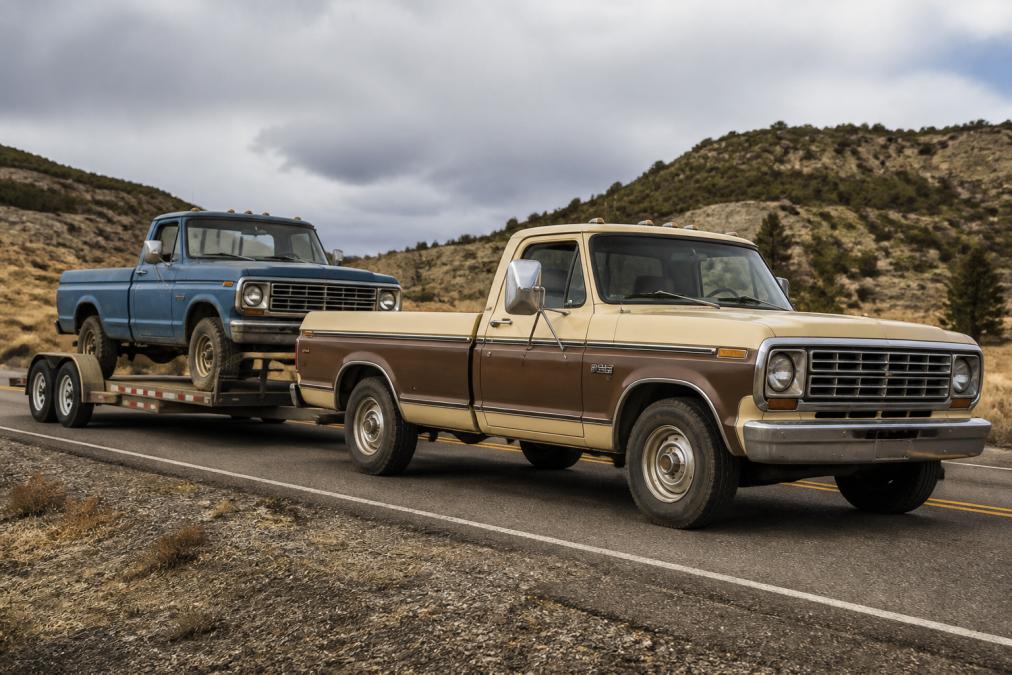
Towing older trucks safely requires understanding your vehicle's limits when towing older trucks with trailers. Your truck's towing capacity is a hard limit determined by engineering, and exceeding it puts both your vehicle and others at serious risk.
Gross Vehicle Weight Rating vs. Payload
Gross Vehicle Weight Rating (GVWR) is the maximum weight your truck can safely carry, including the vehicle itself, passengers, fuel, cargo, and tongue weight from the trailer. This is the most critical number on your truck's door jamb. Don't confuse it with payload capacity.
Payload is what remains after you subtract the truck's curb weight from its GVWR. If your truck weighs 4,500 pounds and has a GVWR of 6,500 pounds, your payload is 2,000 pounds, covering you, passengers, tools, fuel, and trailer tongue weight.
Older trucks often have lower GVWRs than modern counterparts. A 1990s full-size pickup might have a GVWR of 6,500 pounds versus 7,500+ for current models. Tongue weight (10-15% of trailer weight) counts directly against payload, an 8,000-pound trailer puts 800-1,200 pounds on your tongue, leaving minimal room for passengers or cargo.
Finding Your Truck's Actual Limits
Your truck's towing capacity and GVWR are stamped on a placard inside the driver's door jamb. If missing or illegible, contact the manufacturer with your VIN. Never assume your truck can handle what another truck of the same year can handle, options packages, engine choices, and transmission types all affect ratings.
Write down three numbers: GVWR, payload capacity, and maximum towing capacity. Calculate the actual weight of your trailer and cargo using a scale at truck stops or recycling centers. Weighing your loaded trailer is the most reliable way to confirm you're within limits.
How to Safely Tow a Car With an Older Truck
Before towing, your truck needs a thorough mechanical inspection. Towing stress reveals hidden problems in older vehicles faster than normal driving and pushes borderline issues over the edge.
Pre-Tow Mechanical Inspection
Check oil, coolant, and transmission fluid before every tow, towing generates heat and older trucks have marginal cooling systems. Check tire pressure and condition; underinflated or worn tires fail under towing load.
Inspect brakes for sponginess or excessive pedal travel. Older trucks often have drum brakes that fade faster under sustained braking. Check brake lines for leaks or corrosion.
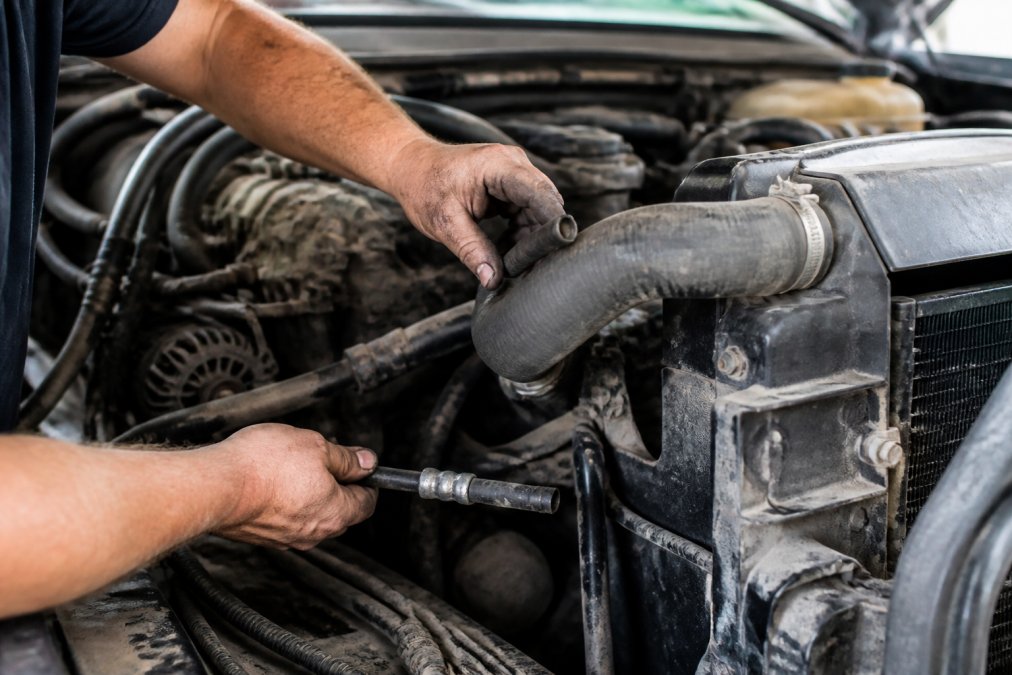
Check transmission fluid: bright red is normal; dark or burnt-smelling fluid indicates overheating or deterioration. Inspect radiator hoses for cracks or soft spots and replace if mushy or hardened.
Inspect suspension for worn bushings, cracked springs, or sagging. Check hitch attachment points for rust or cracks, a corroded receiver can fail under load.
Weight Distribution and Tongue Weight
Tongue weight is the downward force the trailer applies to your hitch. Too little (under 10%) causes sway; too much (over 15%) overloads your rear axle and suspension.
For a 6,000-pound trailer, aim for 600-900 pounds of tongue weight. Distribute cargo toward the front to avoid sway; avoid excessive forward loading that squats the rear and reduces front-end traction.
Use a tongue weight scale or truck scale to weigh your trailer alone, then hitched. Adjust cargo position to achieve proper tongue weight.
Securing Your Load
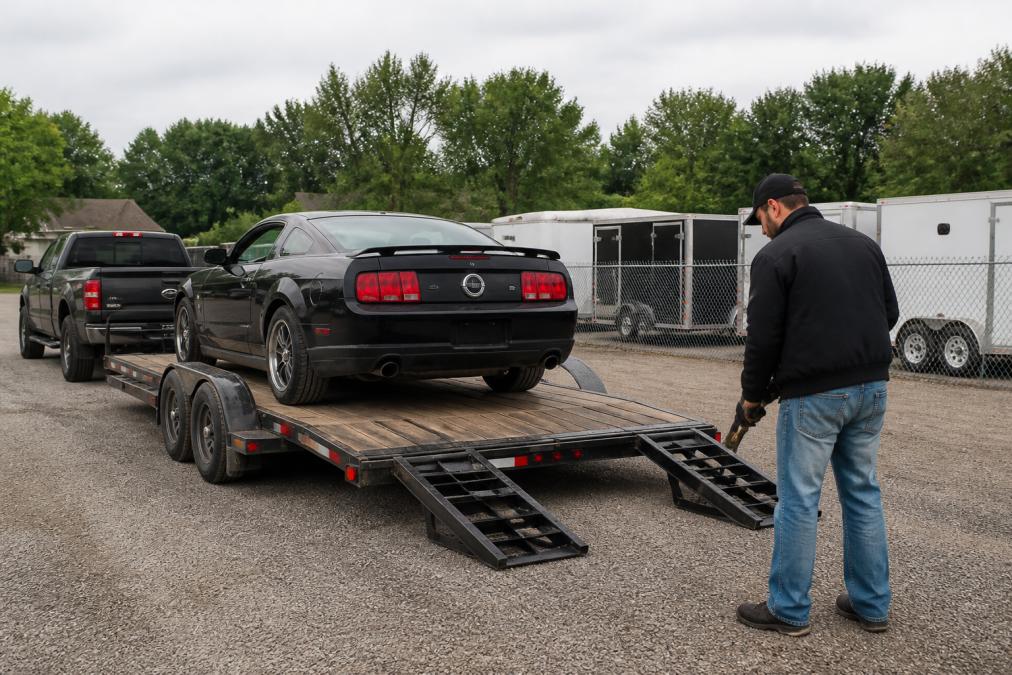
Use tie-down straps rated at least 1.5 times the load weight. A 3,000-pound car needs straps rated for 4,500+ pounds. Place straps across frame or suspension points, never across hood or windshield. Cross-strap diagonally to prevent side-to-side shifting.
Tighten straps firmly without deforming the vehicle. Check tension every 50 miles as straps loosen during travel.
Critical Systems That Fail Under Towing Load
Towing exposes weaknesses in cooling, braking, and suspension that don't show during normal driving. Failure in one system cascades into others.
Transmission Cooling and Overheating
Towing multiplies transmission heat output dramatically. Older trucks often have transmissions designed before modern towing demands, with marginal cooling capacity.
Many older trucks lack a dedicated transmission cooler and rely entirely on the radiator, which isn't enough during sustained towing. Install a transmission cooler before towing regularly.
Watch your coolant temperature gauge while towing. If it enters the upper third or warning light comes on, pull over immediately. Overheating accelerates transmission wear and causes catastrophic failure.
Carbureted engines are particularly vulnerable to overheating and can lean out under heat, losing power and stressing the engine further.
Brake System Limitations
Older trucks often have drum brakes that fade quickly under sustained towing braking demand, requiring harder pedal pressure as they heat up.
A trailer adds significant braking demand. If your trailer has no brakes, all braking force falls on your truck's brakes alone, placing enormous stress on your tow vehicle.
If your trailer has electric brakes, install a brake controller. Without one, the trailer brakes don't engage and your truck's brakes do all the work.
Check brake fluid for contamination and moisture. Dark or cloudy fluid indicates moisture absorption; have it flushed before towing.
Suspension Sag and Stability
Older trucks with leaf spring suspensions sag under load. Trailer tongue weight causes the rear to squat, lifting the front end and reducing front-end traction while overloading the rear axle.
Excessive suspension sag reduces ground clearance and risks bottoming out, damaging the transmission pan, fuel tank, or brake lines.
Suspension upgrades like load-leveling systems maintain your truck's level stance under load, improving stability and handling, but don't change GVWR or payload capacity.
Trailer sway occurs when the trailer oscillates side-to-side from wind, uneven pavement, or steering input. If sway starts, ease off the accelerator and let the truck slow gradually. A weight distribution hitch with sway control reduces sway by distributing tongue weight evenly and applying opposing force.
Vintage Truck Towing Upgrades You Should Consider
Upgrades can't change your truck's fundamental limits but make towing safer and more reliable. Prioritize upgrades addressing your truck's specific weaknesses.
Transmission Coolers and Engine Protection
A transmission cooler is the most important upgrade for towing with an older truck. It maintains transmission temperature within a safe range and prevents overheating failures.
Engine oil coolers are worth considering if your truck runs hot, keeping oil at optimal temperature and reducing wear.
Radiator upgrades are rarely necessary unless clogged or corroded. A quality flush often restores cooling capacity.
Brake Controllers and Sway Control
A brake controller is mandatory if your trailer has electric brakes. It senses your truck's deceleration and applies proportional brake force to the trailer.
Sway control devices use friction or hydraulic force to resist trailer sway. They reduce severity and make recovery easier, especially valuable for older trucks with marginal suspension.
Hitch Options for Older Trucks
Most older trucks use bumper-pull hitches, which are simple and affordable but place all tongue weight on the rear axle. Gooseneck hitches distribute tongue weight more evenly, reducing rear axle stress.
Gooseneck hitches require a bed-mounted receiver and limit truck bed use but work well for heavy trailers.
Maintenance Checklist Before Every Tow
Run through this checklist before towing. It takes 20 minutes and prevents most failures.
Fluids, Filters, and Cooling Systems
Check engine oil, coolant, and transmission fluid levels. Bright red transmission fluid is normal; dark or burnt-smelling fluid indicates trouble.
Tires, Brakes, and Suspension
Check tire pressure on all four tires. Underinflated tires overheat and fail under towing load. Check tire tread depth. Worn tires provide poor traction and are dangerous in wet conditions. Check for uneven wear, which indicates alignment or suspension problems.
| Component | Check | Frequency | Action if Failed |
|---|---|---|---|
| Engine oil | Level and color | Every tow | Top off or replace |
| Coolant | Level and condition | Every tow | Top off or flush |
| Transmission fluid | Level and color | Every tow | Top off or service |
| Brake fluid | Level and color | Every tow | Bleed or flush |
| Tires | Pressure and tread | Every tow | Inflate or replace |
| Brakes | Pad thickness and fluid | Every tow | Replace pads or bleed |
| Hoses | Cracks and leaks | Every tow | Replace immediately |
| Suspension | Springs and shocks | Every tow | Replace if worn |
When Your Older Truck Is Not Safe to Tow
Some older trucks shouldn't tow, regardless of what their paperwork says. If any of these conditions apply, find alternative transportation or rent a trailer instead of risking your safety.
Frequently Asked Questions
What are the most important safety checks before towing with an older truck?
Before every tow, inspect your brakes for wear, check transmission and coolant fluid levels, verify tire condition and pressure, examine hoses and belts for cracks, and confirm your hitch is secure. Test your brake controller if equipped. Older trucks often have worn components that fail under load, so a thorough pre-tow inspection catches problems before they create dangerous situations on the road.
How do I know the towing capacity of my older truck?
Check your truck's door jamb label or owner's manual for the gross vehicle weight rating and payload capacity. Your actual towing capacity is the GVWR minus your truck's curb weight. Subtract tongue weight from that figure. If documentation is missing, contact the manufacturer with your VIN. Never estimate or assume capacity based on similar models, as specifications vary significantly by year, engine, and transmission.
What vintage truck towing upgrades are most critical?
A transmission cooler is essential for older trucks, as overheating is the leading cause of transmission failure during towing. A brake controller ensures your trailer brakes engage proportionally with your truck's brakes. Sway control devices reduce dangerous trailer sway. A weight distribution hitch improves handling and reduces suspension sag. Prioritize these upgrades based on your truck's condition and the weight you plan to tow regularly.
Can older trucks handle long-distance towing safely?
Older trucks can tow long distances if they are mechanically sound and not overloaded. Plan for frequent stops to check fluid levels, tire pressure, and brake temperature. Monitor your engine temperature gauge closely. Avoid towing in extreme heat or mountainous terrain if your truck shows signs of overheating. Many older trucks lack modern cooling efficiency, so conservative speeds and regular breaks reduce strain on the drivetrain and braking system.