 ultimate-guide
Towing Heavy Equipment in Omaha: What to Expect
Table of Contents
- What Towing Heavy Equipment in Omaha Actually Involves
- Heavy-Duty Towing and Recovery Services in the Omaha Metro
- How to Secure Heavy Machinery on a Trailer
- Finding the Best Car Hauler Rental for Your Equipment
- Nebraska Towing Laws, Permits, and Weight Limits
- What Heavy Equipment Towing Costs and Why Quotes Vary
- Preparing Heavy Equipment for Transport: A Client Checklist
- Frequently Asked Questions
Last Updated: September 19, 2026
What Towing Heavy Equipment in Omaha Actually Involves
Towing heavy equipment means moving construction machinery, farm implements, and oversized commercial loads on a trailer rated for the combined weight, with a truck and hitch that meets federal and state requirements. In Omaha, that means Interstate 80, I-680, and Highway 75 traffic, plus city and county weight rules that change the moment you cross a line.
Heavy-Duty Towing and Recovery Services in the Omaha Metro
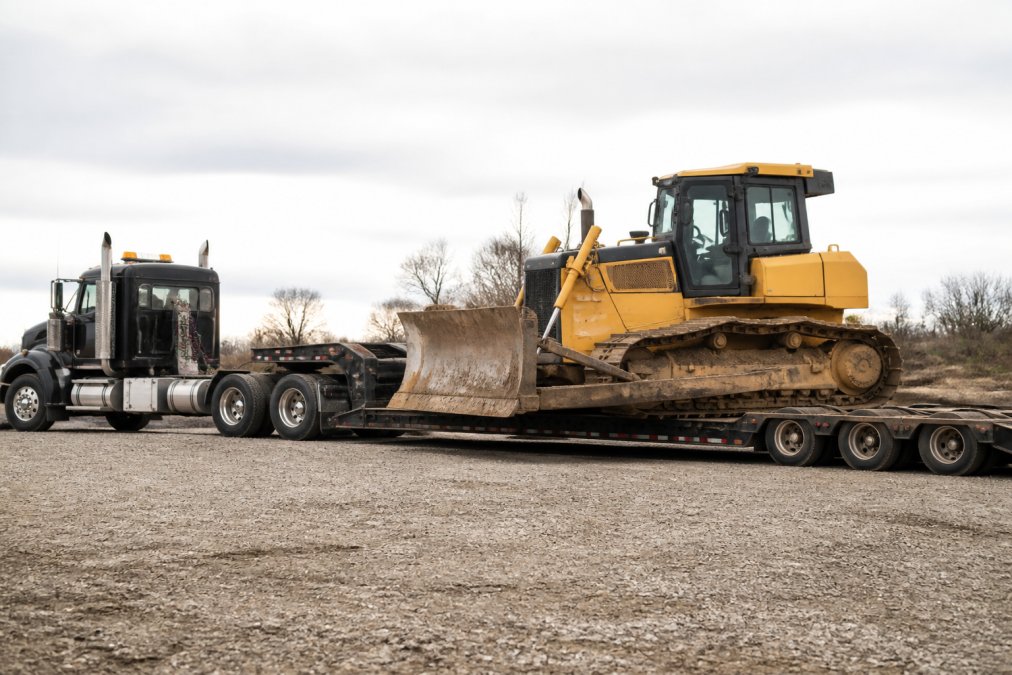
Heavy-duty towing covers any load too large for a standard wrecker, in the Omaha metro, that means a heavy-duty wrecker, a rotator for overturned equipment, or a lowboy trailer. Most providers run 24/7 dispatch, but coverage thins out fast outside the metro core.
How to Secure Heavy Machinery on a Trailer
Load securement is the most important part of any heavy hauling job, and the part most people rush. The goal is to eliminate forward, backward, and side-to-side movement, not just to "tie it down."
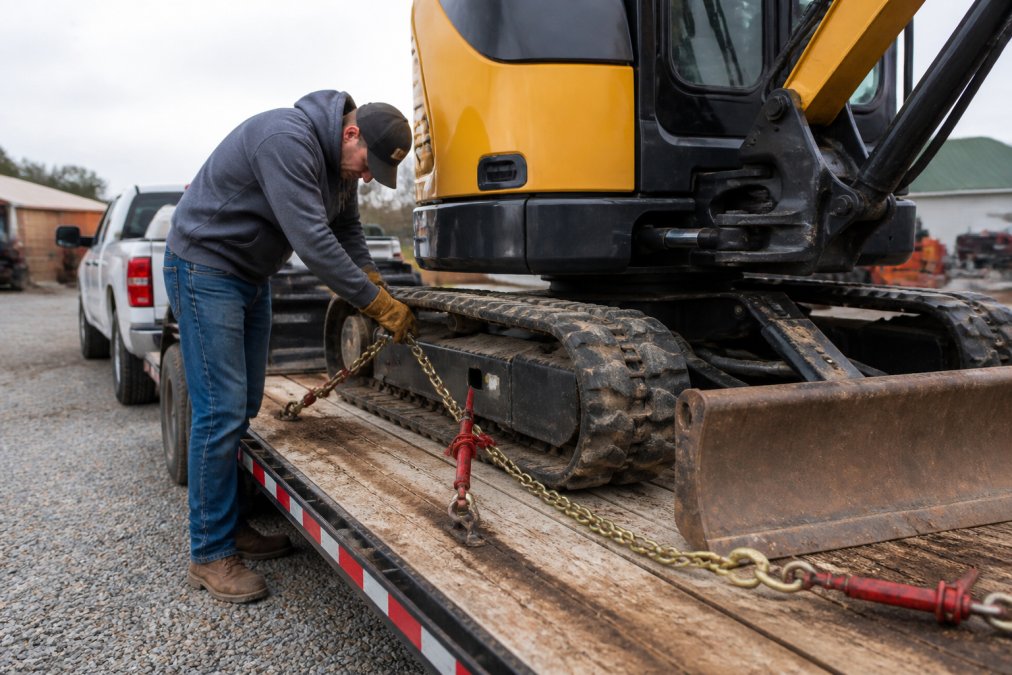
Chain and Binder Placement by Equipment Type
Different machines need different anchor points. Wheeled machines get strapped over the tires or through the wheels. Tracked machines get chained at the tracks. Equipment with a boom or arm needs that arm pinned or supported separately.
- Wheeled equipment: four-point tie-down, one strap per corner, over the tire or through the rim
- Tracked equipment: chains across the tracks, front and rear, with binders on each
- Boom or arm equipment: lower and pin the attachment, then secure it independently
- Oversized load: add flags, signage, and a permit before you leave the lot
Load Securement Mistakes That Cause Accidents
The most common securement failure is relying on the machine's own weight and parking brake instead of proper tie-downs. The second is worn or mismatched straps and chains.
Finding the Best Car Hauler Rental for Your Equipment
The best car hauler rental depends on three things: the load's weight and dimensions, your truck's towing capacity, and how long you need the trailer. A project car or race vehicle works on a standard flatbed. A compact excavator or skid steer needs a heavier deck and a higher-rated hitch.
| Rental Factor | What to Check | Why It Matters |
|---|---|---|
| Deck rating | Matches your load weight plus margin | Overloading voids coverage and risks failure |
| Hitch class | Matches your truck's towing capacity | Wrong class means an unsafe or illegal setup |
| Strap and binder condition | Inspect before you sign | Worn gear is the top securement failure |
| Booking flexibility | Daily vs. extended terms | Project timelines rarely run on schedule |
| Insurance terms | Understand your liability | Determines who pays if something breaks |
Nebraska Towing Laws, Permits, and Weight Limits
Most guides tell you to "check local laws" and stop there, useless when you are standing next to a 26,000-pound excavator at 6 a.m. Here is the actual framework and the rules that get operators cited.
The Federal Rules That Apply to Every Commercial Move
If you are moving heavy equipment for business, not as a hobby, you are operating a commercial motor vehicle under Federal Motor Carrier Safety Administration (FMCSA) rules, and the load securement requirements in 49 CFR Part 393, Subpart I matter most. The standard is performance-based: your securement system must withstand a forward force of 0.8 g, a rearward force of 0.5 g, and a lateral force of 0.5 g of the cargo's weight, the threshold an inspector uses to decide whether your load is legal.
Weight and Size Thresholds
The Interstate System thresholds are the ones most people recognize: 80,000 pounds gross vehicle weight, 20,000 pounds on a single axle, and 34,000 pounds on a tandem axle (Bridge Formula Weights- FHWA Freight Management and Operations). Width is capped at 8 feet 6 inches, height at 14 feet 6 inches, and length at 53 feet for a trailer.
How the Permit Process Actually Works
An oversize or overweight permit is issued for a specific load, route, and window of time. You do not get a blanket permit covering "Nebraska", you get one for the exact path you told the issuing authority you would drive.
A few things that trip people up:
- Permits are not instant. Same-day permits exist for some routes, but complex oversize moves can take longer to approve. Do not plan a Monday move and request the permit Monday morning.
- Escorts and pilot cars. Loads over certain width and length thresholds require escort vehicles, and the thresholds vary by route. Confirm before you dispatch.
- Curfews and restrictions. Some routes restrict oversize movement to daylight hours or exclude rush-hour windows. A permit that is valid at 10 a.m. may be invalid at 5 p.m.
- Local permits stack. A state permit does not automatically cover a city or county road. You may need a separate local permit for the last mile to the job site.
What Inspectors Actually Check
A roadside inspection on a heavy haul is not a formality. The officer checks securement count and rating, working load limits on every chain and binder, tire condition, lighting and signage, and whether your permit matches the load in front of them. A mismatched permit, right route, wrong weight, is treated the same as no permit.
Verify Before You Move
Because thresholds, escort requirements, and route restrictions change, always confirm current limits and permit requirements with the Nebraska Department of Transportation and, for commercial moves, review the FMCSA load securement rules directly. Do not rely on a general rule of thumb you heard from another operator, the rules that applied to their load may not apply to yours.
What Heavy Equipment Towing Costs and Why Quotes Vary
No competitor will give you a straight answer on heavy equipment towing cost, because it depends on six variables, and most providers would rather you call for a quote than understand the math. Here is how the math works, so you can sanity-check any quote.
The Six Factors That Move a Quote
1. Distance and towing radius. Local metro moves are priced differently than long-distance transport. A short haul is often a minimum charge plus a per-mile rate beyond that minimum. Long-distance moves are typically a flat rate for the full run, which spreads the per-mile cost down but adds fuel, driver hours, and sometimes an overnight.
How to Read a Quote
When you get a quote, ask what is included and what is billed separately. Questions that separate a real quote from a lowball:
- Is the permit fee included, or billed on top?
- Is escort required for this load, and is that in the number?
- Is there a minimum charge, and how many miles does it cover?
- Is after-hours or weekend dispatch surcharged?
- What happens if the job takes longer than estimated, is labor billed hourly?
Trailer Rental Pricing
For trailer rentals, pricing depends on trailer type, rental length, and dates. A daily rate for a standard flatbed differs from an extended-term rate for a heavier deck, and weekend or holiday bookings can carry their own terms.
Preparing Heavy Equipment for Transport: A Client Checklist
Preparation separates a smooth move from a roadside problem. Run through this before the trailer arrives.
- Confirm the load's exact weight and dimensions, not an estimate
- Verify your truck's towing capacity against the loaded trailer weight
- Check that the hitch, ball, and safety chains match the load
- Inspect all straps, chains, and binders for wear before loading
- Lower and pin any boom, arm, or attachment
- Remove loose items, tools, and debris from the machine
- Confirm permits for your specific route if the load is oversized
- Verify insurance and liability coverage for the move
- Photograph the loaded and secured equipment before departure
- Plan re-check stops at the first few miles and at each fuel stop
Frequently Asked Questions
What equipment is used for heavy-duty towing in Omaha?
Heavy-duty towing in Omaha uses flatbed trailers, lowboy trailers for oversized loads, heavy-duty wreckers, and rotator service trucks for complex recoveries. For equipment transport, a flatbed with a winch, chains, binders, and load securement gear is standard. Trailers must match the weight and dimensions of your load, and operators need DOT compliance knowledge for oversized loads on Nebraska highways.
Are there specific permits required for oversized equipment transport in Nebraska?
Yes. Oversized loads in Nebraska generally require an oversize or overweight permit from the Nebraska Department of Transportation when they exceed standard width, height, length, or weight limits. Permits specify approved routes and may require escorts. Because requirements change and depend on your specific load dimensions, confirm current rules with the Nebraska Department of Transportation before scheduling transport.
How do I prepare heavy machinery for transport?
Clean the equipment to spot leaks or damage, remove loose attachments, lower buckets and booms, and check fluid levels. Verify the trailer's towing capacity exceeds the combined weight of the machine and any attachments. Photograph the equipment before loading for insurance purposes, and confirm tie-down points are rated for the load. A written checklist prevents last-minute problems at the pickup site.
What is the difference between light-duty and heavy-duty towing?
Light-duty towing handles passenger cars and small trailers, typically under 10,000 pounds. Heavy-duty towing covers commercial fleet vehicles, construction vehicles, and equipment that exceed that weight, requiring flatbed transport, lowboy trailers, or a heavy-duty wrecker. Heavy-duty jobs also involve load securement, DOT compliance, and sometimes permits for oversized loads, which light-duty towing does not.
Moving heavy equipment around Omaha is manageable when you treat securement, permits, and preparation as the real work, not the driving. If you need a dependable trailer for a project car, a race vehicle, or a piece of equipment, 402 car hauler rentals offers reliable trailer rentals with flexible terms and competitive rates in the Omaha area. Get started with 402 car hauler rentals and haul your next load with equipment you can trust.