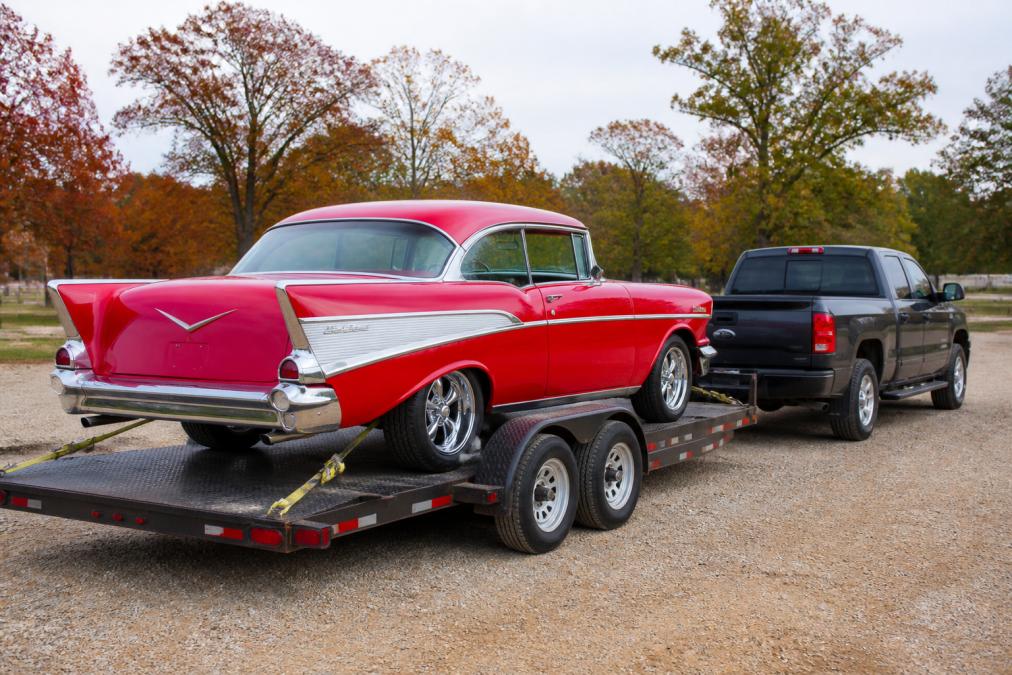
 ultimate-guide
Towing Classic Cars to Shows: A 2026 Guide
Table of Contents
- Why Towing Classic Cars to Shows Demands a Different Approach
- Towing Capacity and Vehicle Compatibility
- Enclosed vs Open Car Hauler: Which Protects Your Collector Car?
- How to Secure a Classic Car on a Trailer
- Choosing a Car Hauler Rental for Classic Cars
- Pre-Show Transport Checklist and Damage Prevention
- Conclusion
- Frequently Asked Questions
Last Updated: September 18, 2026
Why Towing Classic Cars to Shows Demands a Different Approach
Towing classic cars to shows is not the same job as hauling a daily driver across town. A restored 1965 Mustang and a modern crossover may weigh within a few hundred pounds of each other, but they behave nothing alike on a trailer. Vintage frames flex differently, carburetors flood on steep ramps, and a single strap routed across an original fender can cost thousands in paint correction before the gates even open.
Towing Capacity and Vehicle Compatibility
Towing capacity is the maximum loaded weight a vehicle is rated to pull, and it is only the starting point. Three numbers decide whether your setup is legal and stable: curb weight, payload, and tongue weight.
Reading Payload, Tongue Weight, and Curb Weight
Curb weight is the vehicle's weight with a full tank and no cargo. Payload is everything you add on top of that, including passengers, tools, and the tongue weight of the trailer. Tongue weight is the downward force the loaded trailer exerts on the hitch ball, typically targeted at 10 to 15 percent of total trailer weight.
Hitch and Equipment Requirements
A frame hitch bolts to the vehicle's structural frame rather than the bumper, and it is the only acceptable option for hauling a loaded car trailer. Bumper-mounted balls are for light utility trailers and nothing heavier.
| Component | What It Does | When You Need It |
|---|---|---|
| Frame hitch | Transfers load to vehicle frame | Any car trailer |
| Equalizer hitch | Redistributes tongue weight | Loads near the tow rating |
| Trailer brake controller | Syncs trailer brakes to pedal | Any trailer with brakes |
| Sway control bar | Resists trailer sway | Highway hauling, crosswinds |
Enclosed vs Open Car Hauler: Which Protects Your Collector Car?
An enclosed car hauler is a fully boxed trailer that shields the vehicle from weather, road debris, and UV exposure. An open car hauler is a flatbed or open-deck trailer where the car sits exposed to the elements. The right pick depends on distance, value, and how much you care about a clean arrival.
The Real Trade-Offs, Not Just the Brochure Version
Most guides frame this as "enclosed is safer, open is cheaper." That is true but useless. The decision actually turns on four measurable factors:
- Trailer weight. An enclosed trailer typically weighs substantially more empty than a comparable open trailer, which eats into your tow vehicle's payload and tongue-weight budget before the car is even loaded. A half-ton truck that comfortably pulls an open trailer with a 3,500-pound classic may be at or over its rating with the same car in an enclosed box.
- Frontal area and wind load. A box trailer acts like a sail. Crosswinds and passing semis push it harder, and fuel economy drops noticeably. Sway control and a properly set weight-distributing hitch matter more here than on an open deck.
- Loading and unloading. Enclosed trailers usually have a lower deck height and a rear ramp or door, which can actually help low-clearance cars, but interior width and door height become hard limits. Measure your car's track width and roof height against the door opening before you commit.
- Show-day logistics. An enclosed trailer doubles as a locked storage unit at the venue. You can leave tools, spare parts, chairs, and detailing supplies inside overnight without hauling them to a hotel room. An open trailer gives you none of that.
When Enclosed Is the Right Call
Choose enclosed when any of these is true:
- The car has fresh paint, a restored interior, or chrome that has not seen road grit yet
- The haul is long enough that you will hit weather, construction zones, or bug season
- You are stopping overnight and cannot secure the car at a hotel lot
- The car is valuable enough that a single rock chip would be a real financial hit
When Open Is the Right Call
Choose open when:
- The run is short and the forecast is clean
- Your tow vehicle is at the lighter end of the rating range
- You need flexibility, open trailers are far more available for last-minute rentals
- The car is a driver, not a concours piece, and a little road dust is acceptable
Climate-Controlled vs Standard Enclosed
This is the distinction most articles skip. A standard enclosed trailer blocks weather and debris but still experiences temperature and humidity swings inside. A climate-controlled trailer actively manages temperature and humidity, which matters for:
- Cars with bare-metal panels, fresh lacquer, or uncured paint
- Vehicles with leather, wood, or fabric interiors that react to humidity
- Multi-day hauls through regions with large day-night temperature deltas
- Concours-level cars where any condensation or bloom is unacceptable
How to Secure a Classic Car on a Trailer
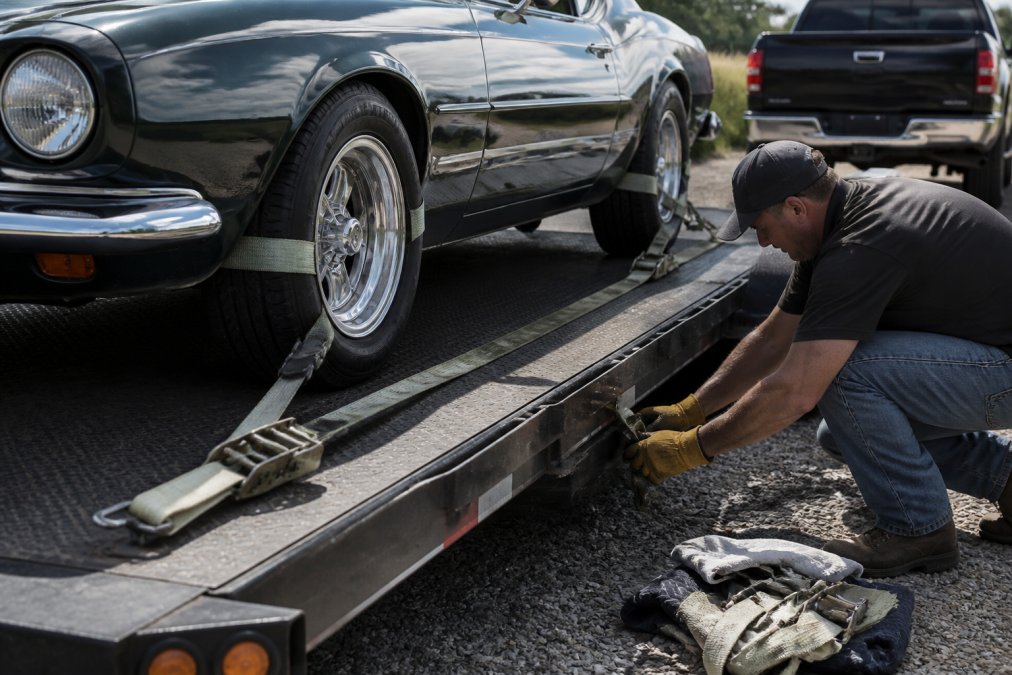
Securing a classic car on a trailer means routing straps around the tires or through the frame, never across body panels, and checking tension at every stop. Done correctly, the car does not move a millimeter over hundreds of miles.
Tie-Down Points and Soft Cloth Straps
Soft cloth straps loop over the tires and anchor to the trailer's tie-down points, which are the reinforced D-rings or stake pockets built into the deck. This is the preferred method for vintage vehicles because it isolates the load from the chassis and suspension.
Loading Techniques for Low-Clearance Vehicles
Low-clearance classics need loading ramps with a shallow approach angle, and often a set of ramp extensions to flatten the transition from ground to deck. A splitter or air dam that clears by an inch on flat ground will scrape the moment the ramp angle steepens.
Three techniques that work:
- Back the tow vehicle onto a slight incline to reduce the ramp angle
- Use wood blocks under the ramp feet to flatten the approach
- Have a spotter guide the front wheels, and stop the moment anything looks close
Choosing a Car Hauler Rental for Classic Cars
A car hauler rental for classic cars should match trailer capacity, deck length, and securement hardware to your specific vehicle. Deck length is the spec people overlook: a car that overhangs the rear of the trailer shifts weight backward and lightens the tongue, which is exactly when trailer sway starts.
Ask three questions before you book:
- What is the trailer's gross vehicle weight rating, and what does it weigh empty?
- Are the tie-down points rated and in good condition, or bent and rusted?
- Does the rental include straps, or do you bring your own?
DIY vs Professional Transport
DIY transport costs less up front and gives you full control over timing. Professional transport costs more but removes the tow vehicle requirement, the securement risk, and the driving.
| Factor | DIY Rental | Professional Transport |
|---|---|---|
| Upfront cost | Lower | Higher |
| Control over schedule | Full | Limited to carrier routes |
| Tow vehicle needed | Yes | No |
| Securement risk | Yours | Carrier's |
| Best for | Regional shows, repeat haulers | Long distance, high-value cars |
Pre-Show Transport Checklist and Damage Prevention
A pre-show transport checklist prevents the two most common failures: forgetting securement hardware and discovering a mechanical problem at the ramp. Run it the day before, not the morning of.
- Weigh the car or confirm its curb weight against trailer capacity
- Inspect straps, ratchets, and tie-down points for wear or bends
- Check trailer tire pressure and tread, including the spare
- Test trailer lights, brake controller, and turn signals
- Confirm tongue weight is within the tow vehicle's rating
- Pack wheel chocks, gloves, and a torque wrench
- Photograph the car before loading for insurance documentation
- Confirm your transport insurance covers the trailer and load
Conclusion
The hardest part of towing classic cars to shows is not the driving. It is the preparation that happens in the driveway, where a missed strap check or an overloaded tongue turns a good weekend into an expensive one. Get the weight math right, choose the right trailer for the distance, and secure the car the way the frame was designed to be secured.
Frequently Asked Questions
What is the safest way to transport a classic car to a show?
The safest setup uses a trailer rated for the car's curb weight, a frame or equalizer hitch, and four-point soft cloth straps over the tires or frame. Avoid chains on painted surfaces. Check tire pressure, ramp pins, and strap tension before you pull out, then re-check straps after the first 50 miles. An enclosed trailer adds weather and road-debris protection for longer hauls or show cars with fresh paint.
Should I use an enclosed or open car hauler for my classic car?
Enclosed haulers shield paint, chrome, and interiors from rain, gravel, and sun, which matters for long-distance hauls or freshly restored cars. Open haulers cost less, weigh less, and are easier to load with a winch. For short trips to a local show, an open trailer with protective covers and soft straps works well. For cross-country runs or concours-level vehicles, enclosed transport is worth the extra cost.
How do I properly secure a classic car on a trailer?
Park the car centered on the deck, set the parking brake, and leave the transmission in gear or Park. Use four soft cloth or axle straps at the frame or through the wheels, never over body panels. Cross the rear straps to limit side-to-side movement. Tighten until the suspension compresses slightly, then stop. Re-check tension at every fuel stop and after the first few miles of towing.
How much does it cost to transport a classic car?
Cost depends on distance, trailer type, and whether you drive or hire a service. Renting a car hauler for a weekend is an affordable option for local shows, while professional enclosed transport may run higher for long-distance hauls. Rates vary by region, trailer size, and rental terms, so request a quote for your specific dates and vehicle before you book.