 ultimate-guide
Long Term Trailer Rental Omaha: 2026 Guide
Table of Contents
- How Long Term Trailer Rental in Omaha Works
- Choosing the Best Car Hauler Rental Omaha Offers for Your Project
- Monthly Trailer Rental Rates and What Drives the Price
- Trailer Towing Safety Tips for Long-Term Renters
- Towing Vehicle Compatibility: Will Your Truck Handle It?
- Insurance, Liability, and Maintenance Responsibilities
- Delivery, Pickup, and Storage Options for Long-Term Rentals
- Frequently Asked Questions
Last Updated: September 15, 2026
How Long Term Trailer Rental in Omaha Works
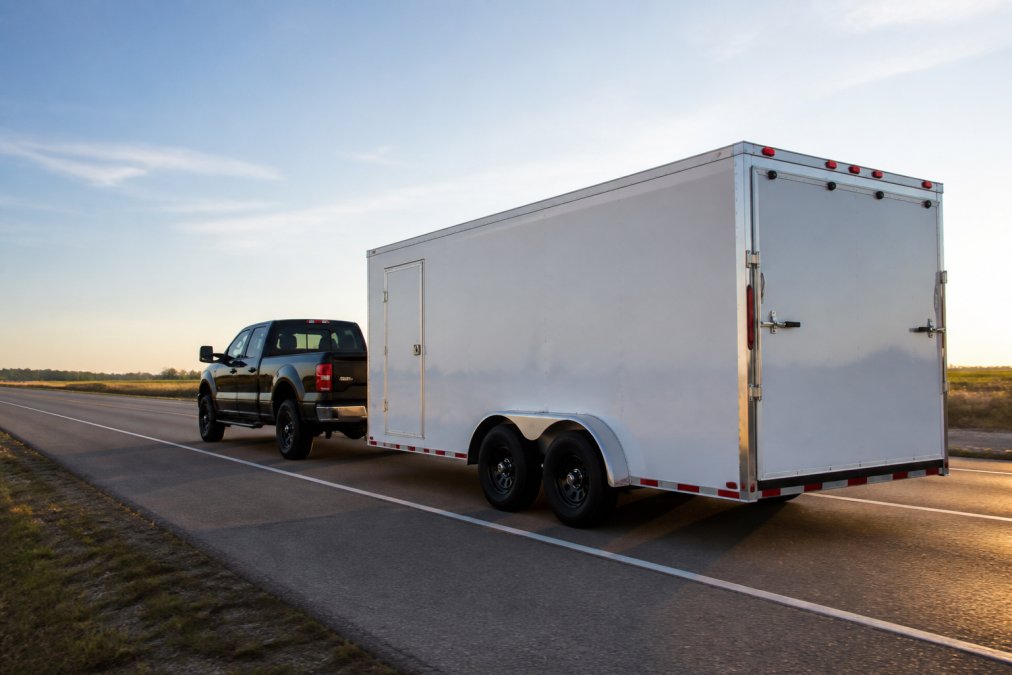
A long term trailer rental in Omaha runs for an extended period, typically a month or longer, giving you ongoing trailer access without committing to a purchase. At 402 car hauler rentals, we offer flexible booking terms and competitive rates, ensuring both hobbyists and professionals receive top-notch service tailored to their specific hauling needs. The key difference from a daily rental isn't just price, it's the relationship: you're not re-booking every weekend hoping the same trailer is free.
Short-Term vs. Long-Term Rental Periods
A short-term rental covers a day, weekend, or week; a long-term agreement stretches across weeks or months, often at a monthly rate. The break-even point arrives fast: haul more than a few times a month and a monthly arrangement almost always costs less than stacking daily rentals.
Short-term works when you need a trailer once for a move or a single auction pickup. Long-term makes sense for restoration shops moving customer vehicles regularly, race teams with a season of events, or anyone whose project timeline keeps slipping.
Leasing vs. Renting a Trailer
Renting and leasing aren't interchangeable. Renting is a shorter commitment renewed as needed; leasing locks in a longer term, sometimes with maintenance responsibilities in the contract.
For most people hauling project cars or equipment, renting with a long-term rate gives the flexibility of a lease without the paperwork. That flexibility matters when a restoration runs long or a buyer backs out of a sale.
Choosing the Best Car Hauler Rental Omaha Offers for Your Project
The best car hauler rental in Omaha matches your load, tow vehicle, and timeline, not the lowest headline rate. Start with three questions: What are you hauling? What's pulling it? How often?
Here's how the main trailer types break down for local hauling:
| Trailer Type | Best For | Key Spec to Check |
|---|---|---|
| Open utility trailer | Project cars, rolling chassis | Deck length, ramp angle |
| Enclosed cargo trailer | Finished cars, weather protection | Interior width, swing doors |
| Flatbed | Oversized loads, equipment | Axle configuration, deck rating |
| Fifth wheel | Heavy loads, frequent towing | Hitch setup, pin weight |
An enclosed trailer protects a finished paint job from road debris and weather. An open trailer is lighter, easier to maneuver, and cheaper to tow. If you're moving a non-running project, check the ramp angle before you commit; a steep ramp and a low-slung car are a bad combination.
Monthly Trailer Rental Rates and What Drives the Price
Monthly trailer rental rates depend on trailer type, size, rental period, and demand, so no single number fits every situation. Pricing depends on trailer type, size, rental period, and demand. Request a current quote directly from 402 car hauler rentals.
Several factors move the price:
- Trailer class and size. A single-axle utility trailer costs less than a tandem-axle enclosed hauler.
- Rental period. Longer commitments usually lower the effective monthly cost.
- Seasonal demand. Spring and summer fill up first. Commercial demand from shops and dealers runs year-round.
- Delivery and pickup. If you want the trailer dropped at your shop, that's a service to factor in.
- Security deposit. Most agreements include one, refundable on return in good condition.
Trailer Towing Safety Tips for Long-Term Renters
Trailer towing safety comes down to three habits: correct loading, correct hitching, and a pre-trip check every time. Long-term renters get complacent because the routine feels familiar, exactly when a loose coupler or worn strap causes a problem.
Before every haul:
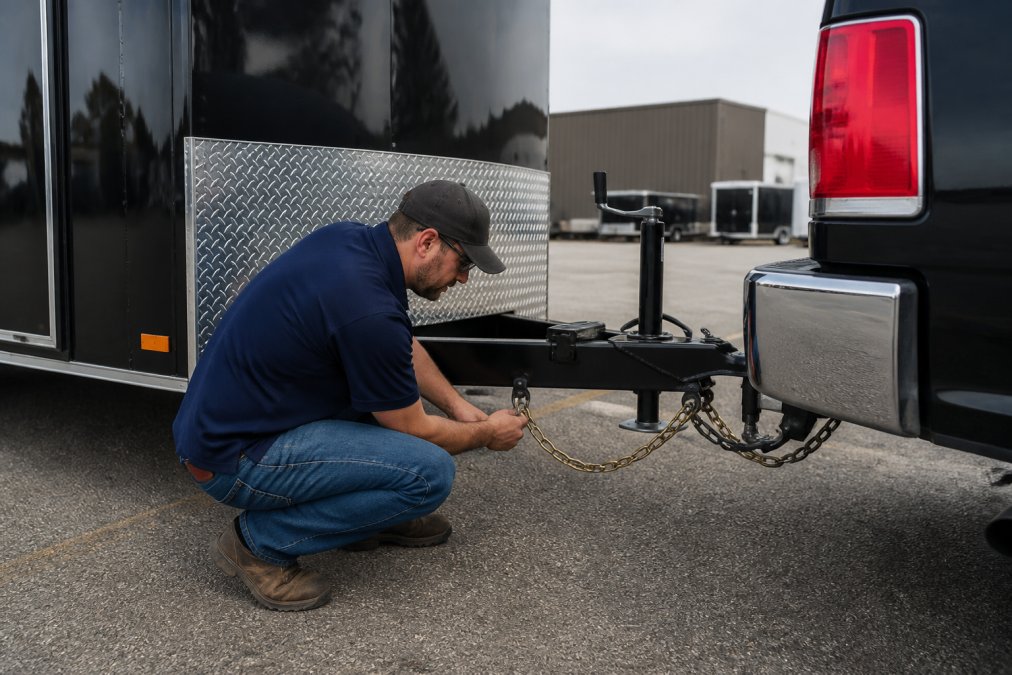
- Confirm the coupler is fully seated and latched on the ball
- Cross the safety chains under the tongue
- Test lights: brake, turn, and running
- Check tire pressure on trailer and tow vehicle
- Verify load straps at four points, not two
- Confirm the load is centered over the axles
- Walk the trailer once more after the first few miles
Weight distribution matters more than most people expect. Too much tongue weight and the rear of your truck squats; too little and the trailer starts to sway at highway speed. Aim for the load centered slightly forward of the axles.
National Highway Traffic Safety Administration guidance on trailer safety
Towing Vehicle Compatibility: Will Your Truck Handle It?
Your truck can tow safely only if its ratings clear what the loaded trailer demands, four numbers, not one. Most people check the bumper tow rating and stop, which is how overloaded half-tons end up dragging enclosed car haulers down the interstate.
Here is a compatibility checklist to consider before any long-term agreement is signed:
- Gross vehicle weight rating (GVWR), the maximum the trailer can weigh fully loaded, including the trailer itself, the vehicle on it, and any gear. This is the number your tow rating has to cover.
- Gross combined weight rating (GCWR), the maximum combined weight of your tow vehicle plus the loaded trailer. Your truck's GCWR is usually the real ceiling, not the tow rating.
- Payload capacity, passengers, tools, fuel, and tongue weight all count against your truck's payload. A 700-pound tongue weight eats payload fast.
- Hitch class and ball size, Class III (up to 6,000 lbs gross trailer weight) or Class IV (up to 10,000 lbs) for most car haulers. Confirm the ball size matches the coupler; a 2-inch ball in a 2-5/16-inch coupler is a disaster waiting to happen.
The Math That Actually Matters
First-time long-term renters often compare the trailer's empty weight to the truck's tow rating and call it good, ignoring the load. A tandem-axle enclosed car hauler might weigh 2,500 lbs empty and 7,000 lbs loaded with a project car and tools. If your truck's GCWR is 12,000 lbs and the truck weighs 5,500 lbs, you have 6,500 lbs of combined trailer capacity, and the loaded trailer is over it.
Run the numbers with the loaded weight, not the empty weight.
Matching Truck Class to Trailer Type
When Your Truck Is Modified
Match the trailer to the truck, not the other way around. Overloading a tow vehicle is the single most common cause of trailer accidents, and it is entirely avoidable with a five-minute spec check against GVWR, GCWR, payload, and hitch class.
Insurance, Liability, and Maintenance Responsibilities
Confirm two things with your insurer before you sign:
Insurance Information Institute guidance on auto and trailer coverage
Who Pays for What During a Long-Term Rental
| Item | Typical Responsibility |
|---|---|
| Tire pressure and visual tire inspection | Renter (routine check) |
| Lights, brake, turn, running | Renter (routine check) |
| Strap and tie-down condition | Renter (routine check) |
| Wheel bearings and repacking | Provider |
| Brake shoes, drums, and brake wiring | Provider |
| Tire replacement from normal wear | Provider (confirm in writing) |
| Tire replacement from road hazard or curb damage | Renter |
| Structural repairs, frame, deck | Provider |
| Damage from accident or misuse | Renter |
Documentation and Incident Protocol
If something breaks mid-haul, the sequence matters:
Do not assume your personal auto policy covers a rented trailer the same way it covers your own vehicle. Liability and physical damage are separate questions, and the answers differ by policy. Call your insurer with the trailer's GVWR and your intended use before you sign the rental agreement.
For a long-term rental, the maintenance question is not "who fixes it" but "who pays for which category of wear." Get the bearings, brakes, and tire-replacement split in writing at signing, and document every incident with photos before you touch a wrench.
Delivery, Pickup, and Storage Options for Long-Term Rentals
Frequently Asked Questions
What are the benefits of long term trailer rentals versus short term?
Long term trailer rental keeps a trailer available for your whole project instead of rebooking every weekend. For a multi-month restoration or a steady stream of customer vehicles, that means no scramble before each haul and no risk of the trailer you need being reserved by someone else. Monthly arrangements usually cost less per day than repeated short-term bookings, and your equipment stays consistent from first load to last.
Do I need special insurance for a long term trailer rental?
Your auto policy often extends liability coverage to a rented trailer while it is attached to your insured vehicle, but that varies by carrier and policy. Many rental agreements also require you to carry coverage on the towing vehicle and may offer a damage waiver for the trailer itself. Ask for the rental agreement in writing before you sign, confirm what your own policy covers, and clarify who pays if a strap fails or the trailer is damaged during your rental period.
Are there maintenance requirements for long term trailer rentals?
Yes, and they should be spelled out in the rental agreement. Typical renter duties include checking tire pressure and tread before each trip, confirming lights and brakes work, inspecting straps and tie-downs, and keeping the trailer clean and stored securely. Major service like bearing repacking and brake inspection is typically handled by the rental company. Report any damage or mechanical issue immediately rather than continuing to tow, and document the trailer's condition at pickup.
Can I rent a car hauler for a multi-month project?
Yes. Multi-month car hauler rentals suit restoration projects, race seasons, and shops that move customer vehicles regularly. You will want to confirm the rental period up front, ask about pricing, and check whether the company allows flexible terms if your timeline shifts. Verify towing capacity, GVWR, and hitch requirements against your truck before committing, and ask about delivery and pickup service if you would rather not drive to the lot.